
Staying ahead in changing times
Insights into how to navigate rising costs and inelastic pricing, redefine your approach and ensure your business survives and flourishes amid change.
Attendees at the 2025 APAL Technical Symposium needed to be on their toes for the morning session, where our first three speakers wasted no time in plunging straight into the complex topic on everyone’s mind: how to stay ahead amid unprecedented challenges and changing times.
Industry experts Bill Malcolm (Professor at the University of Melbourne), Jeremy Griffith (Head of Industry, Government Relations and Advocacy at APAL) and Jesse Reader (Head of Investment, Growth and Commercial at Hort Innovation) shed light on how embracing technology, improving negotiation strategies and managing risks can empower growers to thrive.
Embracing change
Bill emphasised that we are living in an era of profound uncertainty, driven by shifting climate patterns, economic fluctuations and political upheaval. This unpredictability demands that growers adapt swiftly and strategically. Simply being technically proficient is no longer sufficient. Many growers have faced financial ruin, not due to a lack of skill, but because they failed to manage their finances, economics and labour effectively.
Building on this, Jeremy illuminated the significant hurdles posed by competition policy, especially the overwhelming influence of the major supermarkets. He pointed out that input costs have surged dramatically, with an estimated 20 per cent increase over the past four years. Given that labour typically constitutes 60 per cent of total costs, a recent 12 per cent wage hike has only intensified the financial pressures on growers.
Jesse further enriched this discussion by highlighting the transformative power of technology in mitigating biases and enhancing decision-making within the industry. He stressed that grasping the nuances of variability (whether it’s perceived or real) is essential for growers. As technology evolves, it offers a more objective lens through which to view farming challenges, enabling growers to make informed and impactful decisions.
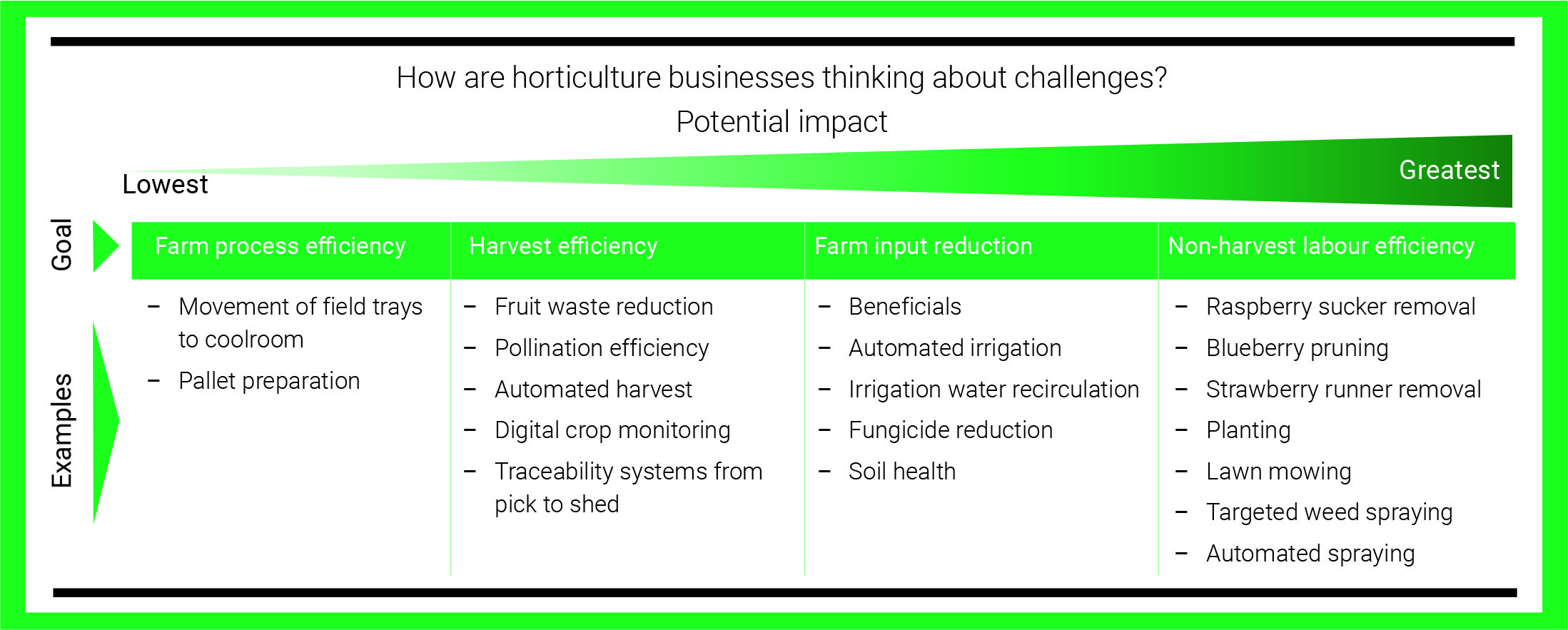
How are horticulture businesses thinking about challenges? Source: Jesse Reader, Hort Innovation
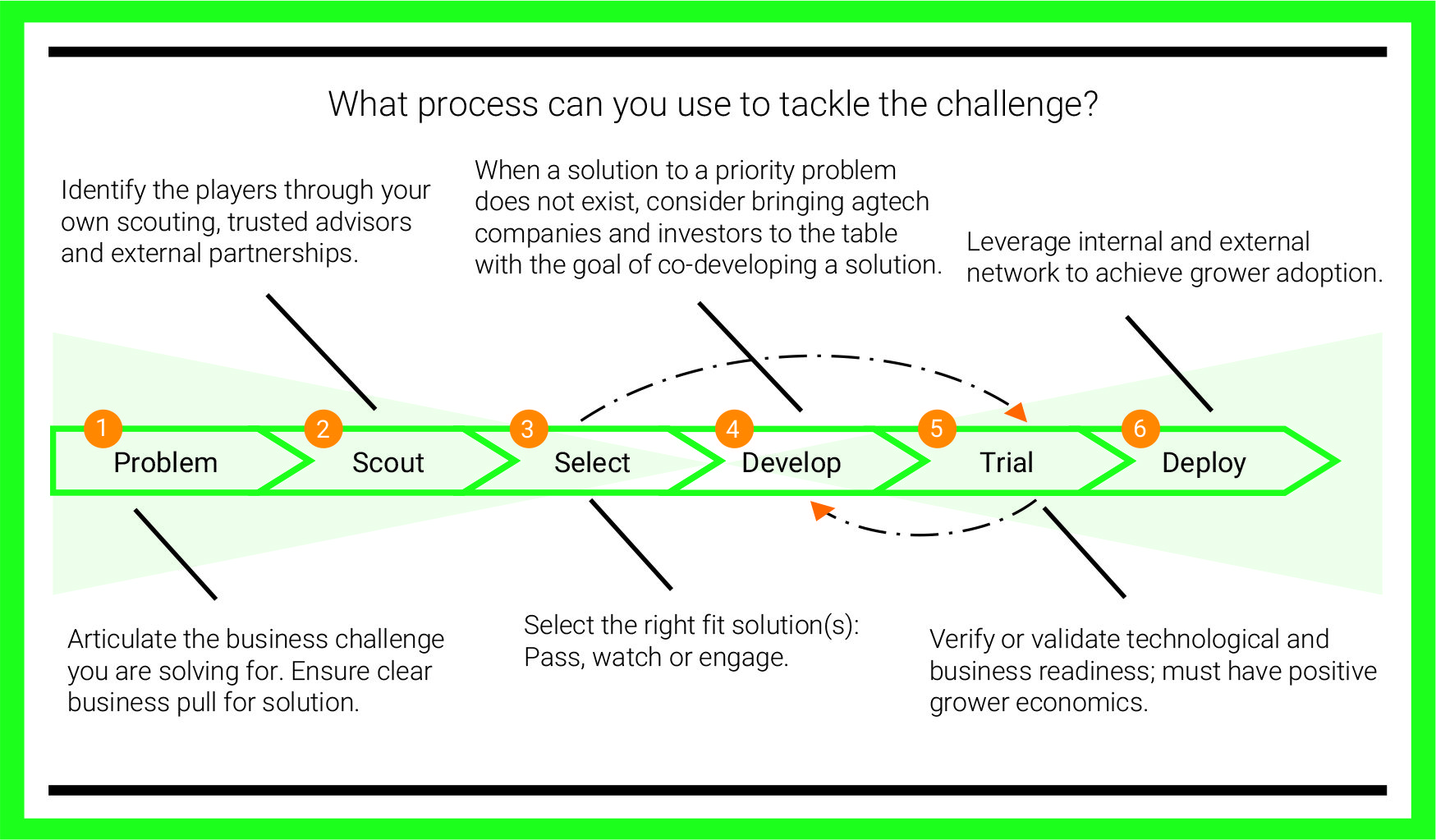
Figure 2: How to tackle the challenge. Source: Jesse Reader, Hort Innovation
Adopting new technologies
Bill underscored the incredible potential of robotics and automation, asserting that such innovations can dramatically enhance efficiency in operations.
“Good innovations get adopted quickly if they’re obvious and the benefits are clear,” he noted, highlighting the urgency for growers to adapt as high labour costs and the challenge of sourcing quality workers becomes increasingly pressing.
Jesse took the discussion further, unveiling exciting advancements in agricultural technology, including automated tractors and precision weeding techniques. While he acknowledged that some innovations take time to penetrate the horticultural sector, he assured growers that a wealth of promising solutions is on the horizon. For example, breakthroughs in ultraviolet C (UVC) technology for pest control and the integration of AI for predictive analytics are poised to transform growing practices fundamentally.
The negotiation imbalance
Growers who harness technology and refine their negotiation tactics will be best positioned to thrive, particularly as the competition policy landscape continues to evolve. Regulations, such as the mandatory Food and Grocery Code of Conduct, are beginning to provide growers with the leverage they need against supermarket dominance. However, Jeremy cautioned that effective negotiation skills remain crucial, as supermarkets often wield considerable power in these discussions and won’t hesitate to suppress prices and impact growers’ profitability.
Navigating inelastic pricing is another critical challenge. Bill noted that growers need to be internationally competitive, which means understanding market dynamics and being strategic in negotiations.
Both speakers emphasised the importance of data in negotiations.
“The lack of access to critical data makes it difficult for growers to negotiate effectively,” Jeremy said.
However, initiatives like the APAL National Orchard Census aim to provide real-time data on apple volumes, helping growers understand market demand better.
Jesse also discussed the importance of assessing opportunities through structured decision-making processes. He emphasised that growers should look at technology readiness and potential impacts before adopting new tools, ensuring they make informed choices that align with their business goals.
Managing risks and biases
As growers adapt, they must also be mindful of risks and biases. Bill made a crucial point that while taking risks is essential for growth, it’s equally important to manage those risks effectively. Understanding the difference between business risk (like yield and prices) and financial risk (related to borrowing and debt) can help growers make informed decisions.
Jeremy outlined key areas where growers can improve their negotiating power, including understanding supermarket tactics and protecting their data. He emphasised the importance of knowing one’s rights under the new regulations, as this can help mitigate the risks associated with dealing with powerful retailers.
“As technology evolves, it can help reduce biases in decision-making, allowing for more objective assessments of challenges and opportunities,” Jesse highlighted.
This shift can empower growers to make data-driven decisions that enhance their competitive edge.
As Bill aptly concluded, “The race goes to the fittest”. By increasing productivity, embracing new technologies, negotiating prices wisely and managing risks, growers who are equipped to succeed can position themselves to thrive in an environment characterised by change.
This article was first published in the spring 2025 edition of AFG.



