Canopy design – new systems, same challenges
In this second of two articles, Nic Finger reports on European planting trends as well as further insights from the ISHS Orchard Systems Conference in January 2025.
Global trends in orchard design continue to pursue relatively narrow, simple structures, emphasising fruiting wood over larger permanent wood structures and intensive management in the formative years. My November 2024 trip to Interpoma in Italy and to research sites in neighbouring countries highlighted that there has been an intensive effort towards adoption of narrow canopies with multiple upright leaders in recent years. This trend was echoed at the ISHS Orchard Systems Conference in Napier, New Zealand in January 2025, with a number of leading researchers from around the world reporting on the benefits, and challenges, of these systems.
Cutting through the jargon
Multi-leader, uprights, stems, leaders, guyot and cordons – what’s the difference? Depending on who you ask, there are multiple names for each planting system and its various components. In the research world, they are typically referred to as planar cordon systems, but for simplicity I will refer to them as multi-leader trees for the rest of this article. To define this further, a singular upright structure is a leader (sometimes referred to as a stem or upright) and this is presented on a modern trellis system producing a fruiting wall (as opposed to a traditional vase- or goblet-style tree).
While there are some subtleties in the initial training of the variants (single versus twin, angled versus flat) and the wood renewal techniques between these systems, they all fundamentally share some key similarities:
- Simple/narrow upright structures resembling a typical spindle-style tree’s branch (assuming it is ‘line pruned’). There is some degree of variance between ‘very tight’ uprights (20–30cm) and ‘wider’ uprights (40–60cm) whereby a small fruiting unit with two to three spurs with the wider spacing between leaders is used, as opposed to a spur with bourse renewal in the tighter leader systems.
- Variance in the number of uprights per rootstock; typically balancing inherent vigour of the rootstock, scion, soil and growing region.
- Relatively narrow rows (typically 2–3m) to allow high light interception with the very simple structure.
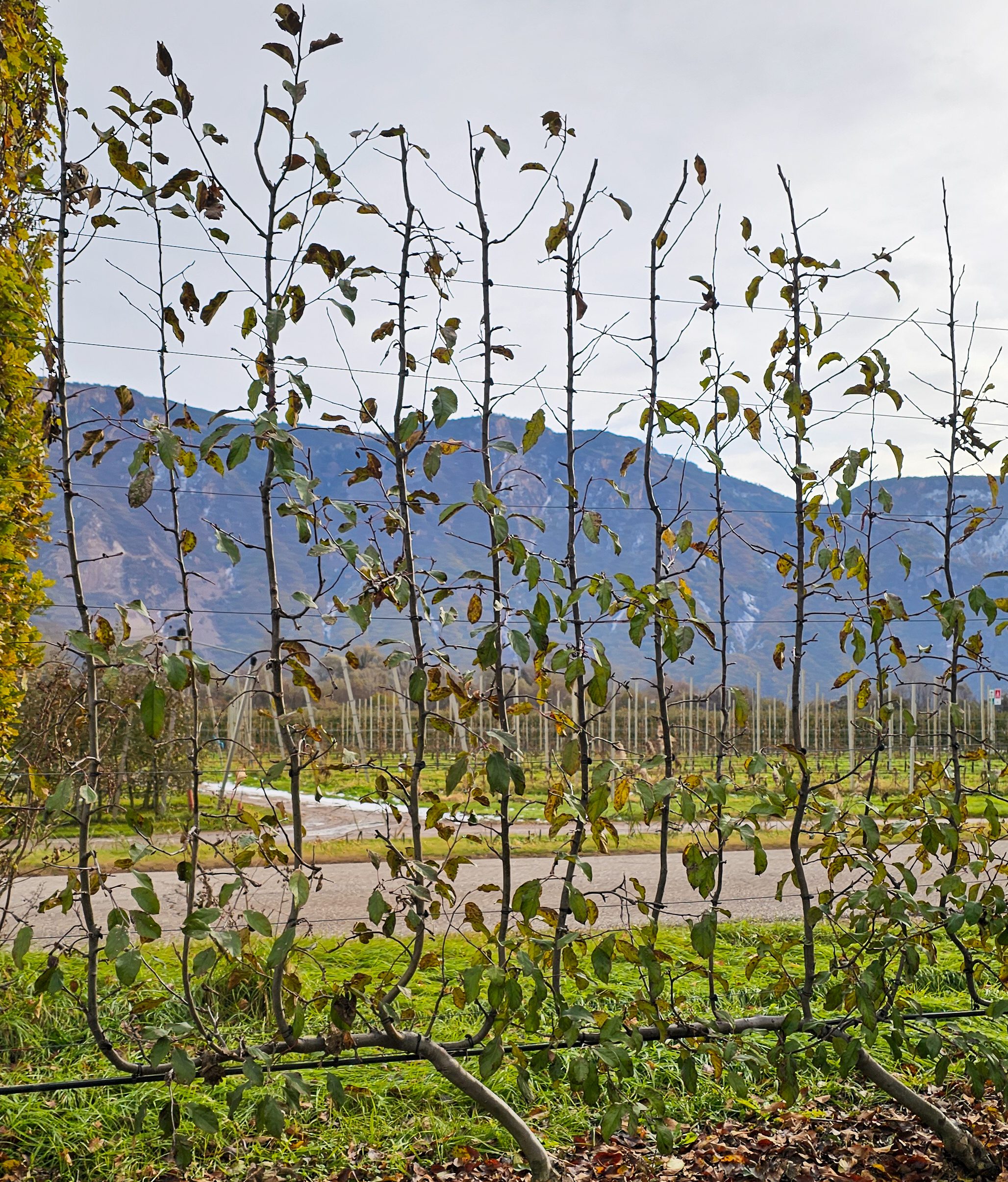
Figure 1: An example of a multi-leader system highlighting the relatively simple structure of wood.
Key trends
Whether or not blocks use the ‘new’ multi-leader style or ‘older’ style of narrow spindles, a few key trends and messages are emerging with their development.
Attention to intensive capital costs
With rootstock and cultivar royalties as a standard fixture on a lot of modern genetic material, attention to balancing total tree intensity per hectare has become front of mind in many regions around the world. While not the only driver, achieving very high leader densities on an individual tree level requires significant tree investment. With a multi-leader design, the upfront cost of trees can be reduced. When we consider reducing row widths further and increasing leader intensity to >8,000 trees/ha, this equation becomes more concerning. In addition, the ability to control the inherent vigour of the tree gets more difficult.
Let’s look at the example in Table 1 of two row spacing systems – one at 3 x 1m spacing between leaders and the other at 2.8 x 0.4m between leaders. This example demonstrates one of the key drivers behind the push towards multi-leader systems when wanting to make a narrow/simplified canopy, with considerable capital savings potentially able to be realised up front to achieve high leader densities per hectare. While this brings other challenges for canopy fill, training costs and other operational costs for management (discussed later in this article), it does highlight the push towards these systems from a capital investment perspective.
Effectively, the super-spindle system has re-emerged in a lower vigour manner and the ‘shading out’ factor can likely be minimised with the added bonus of a reduced capital establishment cost.
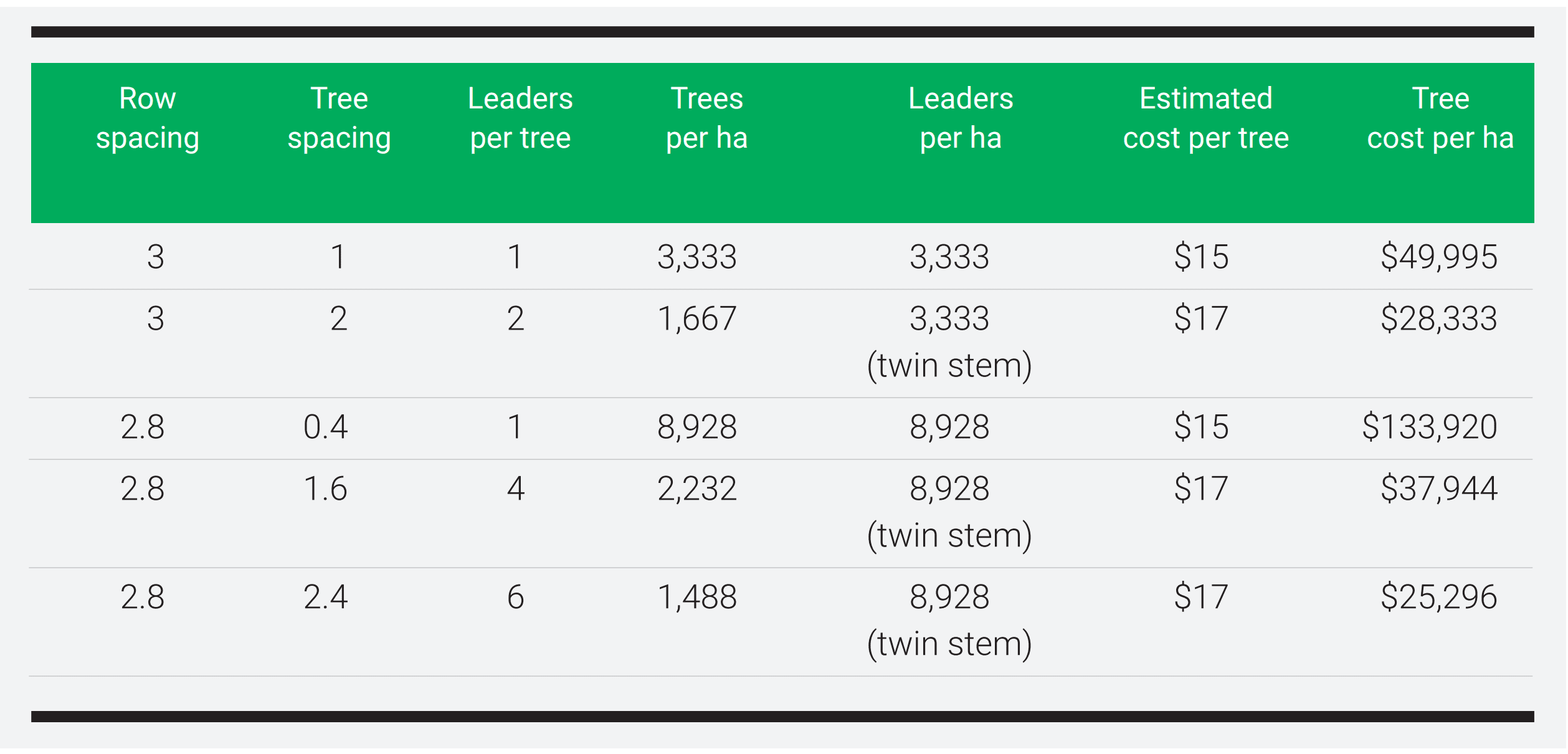
Table 1: A comparison of capital costs based on two different row spacing systems.
Narrow rows but still maintaining height
It is becoming increasingly evident that the pedestrian orchard will probably no longer be a reality without taking a yield penalty over other systems, where the lost revenue is likely to outweigh the potential cost savings of removing ladders and other height-access machinery.
Established narrow leader canopies, at row widths less than 2.5m, are routinely producing high-quality fruit throughout the entire canopy at heights of 1.3–1.5X their row width, with the relatively porous nature of these canopies providing adequate light; critically assuming a good vigour balance within the tree. As is all too common in orchard blocks, where vigour is not managed adequately, heavy wood in the upper tree shades the lower tree resulting in reduced fruiting wood, more vigour in the top and inevitably a poor performing block; this fact still holds true.
Greater intensity of year 1–3 inputs
The ISHS Orchard Systems conference in Napier saw a range of leading scientists report on the labour demands of emerging systems, often comparing multi-leader systems to spindle systems and the labour intensity required. It is incredibly evident, from both trials and grower experience to date, that intensifying the number of leaders per hectare results in more work during the training phases.
Put simply:
- On an 8-wire trellis system at an upright density of 3 x 1m (3,333 trees/ha), the total clip number required would be 26,664/ha to secure the trunk to each wire.
- Increasing intensity on the same row spacing to have an upright every 40cm (8,333 stems per hectare) would result in a total clip number of 66,664/ha – a 2.5X increase – plus the additional work in clipping the lower cordon to the lower wire(s).
- Savings on tree training can potentially be realised in the reduced need for training down larger branches, but the requirement for early training is still high.
- Regardless of the growing system, increased intensity during the initial phases to minimise the incidence of blind wood, maintain leader growth and pinch out unwanted growth points is critical to maximise early performance (yield) and thus profitability of the block during its life.
While the above highlights the intensity of this system’s development, it is imperative to remember that fruit value typically far outweighs costs. While 2.5X tree clipping costs is a considerable jump, this is likely to represent an additional outlay of ~250 hours per hectare over the lower leader density system for the training component, assuming no need for training of limbs in the spindle system. If we rightly assume that ~10 branches require training on the spindle system, the commitment would be largely similar to the additional clipping costs. While it is possible to grow a spindle without significant branch tying, it is more often than not that intensive training is still required where looking to maximise early yields and optimise early tree structure.
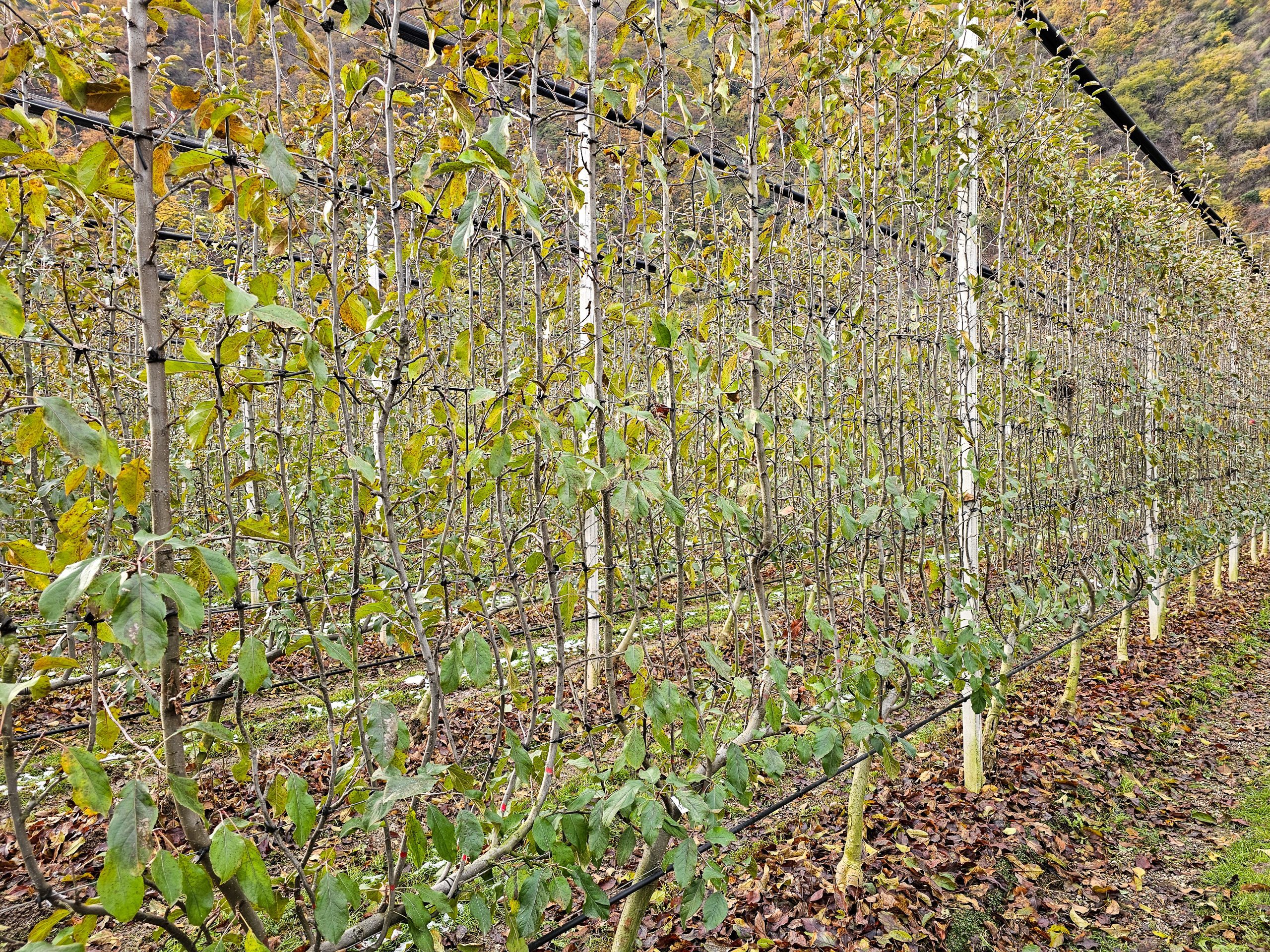
Figure 2: A highly intensive multi-leader tree in Italy.
Critical failure points
While the trend is towards multi-leader systems, with some advantages for simplicity of tasks, much like any system it is imperative to understand the potential failure points on current and future canopies and plan to adjust as needed.
Inability to source appropriate trees at planting
Careful consideration needs to be given towards available planting material and the system choice associated with that. It is imperative that in any planting system the best available planting material is used to ensure that tree growth and training can be completed in a relatively fast manner to achieve maximum canopy fill, and thus cropping potential, in the shortest feasible time. Heading a tree at planting to form the ‘ideal’ twin stem will not recover relative to planting that twin stem directly. By heading you will only achieve the twin stem at the end of year 1, thus delaying cropping potential by another year.
Inability to fill canopy
One disadvantage of multi-leader trees is the time it takes to establish the canopy – they take longer to fill a space than a series of equivalent singular trees at the equivalent leader density (and at a much higher capital cost). In saying that, choice of rootstock and scion for intended use should be taken into account and the appropriate number of leaders per rootstock/scion/site vigour should be selected. Generally speaking, it is easier to have to fight a little bit on the side of too much vigour than trying to make a weak tree grow.
Over-invigorated canopy, failure to set crop
While an inadequately filled canopy is probably one of the hardest things to fix in young blocks, an over-invigorated canopy due to strong rootstock choice, the inability to set a crop or other factors can undermine a new development very quickly. Recognition early in the block’s life that trees are too strong can allow for corrective action. There is a suite of tools that can significantly devigorate trees, from reduced water and nutrition inputs, pruning timing, physical techniques like girdling or root pruning, and chemical techniques.
Not bringing staff along for the ride
The number one way for a new system to fail is not having a team that wants to make it work. As far as I’m concerned, if someone doesn’t think it will work in orchards they will probably find a way to show what they believe is best to be superior.
If you are starting a new system, get input from all key staff for its design and implementation. And go and visit similar blocks as a group rather than working off a couple of grainy photos.
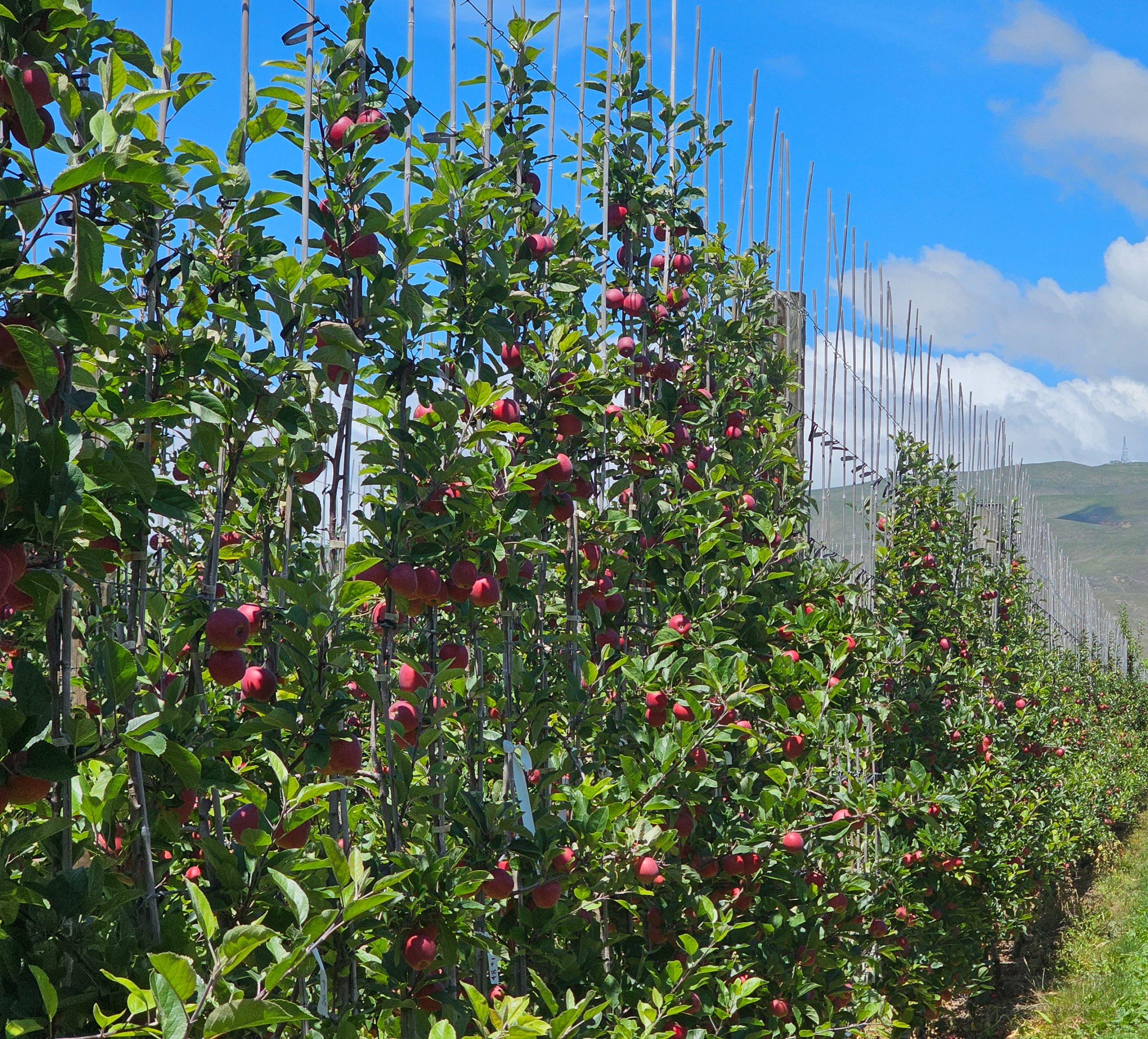
Figure 3: A commercial multi-leader block. While it is still young, the variance in leader height down the row will require extensive corrective action. Much like any other planting, careful management of variability is critical to ensure canopy fill is optimised.
Wrong variety
It is quite clear that there is another new trend emerging worldwide: growers who have endured failed varieties (which is not new, but paying the tree royalty up front is).
In the context of narrow (or non-existent) margins on apple growing, it is simply unsustainable to invest in varieties and growing systems that do not maximise potential profitability.
At Interpoma in November 2024, I counted a total of 47 branded apple varieties on the trade show floor at both commercial and pre-commercial stages. A number were (arguably) already in the ‘death spiral’ of not being wanted by the market, by growers or both.
While variety failure (or lack of demand, if you prefer a softer term) is not a new phenomenon, the costs and, therefore, risks of establishing highly intensive orchards are extremely high and having the execution perfect with the wrong variety is a real kick in the guts when needing to remove the block.
My discussions with a range of people from across the world underlined one key theme: proper due diligence is critical.
This may include:
- testing the variety in the local conditions of the intended growing system
- observing both packing and picking trials at scale
- determining growth habit, colour suitability, size and timing of the variety for the local region
- understanding the market fit for the variety as well as the capability of the marketing partner(s) – whether you like the apple or pear is not particularly relevant if the market at large does not
- observing the variety in a range of growing climates and tree ages
- analysing competitor products.
Regardless of whether you want to pursue the ‘new’ or ‘old’ planting systems, there is still one key principle that will determine its success or failure. Without pre-planting decisions on variety choice, growing system, risk mitigation and adequate resourcing, the potential of the block will be largely compromised. Take the time to plan carefully, select high-quality planting material for the planned growing system and ensure you have the right skills, resources and equipment to nail your execution during the canopy’s development.
Acknowledgement
Nic Finger’s attendance at Interpoma and the ISHS Orchard Systems Conference was part of the Developing orchardists of the future (LP23001) pilot program, which is funded through Hort Innovation Frontiers with co-investment from APAL and Pink Lady® and contributions from the Australian Government.
This article was first published in the Autumn 2025 edition of AFG.