Differentiation key to export success
Tasmanian grower Howard Hansen has urged growers to develop their markets and seek differentiation if they want to drive profitability.
Howard told the Fruit Growers Victoria conference in Shepparton last week there “are no silver bullets” to running a profitable orchard. A profitable orchard must be able to be a leader in at least two of his ‘Three Ps for profitability’: Production (high yield per ha), Packhouse (selection for quality), and Price.
He is an advocate of managed varieties and the associated restrained planting and greater market control, and Hansen Orchards produces up to half of Australia’s Envy. He explained that guaranteeing the quality of a finite amount of fruit is a much surer way to success than producing a higher quantity of unknown quality commodity apples.
Instead of producing high volumes of apples and hoping for high prices, Hansen Orchards has focused on finding a way to differentiate their product by developing markets both locally and abroad.
He said as Tasmania can’t compete with other states in exporting commodity varieties due to higher freight costs, Tasmanian growers were embracing managed varieties and the domestic market.
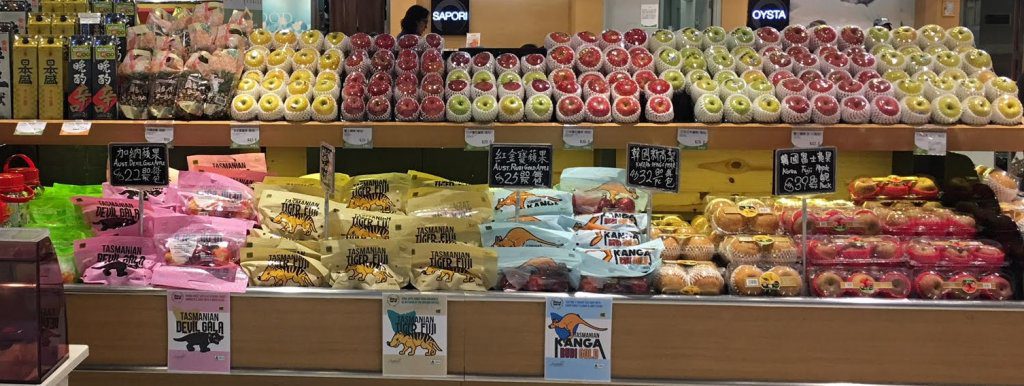
Hansen Orchards has launched a number of initiatives within the state to develop the domestic market, including a partnership with local schools to deliver free apples to kids, to literally “put [apples] in their mouths”. Abroad in Hong Kong, they have had success with the marketing of their own and fellow growers’ apples under Tasmanian branded Kanga Rubi Gold, Tasmanian Devil Gala, and Tiger Fuji.
When it comes to exporting, Howard made it clear that differentiating the product was the only way to guarantee a premium. In addition to his apple brands, he exports his cherries under the Hansen Orchards brand to take advantage of Chinese New Year, a time when the Chilean season is coming to an end and gifts of premium cherries are in high demand. In order to differentiate their cherries from Chile’s large volume cherry exports, Hansen Orchards selects for late maturing varieties, aims for a premium product with positive selection (hand picking and use of the ‘Hansen 360’ sorting machine modified to account for cherry stems) to ensure quality, airfreights shipments in to maximise freshness, and aims their marketing at the exclusive premium gift market.
“[In China] We are a gift business, not a food business,” he said.
As a result, Hansen Orchards is recognised as a premium cherry brand in China, known for quality, Tasmanian freshness, and commanding premium prices in each market around the world.
Howard is a fourth-generation grower, and has run the family business with his father Carl for 23 years. The family has been in the Huon Valley since 1944, and they’ve been growers since 1887. Howard spoke to the audience of Fruit Grower’s Victoria members about the state of Tasmania’s growing community; in 1944, there were 2000 growers. In 1995, there were 200. In 2018, he states the number is down to 20.
While Tasmania is currently the only state with export protocols in place for apple export to China, negotiations are underway for the mainland to gain access to the market too.
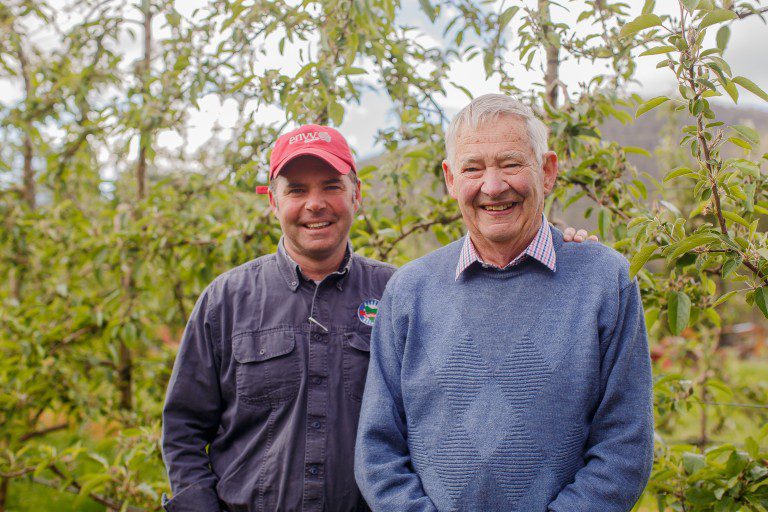
Howard is a fourth-generation grower, and has run the family business with his father for 23 years.