
Eye on the market, ‘boots on the ground’ drives success at Joyson
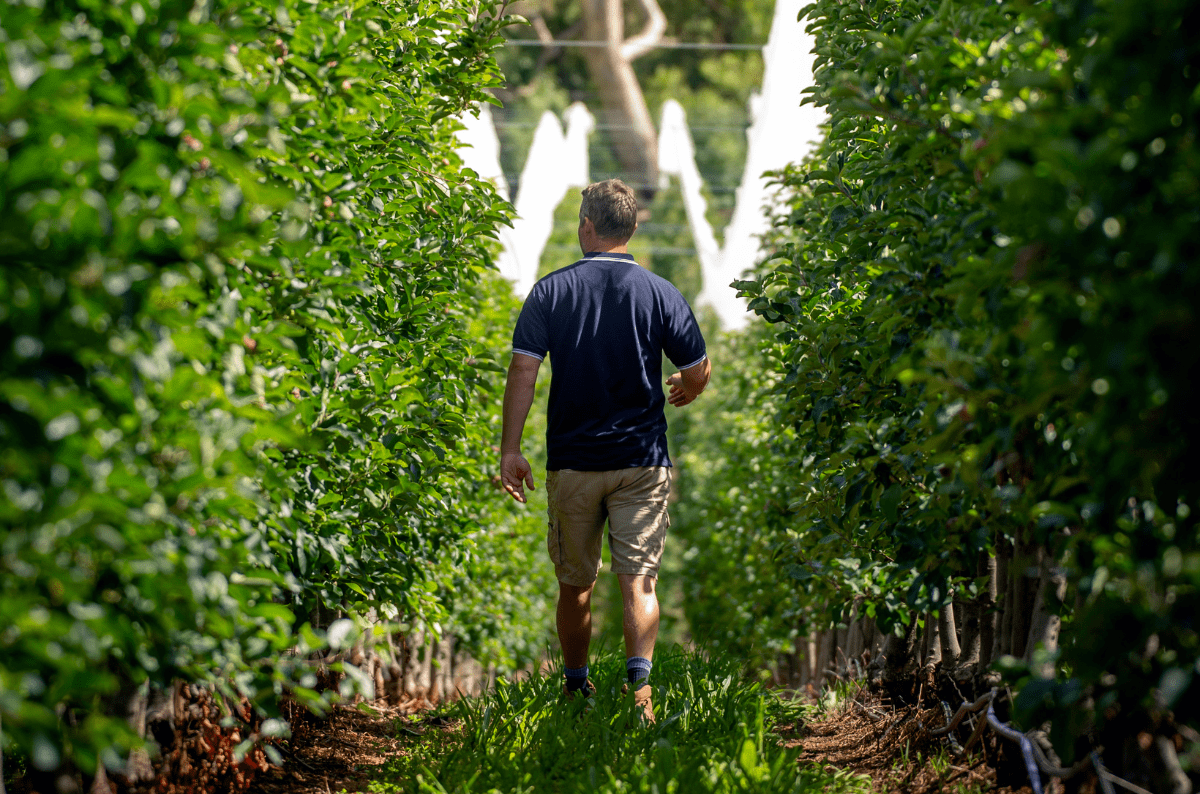
Photo: Darren Clements Photography
A strong market focus, simple-to-manage orchard systems and ‘boots on the ground’ are driving success for the Adelaide Hills-based Joyce family’s Joyson Orchards.
Themes
- Positioned to maximise market opportunities
- Simple, easy to manage systems
- Budget focus, spend where it adds value
With the benefit of insights via the family’s related marketing arm Adelaide Hills Fresh, orchards positioned strategically for their market or bottom-line advantages, and an established family willingness to grasp an emerging opportunity, fourth generation grower Ben Joyce is refreshingly optimistic about the future.
“We are feeling quite positive,” he said. “The last six months have been pretty good.”
Ben returned to the family business in March 2020, after seven years at BAE Systems’ high-tech titanium machining facility at nearby Edinburgh Parks machining parts for the F-35 Joint Strike Fighter. He now shares the orchard management with his father Mark and his uncle Brett.
While producing fighter jets and apples are at first glance a world apart, Ben said the very precise approach to turning out high-quality, identical jet parts had some parallels with producing consistent, high-quality fruit.
“BAE was very procedural and very structured and I think that has helped me in coming back,” he said. “It’s a different set of skills altogether that you bring across. Not all of it is relevant, but it’s always good to have a different way of looking at things.”
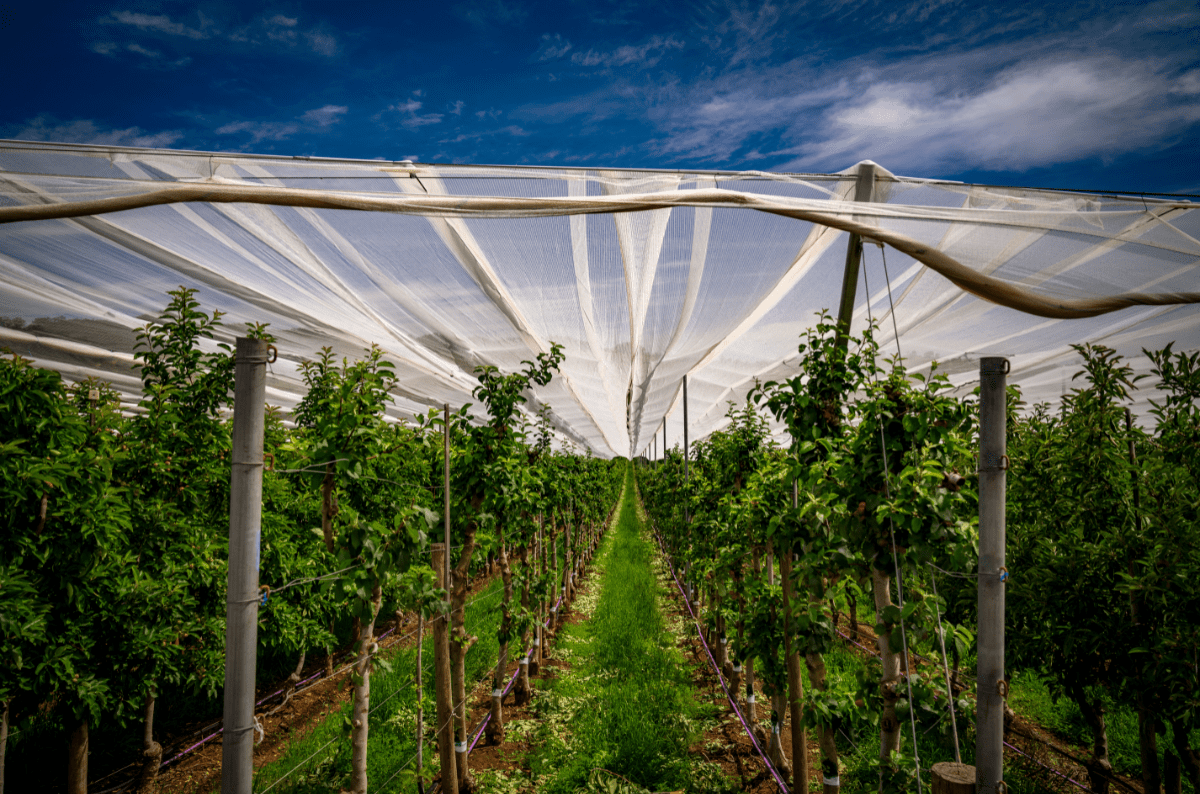
Formerly Fuji, this block has been newly grafted over to the Washington State University-bred WA2 (marketed as Sunrise Magic®). Photo: Darren Clements Photography
Strategic spread
Joyson Orchards is a significant apple grower in South Australia and – as part of the Joyson Group – part of a vertically integrated and strategically diversified business that stretches from nursery through to storage, marketing and distribution, and includes both Balhannah Nurseries and partnership in Adelaide Hills Fresh.
An entrepreneurial bent begun by Ben’s grandfather Bill has, over the years, seen the family plant orchards to tap into strategic scale and market opportunities, pioneer modern two-dimensional systems, partner with the local water authority to access secure water supplies, and develop domestic and international markets.
Orchard holdings now cover eight different locations from Kalangadoo in the far southeast of the state, to Blanchetown 120km northeast on the Murray River. While the geographical spread requires some extra logistical effort, Ben said the different locations allow the business to target different market opportunities.
“It is a challenge; we do cart most of our equipment for harvesting to where we need it,” he said. “Fortunately, the Riverland is a bit early and all the harvester tractors go up there first and make their way back down when we’re ready to pick here. As far as carting fruit is concerned, we’ve got to be on it because it’s so hot up there. We don’t have storage up there, so everything’s got to come back here the same day.”
It was for the early season Gala premium opportunities afforded by its hotter, drier climate that Blanchetown was originally purchased. When the advent of SmartFresh® and the ability to carry fruit over changed the early market, Ben said the orchard had switched to organic production, and more recently reduced apples to introduce plums.
“We used to hit the market out there early and achieve profitable results,” he said. “There’s less inputs required. It is hotter up there and there isn’t the disease pressure, so we don’t need to spray and we don’t primary thin, but now we have SmartFresh, there is not the same early market, so we went organic.
“It’s ever evolving; we’ve taken out half the apples and put some cherries and Queen Garnet plums in up there and we can pick them earlier.”
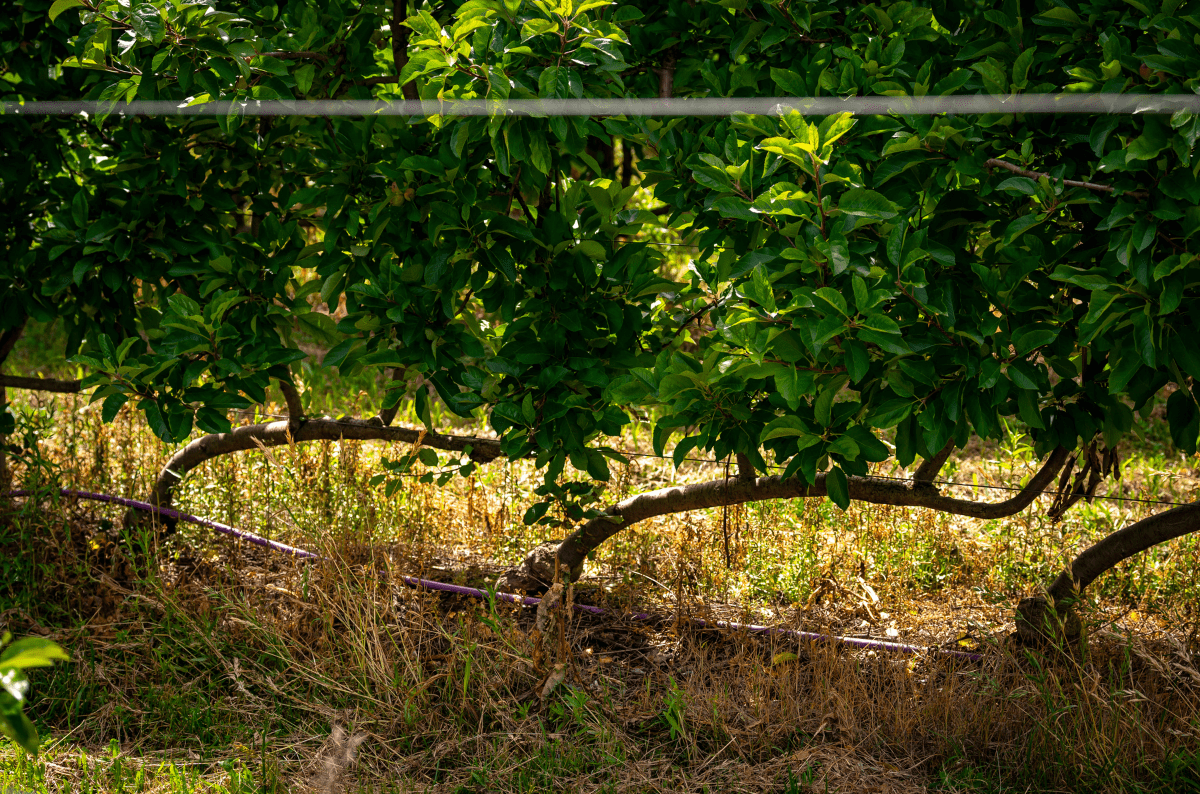
The multi-leader system, with three leaders 40cm apart, has been successful in managing vigour in Prem A96 (Rockit®). Photo: Darren Clements Photography
Vines to apples
At Gumeracha orchard, site of the South Australia 2025 Future Orchards® winter walk, Ben is managing an evolution of a different kind – apples grown on old vineyard trellises.
In 2014 on land bought during a wine industry downturn, Ben’s brother Will, now working off farm, pioneered the state’s first two-dimensional orchards after seeing them in Europe. Recognising the higher yield/hectare, quality and consistency and the labour efficiencies achievable on narrow orchards, high-coloured Cripps Pink cultivars (marketed domestically as Pink Lady), Gala and ANABP 01 (sold domestically as Bravo®) were trained to the old vine trellises, at a close 1.2m tree x 2.1m row spacing for a density of just under 4,000 trees/ha. A mix of single and twin leader systems were used.
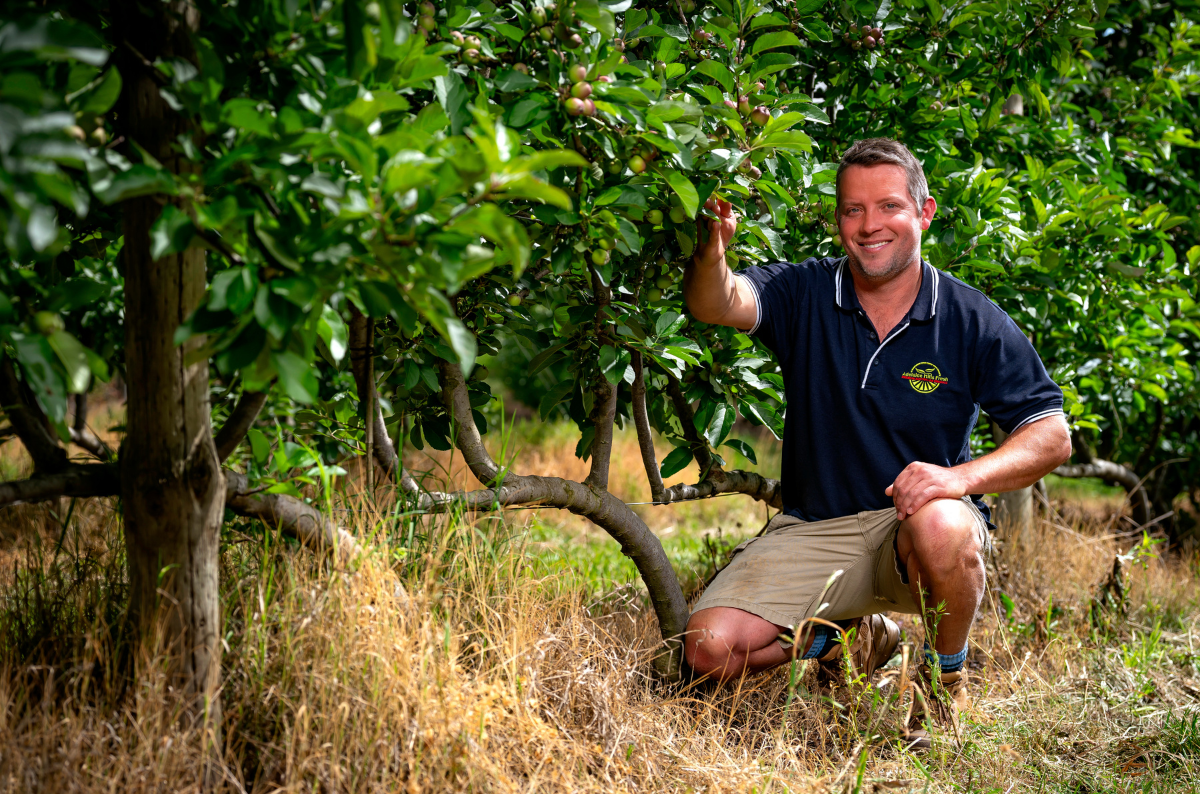
Ben with the Prem A96 (marketed as Rockit®) trees grown on a multi-leader system, planted in 2015. Photo: Darren Clements Photography
Converting to orchards was a relatively easy transition, Ben said, as the vineyard posts were close together, reducing the support needed.
“The vineyard wires were a couple of metres; we put a taller post on the end assembly and an extension on the middle posts,” he said. “They are a little lower than we probably do in the Hills, but because we can get a bit more tonnage a hectare as we can fit more rows in, we don’t need to go as high.”
A year later the opportunity to lock in a reliable supply of recycled water via a take-off contract from the adjacent water treatment plant allowed the development of an additional 6ha of Prem A96 (sold as Rockit®) at the site, on a multi-leader system, with three leaders 40cm apart, at a slightly wider spacing of 1.2 x 3.1m.
The mature orchards are calm, consistent and productive. A standout block of high-coloured Cripps Pink cultivar on M26, grown as a single leader, is yielding 100 tonnes/ha and packing out at 90 per cent Class 1 fruit of 70 (12kg carton) count size.
“I don’t need to do a whole lot; it’s pretty cost-effective,” Ben said.
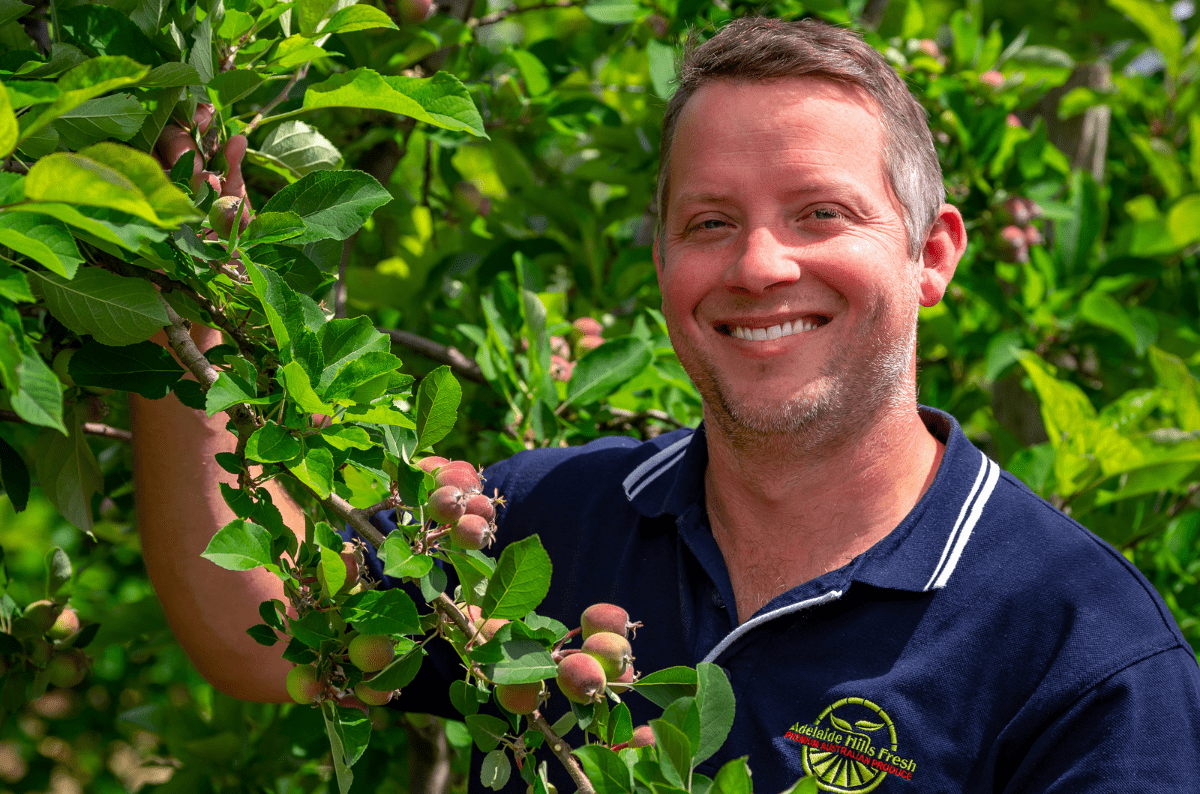
Planted in 2014, this high-coloured Cripps Pink cultivar block, on a single leader system, is producing 100 tonnes/ha and packing out at 90 per cent Class 1 fruit. Photo: Darren Clements Photography
Keeping it simple
It is this system that Ben sees as best delivering the mix of productivity and easy management necessary to meet the business’s goals of cheaper, more labour-efficient production.
“The multi-leader Rockit is good at controlling vigour,” he said. “But we lean towards the more traditional spindle/single leader due to the ease of set up.
“It’s a 2D, but it’s not a true 2D as we let the branches grow into the row, for the yield, just allowing the tree to grow, for the vigour, so it’s easier to manage, but also for ease of set up. Setting up that true 2D system and managing it, that requires a bit more skilled labour.
“The way it is, it’s cheaper, it’s more efficient, you can go through there quicker, it’s easier to manage. We’re pretty simple creatures.”
In keeping with simplicity, Joyson aims for minimal intervention, ‘budget operation’ directing effort where the value is clear.
“We use primary thinners sparingly,” Ben said. “We like to see what we have got before we thin. We will go in with a secondary but only so far as to reduce clusters. If we leave a heavy crop on, we don’t get return bloom. We’re trying to get a happy medium.”
Two passes with a Darwin thinner to tackle a biennial swing in the Rockit, followed by a secondary thinner, produced good results this season, but Ben said heavier use of primary thinners was under consideration.
“We need to get the biennial swing out of it,” he said.
Despite the range of crop size monitoring and counting tech on the market, Ben said crop management decisions at Joyson were still driven by ‘boots on the ground’ and close observation.
“Dad and I are in here every day, walking the blocks and seeing what is going on,” he said. “We might not put numbers on paper, but we are always out there counting buds, looking at bud health and bud numbers.”
All blocks at Gumeracha are netted and drip irrigated.
“We spend a lot on nets,” he said. “We don’t want to grow good fruit and have it damaged.”
Also at Gumeracha, Joyson has Gala and Cornell University-bred NY2 (marketed as Ruby Frost®), as well as nursery trial blocks to test the performance of varieties under consideration. Preparation is underway at nearby Kenton to plant one of these, the Washington State University-bred WA2 (marketed as Sunrise Magic®) – a late season variety, which had its Australian release this season.
Joyson is a partner, with NSW-based N&A and Victorian 9Mile, in Fruit Australia which is the Australian manager and marketer for Sunrise Magic, Ruby Frost and also Cornell University-bred NY1 (marketed as Snapdragon®). They also manage and grow the block-red, crisp, early season ‘solid performer’ MiApple®, producing 1,000 tonnes annually.
“We are quite broad in what we produce – MiApple, Gala and, as most growers do, a lot of [cultivars sold as] Pink Lady which covers the later market,” Ben said. “Grannies have been a bit down, so there has been a bit of a gap in mid to late market fruit, which is where Sunrise Magic will be focused.”
Market insights
Adelaide Hills Fresh, founded in 2017 by Mark Joyce and James Walters, packs and markets the group’s fruit, providing valuable input on current market trends and opportunities.
“If, say, the market is looking for bigger fruit, James will say let’s try and get them a bit bigger,” Ben said. “Everyone is loving punnets at the moment, so we’ll aim for smaller fruit. We don’t want to provide the market with something that can’t sell. So, it’s just a natural conversation that we have with James to try and feed him what he wants.”
Around 250 bins a day can be run across the MAF Roda pre-sizer. The bulk of the fruit packed is Joyson’s own, but the shed also packs for other local growers to keep it at capacity. Most is sold domestically.
Automation
With narrow orchards set up for automation, it is no surprise that Joyson is looking at labour-saving innovation to both cut costs and improve operational efficiency, including retrofitting an automation system to an existing tractor.
“We are looking at an automated tractor, mostly for spraying,” Ben said. “Black spot is the Adelaide Hills’ problem and we spray weekly. In September, between rains, if I run a couple of automated machines, I can get it done in a day. That’s one day, versus 2.5 days with a person, and it narrows the window you need.”
Although they are currently picking with ladders, Ben said they were investing in platforms.
“You are paying people to go up and down ladders,” he said. “The narrow rows help as you don’t have to go up as far, but we want to keep people off ladders.”
With quality a focus and a large crop to harvest, Ben said they relied heavily on Retain® and Harvista® at harvest.
“When I was young, they would have to start when fruit was green in the bin and by time they finished, the last of it would be yellow and greasy. Now the last bin is like the first bin; it has changed the game.”
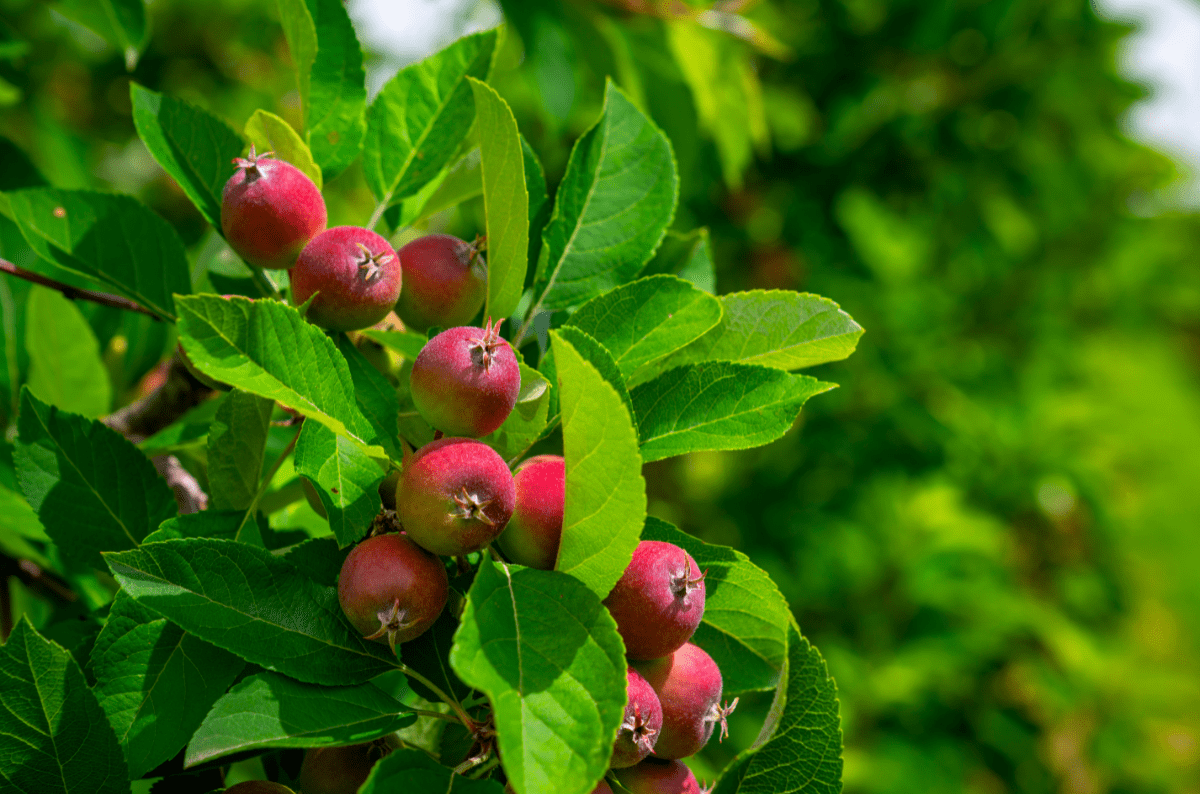
Primary thinners have been used sparingly to date, but increased use is an option being considering to tackle biennial bearing in Prem A96 (Rockit®). Photo: Darren Clements Photography
Efficiency and relevance
Looking forward, Ben said the focus was on finding ways to improve labour efficiency and lifting production of varieties that customers wanted to buy.
“Skilled labour is hard to find, so it is about making our contract labour as efficient as possible, trying to keep them off ladders as much as possible. We do a lot of [labour-intensive] hand thinning at the moment and primary thinning going forward is something we will have to look at more.
“We are planting a fair bit. We would like to underwrite the packing shed with our own production and we can’t be scared to turn over orchards to more relevant varieties.
“We have to continue to stay relevant in the market.”
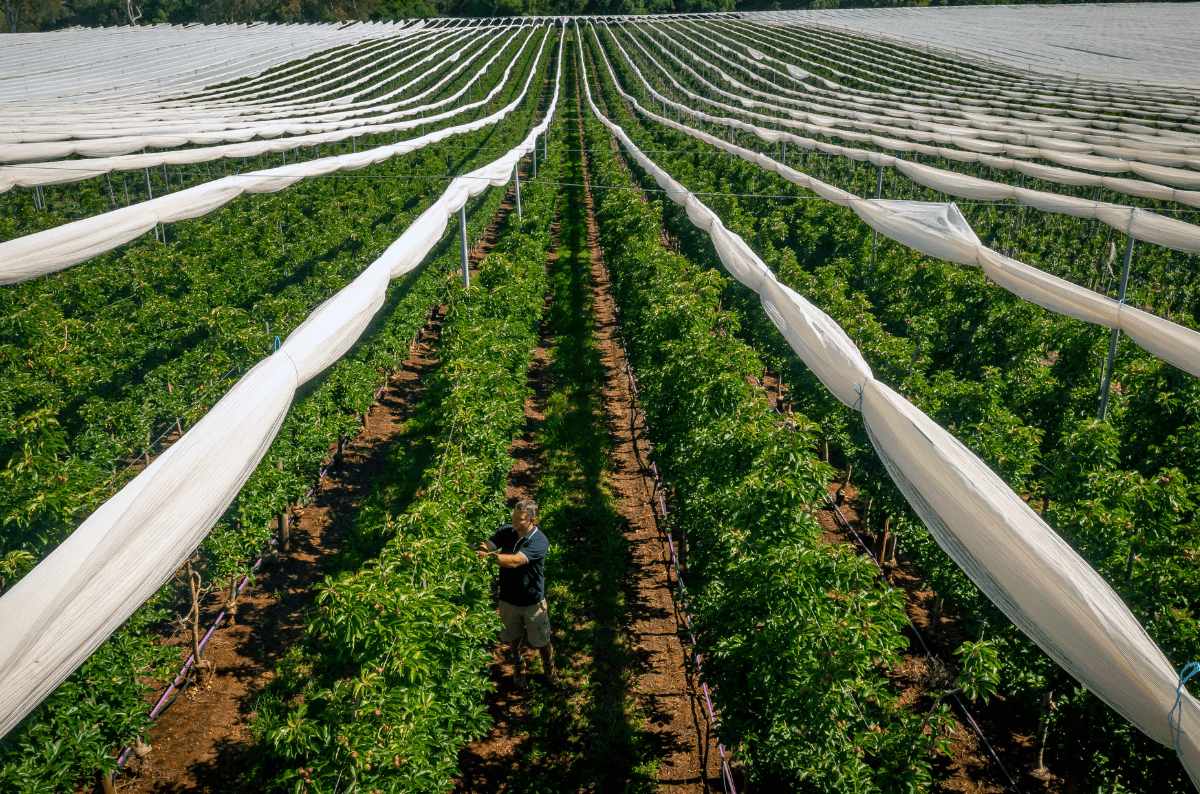
All blocks at Gumeracha are netted. Photo: Darren Clements Photography
Further information
Join the APAL Member Hub and visit the Consumer Insights section within the Data Hub to discover data-driven insights into what consumers want, how they make choices, and what drives their purchasing decisions: apal.org.au/member-hub/
Read “Train your way to a more productive, efficient and easier to manage orchard” to find out how using multi-leader systems can lift orchard productivity and efficiency, while reducing input costs: apal.org.au/train-your-way-to-a-more-productive-efficient-and-easier-to-manage-orchard/
This article was first published in the Summer 2025 edition of AFG.



