
WA Biosecurity Alert – Polyphagous shot-hole borer

(©2021 Pia Scanlon DPIRD)
The Western Australian Department of Primary Industries and Regional Development (DPIRD) is responding to the detection of an exotic beetle, Polyphagous Shot-Hole Borer (Euwallacea fornicatus) in East Fremantle.
This is the first time that Polyphagous Shot-Hole Borer has been detected in Australia. DPIRD is working closely with the local plant industries, councils and the community to conduct surveillance in the East Fremantle and Fremantle areas to determine if the borer has spread.
Polyphagous shot-hole borer bores into living trees which can result in tree death. It is considered both an agricultural and environmental pest.
If the borer spreads beyond urban amenity trees, it could impact the production nursery, fruit, and nut tree industries, as well as the forestry industry.
What is Polyphagous shot-hole borer?
The adult female beetles are 2 mm long and tunnel into the tree’s stems and branches, causing damage and dieback. The beetles spread with the movement of infested trees, firewood and green waste material. After mating, female borers disperse to look for suitable host trees and may fly up to 400 metres.
Biosecurity Requirements
A Quarantine Area Notice is in place for an initial period of 6 months to help contain the spread of the borer in WA. Containerised plants, trees, mulch and wood cannot be removed from the quarantine area. A detailed map of the quarantined area is available at agric.wa.gov.au/borer.
Residents have been advised to check their trees for signs of borer damage and wilting and to not remove wood or green waste material from their property unless it is through an approved council collection.
What to look for
The adult beetles and their larvae can be hard to spot as they spend most of their lives inside a tree.
Symptoms that indicate the borer could be present:
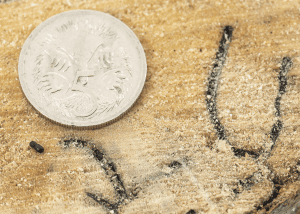
- Multiple entrance holes, up to 2mm diameter or the size of the tip on a ballpoint pen, on the trunk or branches.
- Frass (white) extruding from the tree and crystalline foam which look like sugar volcanoes exuding from the entry holes.
- Thick resin or sap on the tree’s branches or trunk.
- Dark brown to black staining of the wood around entrance holes.
- Wilting and dying branches and eventually tree death. Symptoms usually start in the upper canopy.
The beetles are most likely to be seen in spring and autumn because this is when they move to new trees.
-

- (©2021 Pia Scanlon DPIRD)
Domestic or international trade is currently not impacted by this detection.
Further identification information is available here: https://pestid.com.au/ and on the DPIRD website.
Report and submit samples
While apple and pear are not considered reproductive hosts of the beetle (this means that the beetle doesn’t establish tunnels in the trees, or breed in them) it is important to report any suspected borer damage and wilting in suspected host plants to DPIRD through the MyPestGuide® Reporter app or call the Exotic Plant Pest Hotline on 1800 084 881.
Instructions will be given on how to collect and submit samples for identification. Your cooperation will assist in delimiting the spread of this unwanted new pest.



