
Thin early in biennial-prone varieties to improve return bloom
Understanding the timing of flower initiation is key to timing thinning in biennial bearing-prone varieties to get the best return bloom.
Key points
- Flower formation occurs in previous season during fruitlet growth
- There are four developmental stages in flower formation: induction, initiation, differentiation and anthesis
- Timing of flower induction and initiation differs among varieties
- Varieties that are prone to biennial bearing initiate flower formation earlier (45–75 DAFB) than annual cropping varieties (85–100 DAFB)
- Order of flower formation: spurs à bourse shoots (one-year-old branches)
- Flower induction in apple is not controlled by temperature and day length, therefore induction can occur later in the season if trees are not over-cropped
- Early thinning is, so far, the best strategy to ensure return bloom
- PGR summer sprays only work when crop load is reduced early in the season
Early thinning can help improve return bloom in varieties prone to biennial bearing, but it has to be done before floral buds begin forming.
Presenting at the spring Future Orchards® walks in 2024, Dr Poliana Francescatto, Global Technical Development Manager for plant growth regulators at Valent BioSciences, said as bud formation had been found to occur earlier in biennial varieties than in those that cropped consistently, thinning early in biennial-prone varieties was critical.
“Everybody knows that if you want to get good return bloom you have to thin,” Poliana said. “But for these biennial varieties, you have to thin early.”
Flower development
Prior to joining Valent BioSciences in 2019, Poliana worked as an applied fruit physiologist at Cornell University, New York State, focusing on flower biology, plant growth regulators and crop load management.
Sharing insights from that research, she said the challenge for growers was that as flower development for the next season’s crop occurs over a 12-month period beginning in mid to late spring of the previous year, they had to manage both the current and following year’s crop at the same time.
“In spring during the thinning season, trees are already preparing the flowers and fruit you are going to harvest the following year,” she said. “While growers are taking care of their fruit this year, they are also taking care of the fruit for next year.”
While a range of factors, including variety, rootstock, tree training, irrigation, nutrition and plant hormones, can impact return bloom, Poliana said crop load management has a significant impact in the formation of flower buds.
Breaking the flower development process down, Poliana defined the four key stages as:
- Flower induction (mid/late spring): transition of bud from vegetative to floral. This phase is not visible.
- Flower initiation/formation (summer): visible signs of floral bud forming, doming at apex of bud, first on spur buds, then axillary and terminal buds.
- Flower differentiation (autumn/winter): parts of the flower form (petals, sepals, etc).
- Anthesis (following spring): flowering, followed by fruit set. Ovules and anthers will be formed here.
Knowing the timing of flower induction and initiation of each variety is very important before implementing any strategies to improve return bloom or flower bud quality. Poliana’s initial research focused on identifying the timing of flower initiation and differentiation so growers can effectively time and manage their growing practices.
However, sharing earlier research done into the timing of flower initiation, Poliana said the timing had been found to vary widely across varieties (Figure 1).
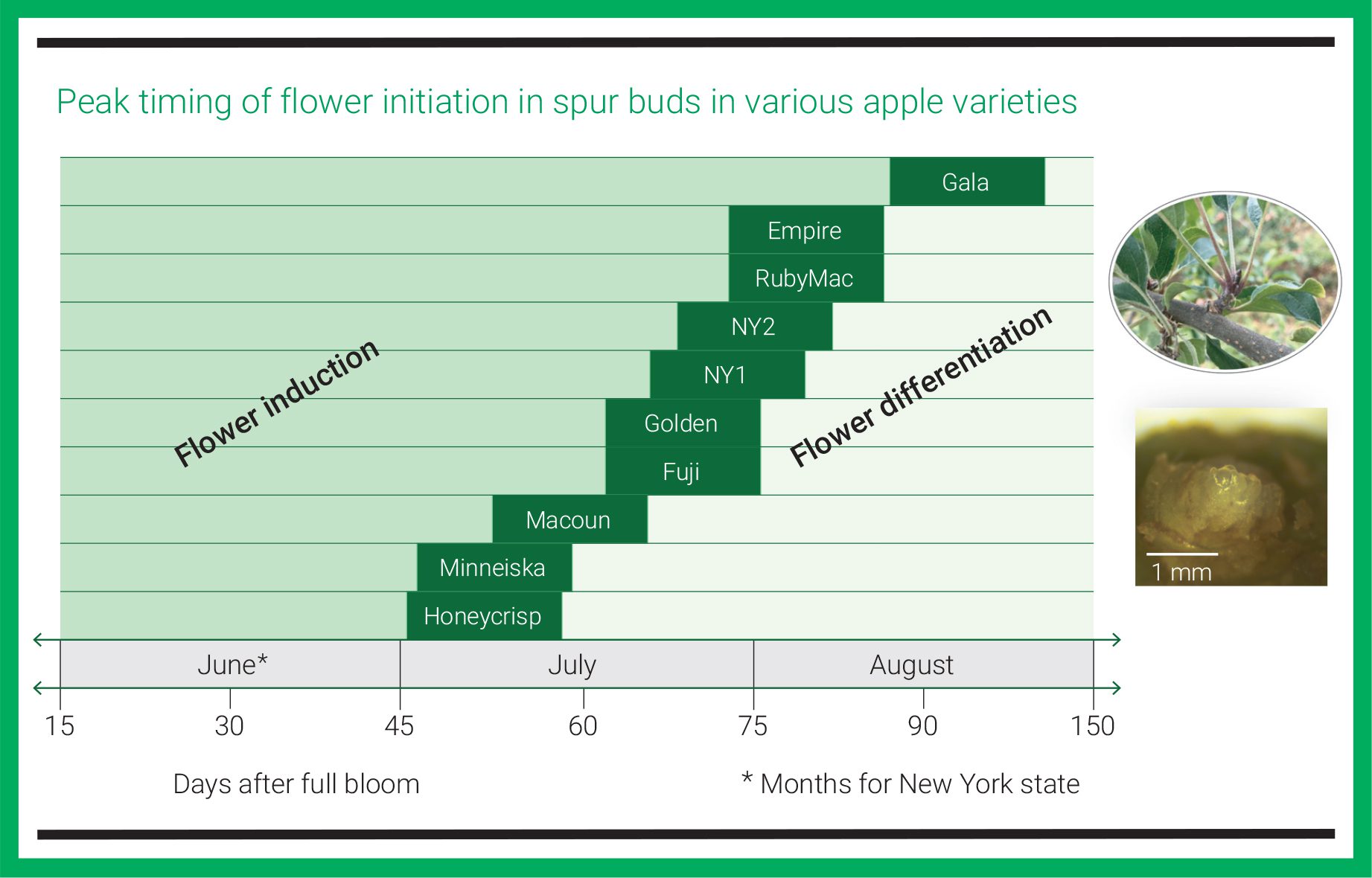
Figure 1: Varieties widely differ in the time of flower initiation, with those prone to biennial bearing initiating flowering earlier than varieties that crop consistently each year. (Note: This is a Northern Hemisphere trial; months shown are summer months. Days after full bloom are applicable to all regions.) Source: P Francescatto, Cornell University
“For instance, in Honeycrisp, more than 50 per cent of the spur flower buds have initiated at around 45–60 days after full bloom (DAFB). We have huge issues with return bloom in that variety,” she said. “Fuji is another variety susceptible to alternate bearing, and most of the flower initiation happened earlier, around 65 DAFB. By contrast, flower initiation in Gala was later, peaking at 85–90 DAFB. We hardly see issues with return bloom in Gala.”
Therefore, her conclusion was that varieties prone to biennial bearing tended to initiate flowering earlier than those that cropped consistently.
Although Poliana did not work on biennial-prone varieties such as Scilate, Nicoter and ANABP 01 (marketed domestically as Jazz™, Kanzi® and Bravo®), she believes that the same finding could be applicable to those varieties.
Considering that flower induction is triggered before flower initiation, it is clear that actions to improve return bloom must be carried out in the induction period before bud set.
Plant hormones or naturally occurring substances have consistently proven to have a close relationship to flower induction. Gibberellins (GAs) and ethylene are well-known plant hormones involved in the flower development process. Ethylene and auxin-induced ethylene synthesis have long been shown to promote flowering in apples. In contrast, gibberellins negatively regulate the flower induction of fruit trees.
“Fruitlets carry seeds, the seeds carry gibberellins and, therefore, that can suppress flower formation and your next season’s crop if you have too much,” Poliana said.
Removing surplus fruit well before the flower initiation stage is very important to limit the impact on return bloom.
“Early thinning is very critical in order to ensure good return bloom. Growers need to remove the excess gibberellins produced by the developing seeds as early as possible,” she said.
For those whose practice is to thin varieties in order of expected harvest timing, this might mean prioritising thinning of biennial varieties ahead of annual cropping varieties.
Asked if the use of gibberellins to manage stem elongation and cracking at flowering risked reducing return bloom in the following crop, Poliana said studies done on the use of GA4+7 for stem elongation had found no impact, as long as the rates are used correctly for both uses. Furthermore, the application of GA4+7 for stem elongation is done at tight cluster to early pink bud – much earlier than the timing of flower induction.
Effect of warmer winters
To gain greater understanding of the impact of milder winters and reduced chill on flower development, Poliana also looked at whether the timing of flower initiation in Fuji was impacted by warmer winters.
Poliana said no difference was observed in the timing of flower initiation between Ohio in the US, where winter temperatures dropped below zero, and two sites in Brazil, where temperatures during the winter fluctuate dramatically, and hardly stay below zero.
“There is no difference between the two countries; initiation happens at the same time, depending on the variety,” she said.
In her case, she looked at the flower development in Fuji, and spur buds started to initiate around 60–65 DAFB in both countries (Figure 2). But she said there was a marked difference between the countries in the time taken for the bud to form, with the buds forming much faster in Brazil, which can have implications for bud quality.
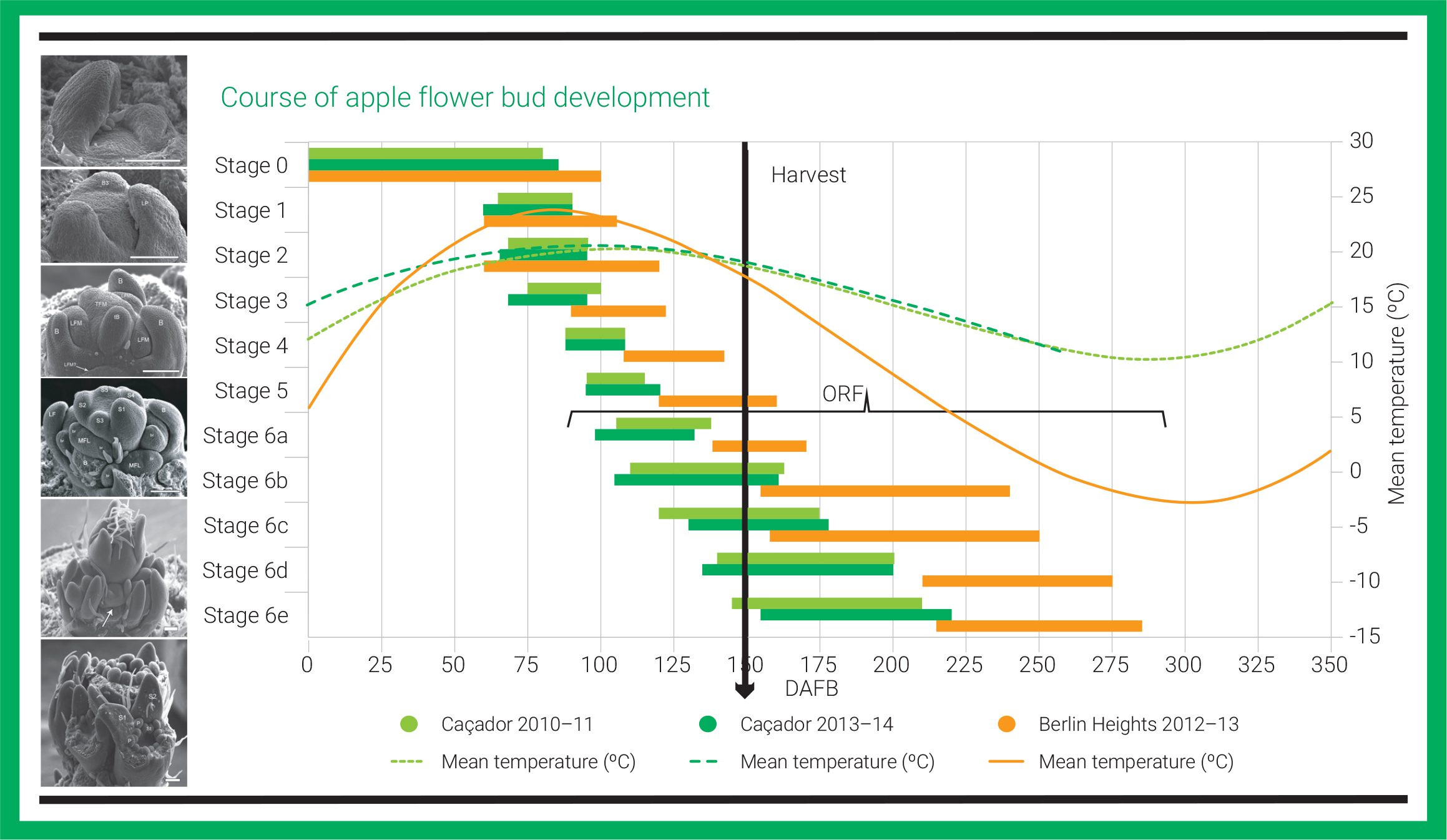
Figure 2: Course of Fuji apple flower bud development in Ohio State US and Brazil. Source: P Francescatto (2018), thesis
“It is really warm in Brazil and probably the temperature has an effect, not on the initiation but on the differentiation process,” she said. “Flower buds form (into full cluster) much faster, just before trees go into dormancy. Brazil has long seasons and warm autumns/winters, so this earliness, combined with the climate conditions, has a huge impact on the next year’s fruit quality.”
She believes that as the flower bud is ready and the trees are still actively growing due to the lack of cold temperatures (instead of slowing down), trees end up wasting energy and using stored carbohydrates, therefore affecting flower bud quality.
“That’s why, when we compare the size of a flower in Brazil with one in the US, it’s way smaller.”
Interestingly, pears differentiate faster than apples, regardless of region. With the cluster fully formed by harvest of the previous crop, and using a low chill requirement variety in warmer parts of Brazil, growers can harvest two pear crops a year.
Timing of thinning
In order to demonstrate the effect of early thinning on return bloom and fruit size, Poliana showed the results of trials in Honeycrisp and Fuji comparing the outcome of hand thinning flowers back to the king bloom against waiting until fruitlets reached 10–12mm and then thinning clusters back to one fruitlet while maintaining the same crop load. Thinning at bloom, leaving one flower per cluster (king flower), significantly increased return bloom and fruit size, proving that early thinning is certainly the most successful approach to overcoming biennial bearing issues and producing regular crops for these varieties (Figure 3).
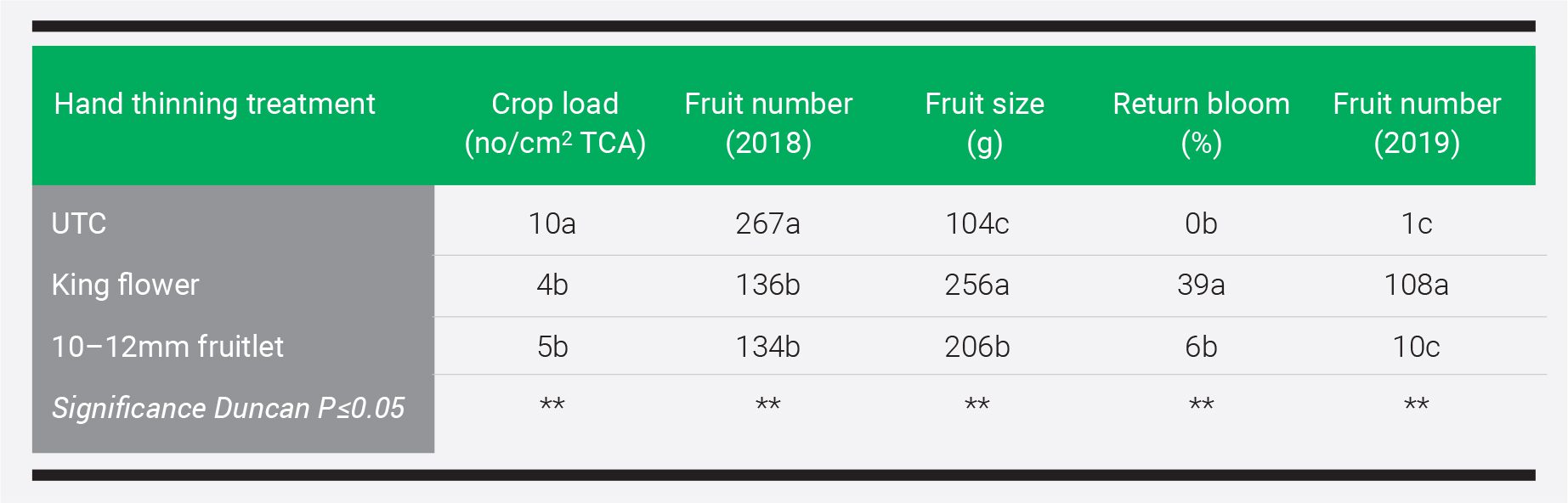
Figure 3: Hand thinning timing and return bloom in Honeycrisp. Source: P Francescatto (2018), Cornell University
Poliana said while there was no ‘silver bullet’ chemical thinner to get the blossom numbers down perfectly at flowering, it is very important to be aggressive early with biennial bearing varieties in ‘on’ years.
“If you do your blossom thinning right, you get better return bloom,” she said.
Role of PGRs
Poliana joined Valent BioSciences – a subsidiary of Tokyo-based Sumitomo Chemical – in 2019, bringing her vast experience of PGRs, flower biology and crop load management to the role of Global Technical Development Manager for plant growth regulators.
Highlighting the complexity of using PGRs, ahead of the field discussions at the orchard walk, Poliana said there was a PGR for every growing season (Figure 4), with the impact influenced by a wide range of variables, including variety, temperature and when in the season they are applied.
Commonly used PGRs include:
- gibberellins, auxins, cytokinins: often responsible for growth induction
- ethylene, abscisic acid: often related to growth control, maturation, senescence.
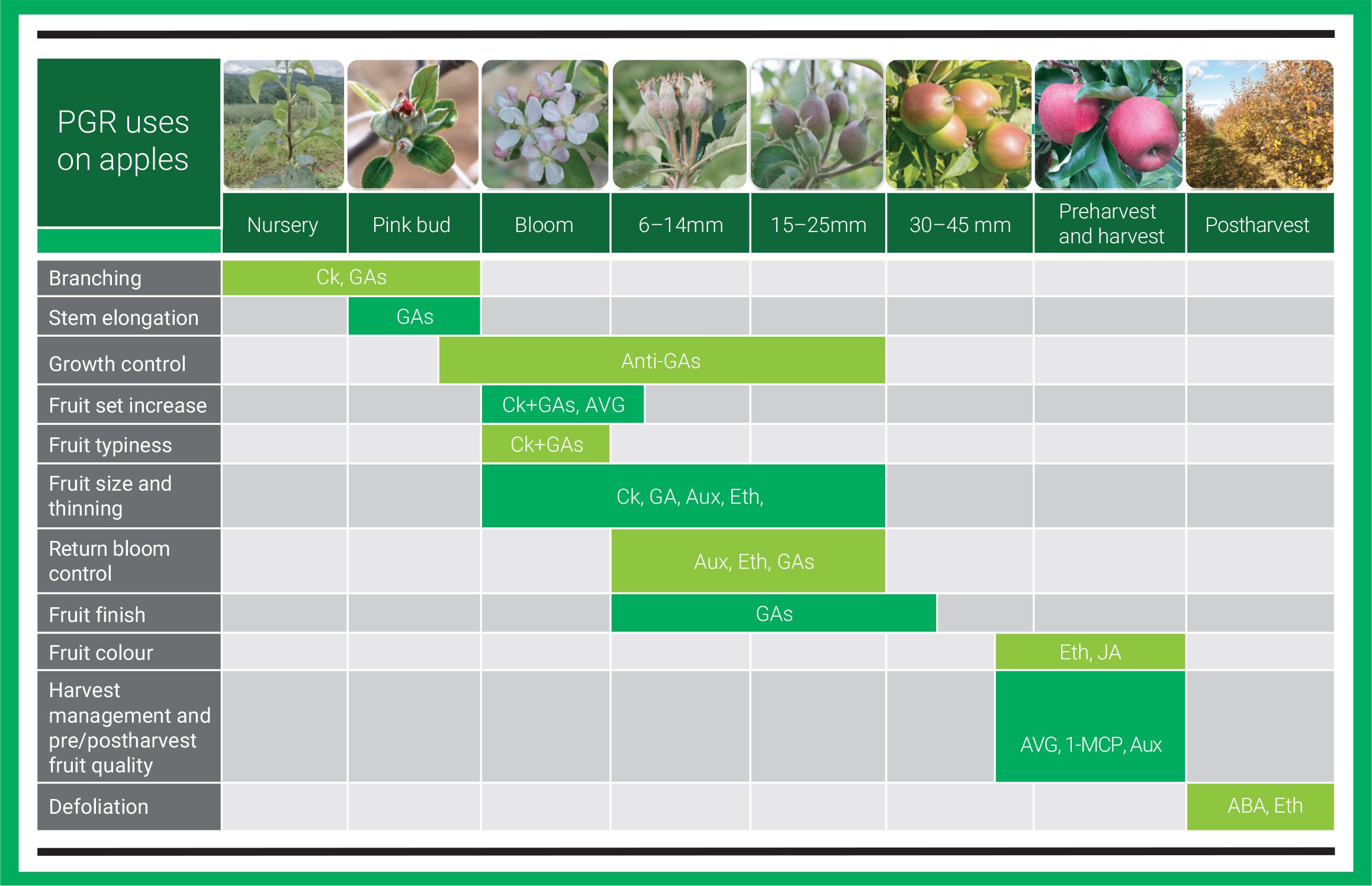
Figure 4: PGR uses at different stages of apple growth. Source: P Francescatto
Summer sprays
Although the use of summer sprays of ethylene inducers such as ethephon and naphthalene acetic acid (NAA) to promote return bloom is widespread, Poliana said results in biennial-prone varieties were inconsistent and not always satisfactory.
The results clearly showed the importance of knowing and understanding flower initiation, she said. Taking into account that timing of flower induction varies among cultivars, the applications of summer sprays were, in fact, too late.
“I’ve done maybe 10 years of trials of summer sprays, working a lot with Fuji, and the return bloom was never consistent. We’re not doing it right. Initiation is way earlier in those varieties that tend to be biennial and we should be spraying earlier than summer.
“Before spending money on summer sprays, make sure to prioritise early thinning. None of the PGR programs will work on heavily loaded trees, so appropriate thinning in combination with PGR sprays makes more sense.”
Poliana is currently investigating the use of ethylene inducers during the thinning window, either as a thinner or as a supplement to promote flower formation. In a work collaboration with Cornell University, studies comparing early (starting at 16mm size) and later (starting five weeks after full bloom) sprays of ethephon, NAA and ethylene precursor ACC (sold as Accede®) applied weekly for four weeks on Honeycrisp found that early sprays resulted in better return bloom, with ethephon and ACC outperforming NAA.
While there are clearly some benefits of summer PGR sprays, earlier thinning in varieties prone to biennial bearing is still the preferred option. Earlier and more aggressive establishment of final crop loads continually demonstrate strong benefits for regular annual bearing and should be a key focus when making pruning and thinning plans for each block.
More information
Watch: Apple flower bud development, return bloom and the use of PGRs
“Apple flower bud development and return bloom”, presentation by Dr Poliana Francescatto, 2024 spring orchard walks, https://apal.org.au/wp-content/uploads/2025/01/2024-Nov-FO_Poliana-F_Flower-Development.pdf
“Targeting perfect chemical thinning in spring” presentation by AgFirst, 2021 spring orchard walks, https://apal.org.au/wp-content/uploads/2021/09/FO-Chemical-thinning-Aug-2021.pdf
This article was first published in the Winter 2025 edition of AFG.



