
Smarter orchard renovation: boosting returns with multi-leader training systems
A variety of planar canopy structures are being trialled and evaluated in Tasmania under an orchard renovation scenario.
Conventional apple orchard systems in Australia are becoming less efficient due to high labour costs, ageing trees and changing market demands. Multi-leader training systems can offer a smarter renovation strategy by improving light interception, fruit quality and labour efficiency. These systems create planar canopies that support mechanisation and consistent yields.
Trials at Hansen Orchards in Tasmania are evaluating various multi-leader configurations using Rockit™ and Cripps Pink cultivars. The PIPS 4 Profit Optimising apple production systems project is undertaking research to enhance productivity within existing orchards and support gradual transition to advanced 2D fruiting wall systems.
Conventional orchards in Australia often use central leader or open vase systems, which are three-dimensional (3D) and require significant labour for pruning, thinning and harvesting. While these systems have served growers well for decades, nowadays they are increasingly seen as inefficient in terms of light interception, labour use and yield consistency.
Labour remains one of the highest cost variables in apple production, exacerbated by seasonal shortages and rising wages. Simultaneously, consumer expectations for high-quality, visually appealing fruit have intensified both in domestic and export markets, pushing growers to adopt systems that support better fruit colour, size and uniformity. This increases the need for improved orchard performance.
Meanwhile, existing orchards are ageing, with declining productivity and increasing maintenance costs. Tree vigour is often difficult to manage, leading to inconsistent yield and fruit quality. These issues, combined with shifting consumer preferences and market dynamics, have prompted growers to seek replacements with new cultivars that offer higher productivity, stronger market demand and greater potential to improve profitability. Moreover, traditional systems are not well-suited for mechanisation and automation, limiting opportunities for cost saving and efficiency improvements.
These challenges create a compelling case for orchard renovation. Growers are now seeking smarter, more scalable solutions that align with modern horticultural practices and market expectations.

Figure 1: The Guyot multi-leader training system has been adopted at Jassi and Hardeep Bhangu’s orchard in Victoria’s Goulburn Valley.
Over the past two decades, apple-growing regions around the world have witnessed a significant transformation in orchard design. Traditional 3D tree structures are increasingly being replaced by narrow and ultra-narrow 2D fruiting wall systems. Studies have shown that these systems allow for better utilisation of light (Figure 2), land resources and labour (Figure 3), uniformity, and compatibility with modern pruning and harvest technologies.
Benefits of narrow 2D systems:
- Improved light distribution: Planar canopies allow for more uniform light interception, which enhances fruit colour, size and quality.
- Labour efficiency: Narrow systems simplify pruning, thinning and harvesting, making them more suitable for mechanisation and robotics.
- Precision management: 2D planar canopies facilitate better spray coverage, irrigation control and pest management, contributing to more sustainable production.
- Yield consistency: Uniform tree architecture leads to more predictable yields and easier crop load management.

Figure 2: Multi-leader training systems increase light interception, resulting in better yield. Source: Tustin et al (2022) “Light utilisation, leaf canopy properties and fruiting responses of narrow-row, planar cordon apple orchard planting systems – A study of the productivity of apple”, Scientia Horticulturae, Vol. 294, https://doi.org/10.1016/j.scienta.2021.110778
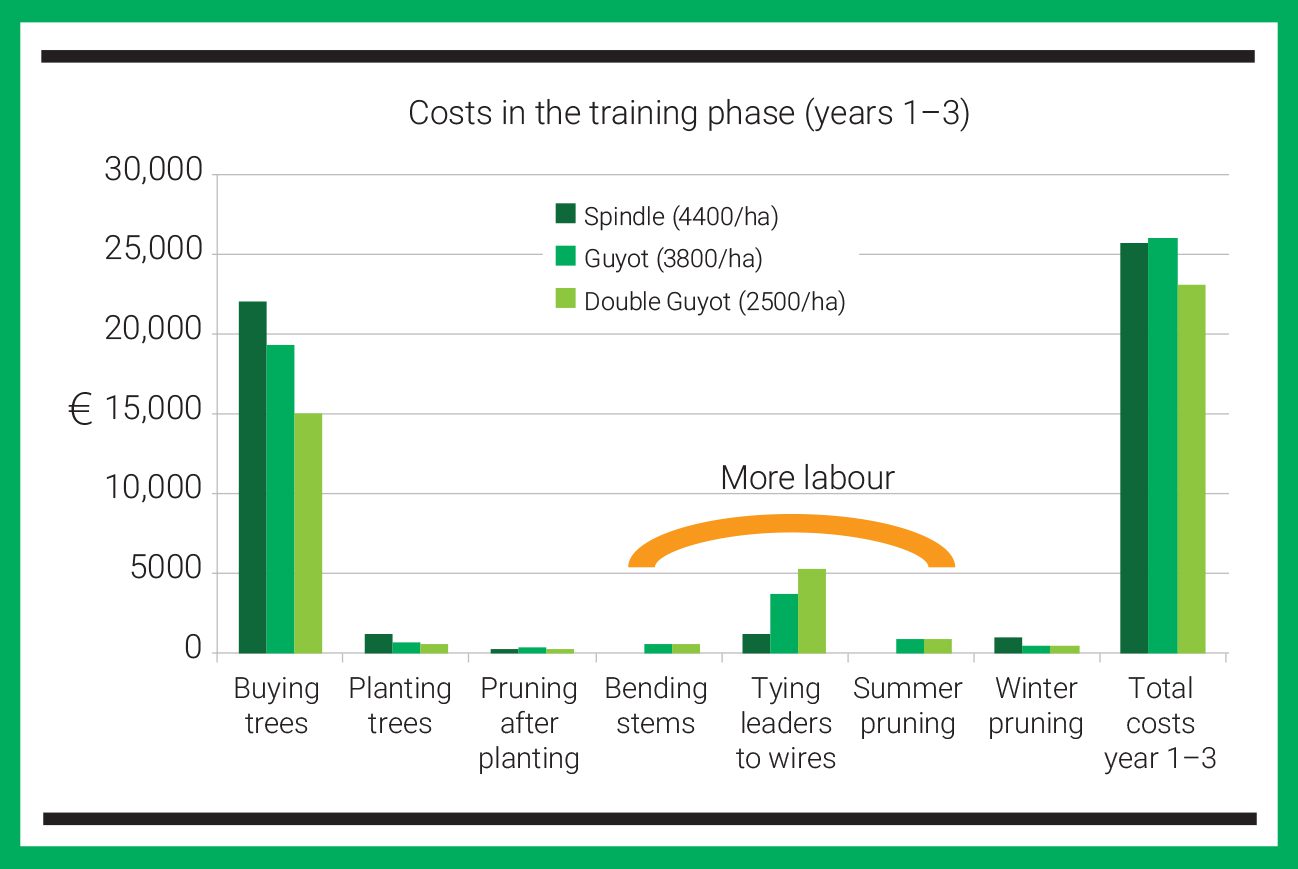
Figure 3: Multi-leader systems help save labour costs in the long term. Source: A Dorigoni (2022) “Multi-leader training for apple and fruit production”, www.fgv.com.au/attachments/article/1434/Albert_Dorigoni_Multi-leader_Traning_for_Apple.pdf
Despite their advantages, transitioning to 2D systems requires significant initial investment and technical expertise. Therefore, for many growers, a gradual transition, starting with orchard renovation strategies using multi-leader systems, offers a safer and more cost-effective pathway.
Multi-leader systems involve training a single tree to produce multiple upright leaders, each functioning as a semi-independent fruiting unit. These leaders are spaced to create a more planar canopy, improving light distribution and simplifying orchard operations. For existing orchards undergoing renovation, multi-leader systems offer several advantages:
- Reduced tree density requirements: By increasing the number of leaders per tree, growers can maintain or even increase linear fruiting meterage without planting more trees.
- Lower establishment costs: Renovating existing trees into multi-leader training systems can be more cost-effective than replanting from scratch.
- Improved canopy uniformity: Multi-leader trees can be trained to form planar, more consistent canopies, enhancing fruit quality and simplifying management.
- Flexibility for future conversion: These systems can serve as a transition on a block-by-block basis toward fully adopting 2D fruiting wall systems, allowing growers to gradually adapt to modernised pruning, training and management practices.
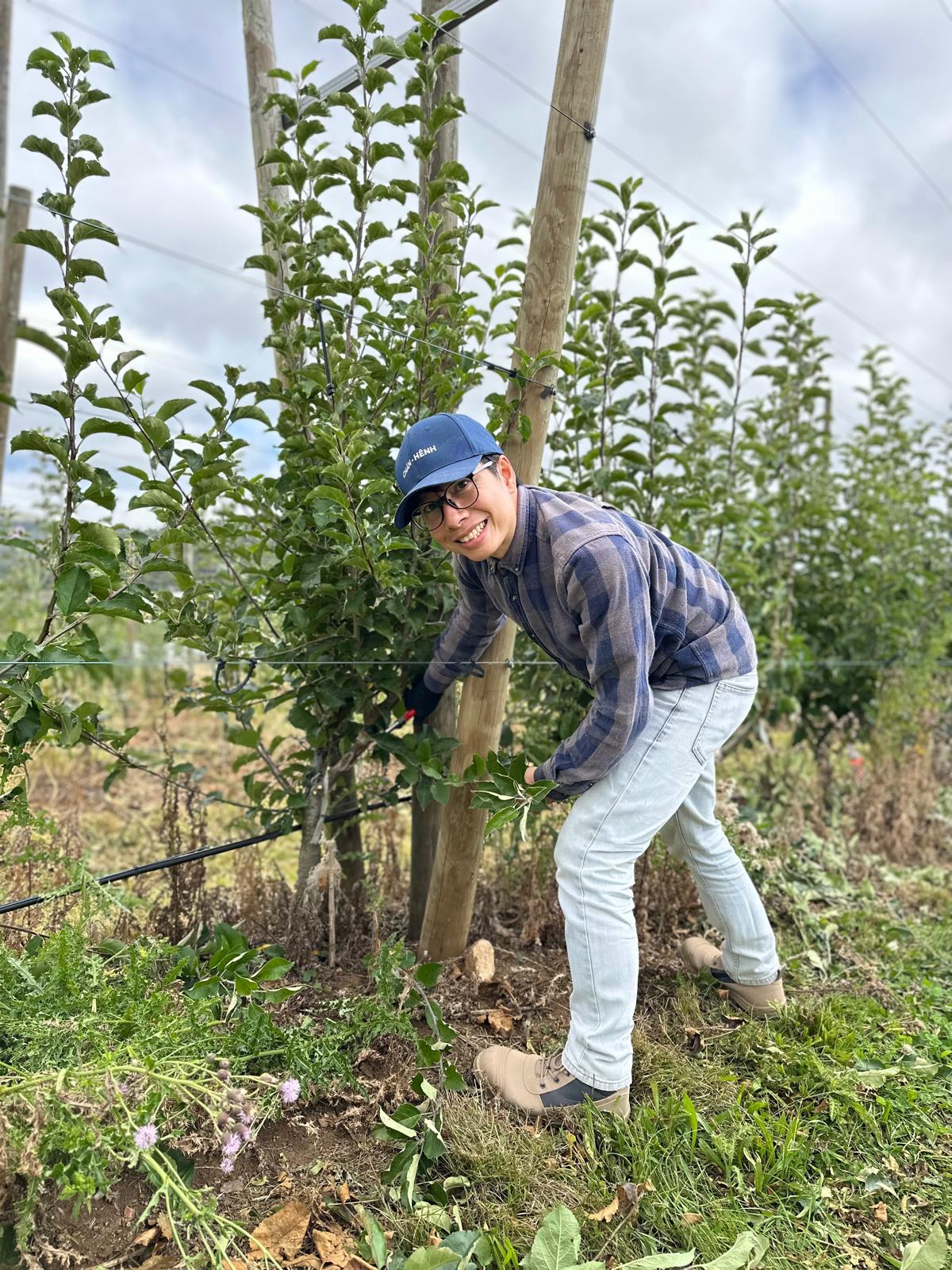
Figure 4: Hieu setting up trials at Hansen Orchards, Huon Valley, Tasmania.
The AP22004 project team at the Tasmanian Institute of Agriculture has been evaluating the performance of various planar canopy structures under an orchard renovation scenario. These structures include V systems with 2, 3 and 4 pairs of leaders (Figure 5), and quadruple cordon systems with 2, 3 and 4 vertical shoots per cordon (Figure 6).
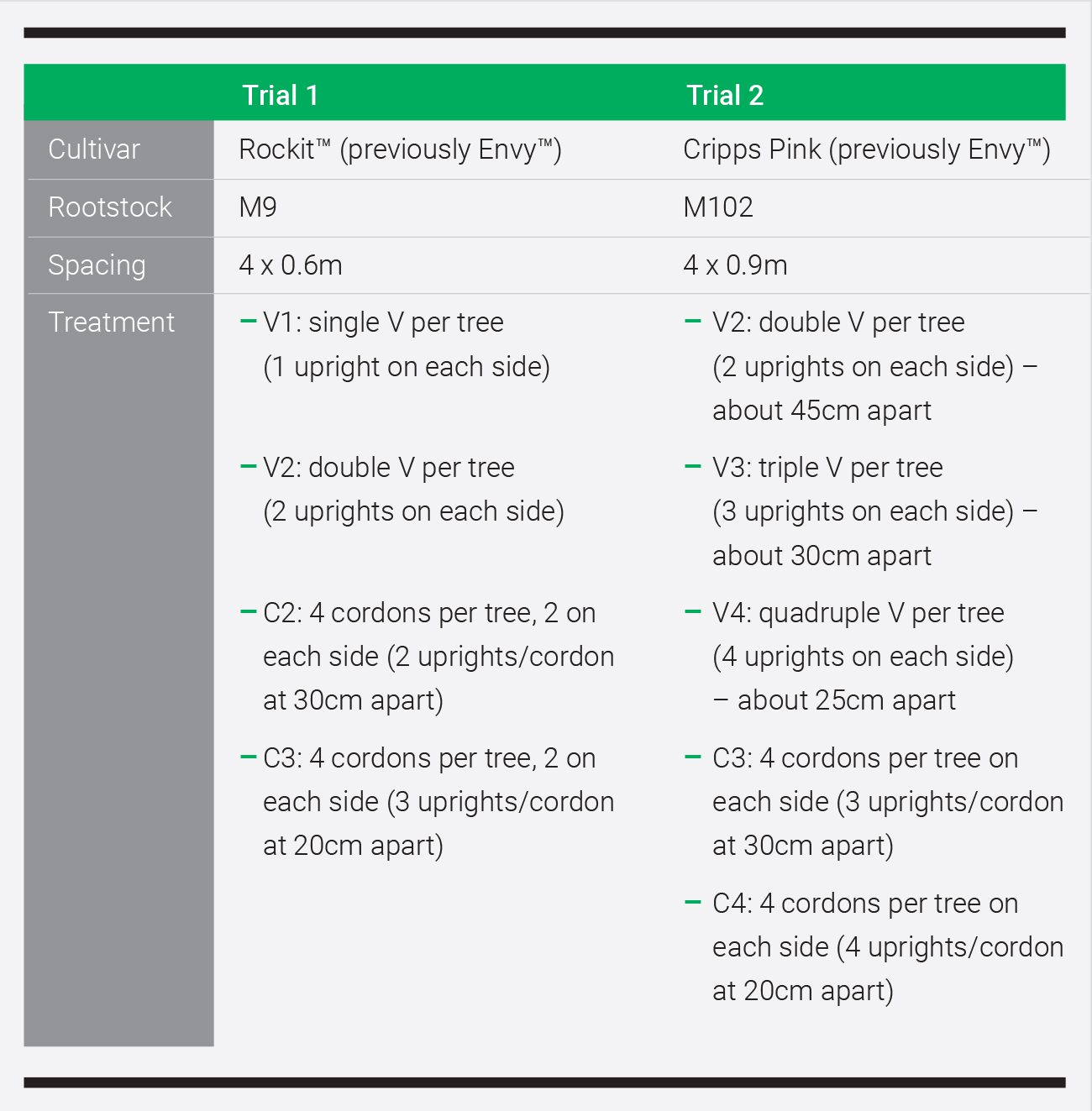
Table 1: Details of the trials in progress at Hansen Orchards, Huon Valley, Tasmania.
The trials are being conducted by PhD student Trong Hieu Do and Research Fellow Ramandeep Singh Sidhu at Hansen Orchards in the Huon Valley, Tasmania. The trials will focus on studying the impacts of the multi-leader training systems on key orchard performance indicators, such as light interception, fruit yield and quality, labour requirements, and overall economic benefits and profitability. These data will answer the project’s research questions:
- How does improved light utilisation in multi-leader systems influence return bloom, flower cluster distribution and fruit set?
- Do multi-leader systems support more uniform fruit development by reducing competition among fruits?
- Does partitioning vegetative growth across multiple axes in these systems reduce overall tree vigour and promote more balanced carbohydrate allocation toward reproductive growth?
- How do these systems require labour investment?
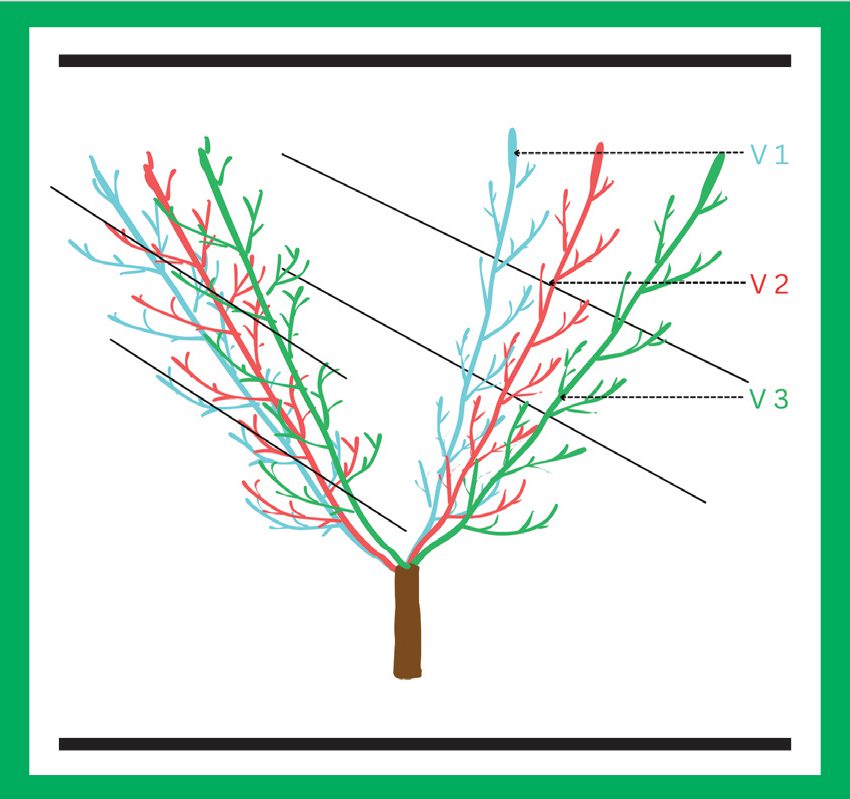
Figure 5: V-system with different pairs of leaders.
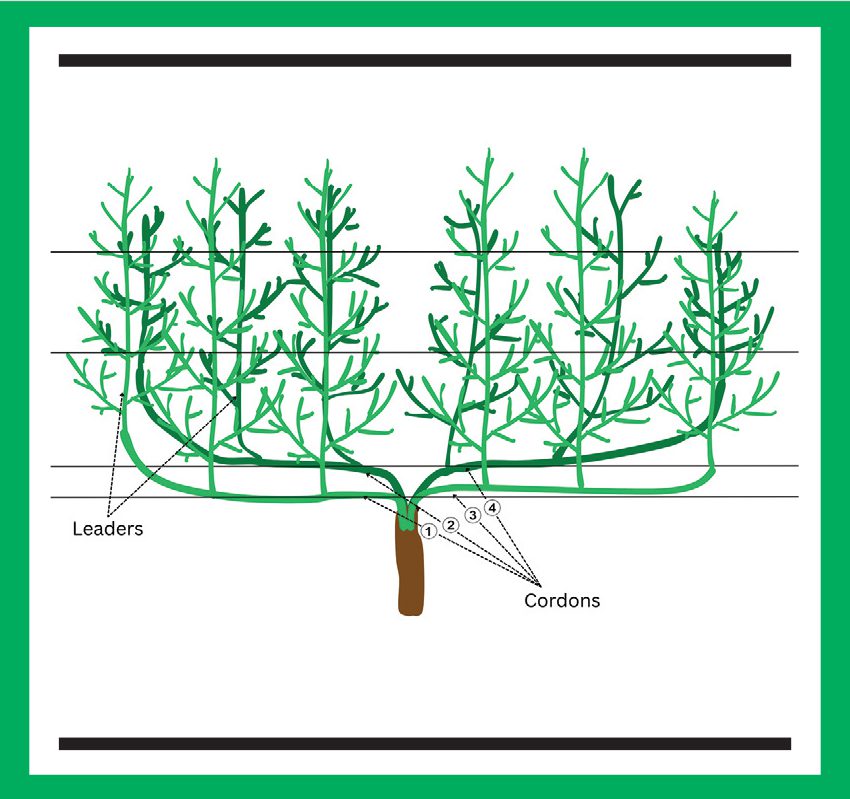
Figure 6: Quadruple cordon system with vertical shoots.
Importantly, the study emphasises renovation strategies over new plantings, aiming to enhance productivity and profitability within existing orchard frameworks. The findings are expected to provide practical insights that support the transition toward more advanced systems such as the fruiting wall, which is increasingly believed to be a transformative approach in modern apple orchard design worldwide.
Further reading
Robinson T (2008) “The evolution towards more competitive apple orchard systems in the USA”, Acta Horticulturae, 772:491–500, https://doi.org/10.17660/ActaHortic.2008.772.81
Evans K (ed) (2017) Achieving sustainable cultivation of apples (Vol. 18), Burleigh Dodds Science Publishing, www.google.com.au/books/edition/Achieving_sustainable_cultivation_of_app/xCQzEQAAQBAJ?hl=en&gbpv=0
Brown G (2024) “How many leaders are ideal in an apple orchard?”, AFG Winter 2024, apal.org.au/how-many-leaders-are-ideal-in-an-apple-orchard
Dorigoni A and Micheli F (2018) “Guyot training: A new system for producing apples and pears”, European Fruit Magazine, 2:18–23, www.researchgate.net/publication/338595250_Guyot_training_a_new_system_for_producing_apples_and_pears
Tustin D, Van Hooijdonk B and Breen K (August 2016) “The Planar Cordon – new planting systems concepts to improve light utilisation and physiological function to increase apple orchard yield potential”, Acta Horticulturae, 1228:1–12, https://doi.org/10.17660/ActaHortic.2018.1228.1
Scalisi A, O’Connell M, Stefanelli D, Zhou S, Pitt T, Graetz D and Goodwin I (2024) “Narrow orchard systems for pome and stone fruit – A review”, Scientia Horticulturae, 338:113815, https://doi.org/10.1016/j.scienta.2024.113815
Acknowledgment
 The PIPS 4 Profit Optimising apple production systems (AP22004) project is funded by Hort Innovation, using the Hort Innovation apple and pear research and development levy, contributions from the Australian Government and co-investment from the Tasmanian Institute of Agriculture, Agriculture Victoria, WA Department of Primary Industries and Regional Development, NSW Department of Primary Industries and Regional Development, Fruit Producers SA and APAL. Hort Innovation is the grower-owned, not-for-profit research and development corporation for Australian horticulture.

This article was first published in the Summer 2025 edition of AFG.



