Promising early results in Medfly biological control trial in Western Australia
Researchers from Pomewest and Agriculture Victoria are partnering to investigate the feasibility of classical biocontrol for Ceratitis capitata, commonly called Mediterranean fruit fly or Medfly.
Can the native parasitoid Diachasmimorpha kraussii (D. kraussii) help Western Australian growers suppress Medfly populations? Research being undertaken through the PIPS 4 Profit Pest and disease management (AP22001) project is showing promising early results that indicate this native parasitoid could become an important biological control agent for Medfly in Western Australia’s apple and pear growing regions.
Pre-release monitoring
An essential step in assessing biological control impact is to measure pest populations before a biocontrol agent is released into a trial area. Pre-release monitoring also helps to pinpoint the best timing for biocontrol agent introduction by identifying vulnerable life stages of the pest and when it is most abundant.
Initial monitoring of Medfly was undertaken from October 2024 to May 2025 across multiple locations using pheromone traps (see results in Figure 1). An orchard close to the Donnybrook townsite was selected for the biocontrol agent release against Medfly, indicated as Orchard 2 in Figure 1.
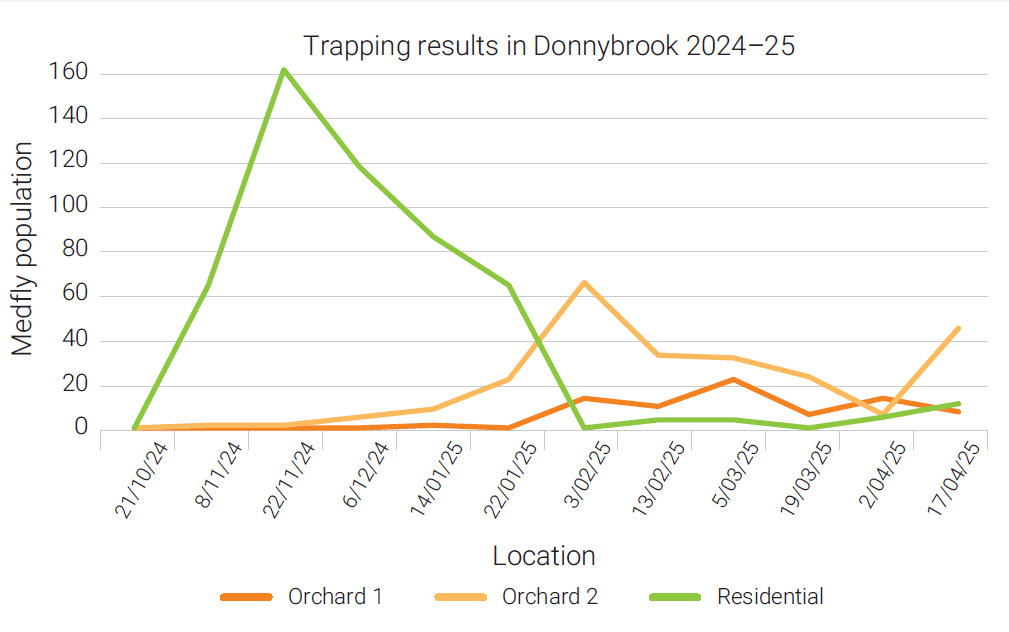
Figure 1: Ceratitis capitata (Medfly) trapping results in the Donnybrook region of Western Australia, 2024–25.
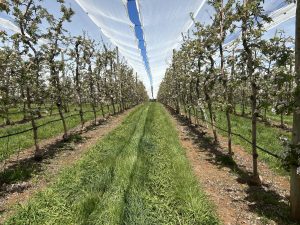
The chosen release site is 2km from the centre of Donnybrook and close to many household orchards. The nearby Preston River provides opportunities for both pests and parasitoids to shelter and forage nectar in unmanaged habitat and escaped fruit trees. These factors raise pest pressure on the orchard but also make it a suitable biocontrol release site as D. kraussii has opportunities to shelter and overwinter.
Trapping results showed a spike in pest population in November in the residential site (Figure 1), while commercial orchards did not see pest emergence until December and a peak of Medfly numbers in mid to late January (Orchards 1 and 2, Figure 1). As only one release of D. kraussii would be possible in 2026, this January ‘spike’ in Medfly activity was judged to be the best time to release the parasitoid.
D. kraussii target 2nd and 3rd instar larvae, therefore adult wasps are more likely to establish when released alongside an expected spike in adult Medfly numbers. This maximises the opportunities for D. kraussii attack on Medfly larvae. It is important to note this strategy is for establishing a population; if the goal was to keep Medfly numbers below a threshold as part of an orchard IPDM program, releasing D. kraussii in stages (as Medfly pest numbers increase) would be more effective.
Navigating the Western Australian border
Found in northern WA and in Perth, D. kraussii is considered native to WA. However, to assess D. kraussii in a field trial, it is necessary to rear the biocontrol agent in a laboratory culture so that parasitoids are available in sufficient numbers, and at the right life stage, when required.
This is where the strong research networks in the PIPS 4 Profit program proved their worth. As part of a related program of research, Agriculture Victoria has been developing methods to mass rear D. kraussii at its Tatura SmartFarm and AgriBio laboratories. Victorian researchers were therefore able to provide adult D. kraussii for the Western Australian trial.
As a native species, D. kraussii is permitted to be brought into WA and is listed on the WA organism list under S.11 as not requiring a permit for import. Nevertheless, it was critically important that rigorous processes be followed when transferring the D. kraussii parasitoids to WA.
Diachasmimorpha kraussii require fruit fly larvae to lay their eggs into and in Victoria are reared on Queensland fruit fly (Bactrocera tryoni, Qfly). When the adult wasps emerge, they are separated from any Qfly hosts so the adults can mate and continue the cycle again.
Transporting Qfly larvae into WA is forbidden and so, to eliminate any risk of contamination, D. kraussii could only be transported into WA as fully emerged and isolated individual adults. This process involved close coordination with Quarantine WA, which required details on the laboratory culture and preparations, the transfer date, destination airport and carrier of the insects as well as images of the container before and after the insects were packaged.
A declaration that nothing else was in the packaging but a wet plastic sponge was also required, as honey is explicitly prohibited from crossing the WA border.
After providing these details, the consignment was cleared by quarantine on 13 January 2026. The wasp is most effective at targeting fruit fly larvae several days after emerging, so the window for release was very narrow.
The isolated adult parasitoids were therefore couriered to Busselton by air on 14 January. On arrival at Busselton Airport the parasitoids were immediately transferred into a 60cm insect cage and fed with water and WA-sourced honey streaked outside the cage. The wasps were then taken to the Donnybrook orchard 45 minutes away.
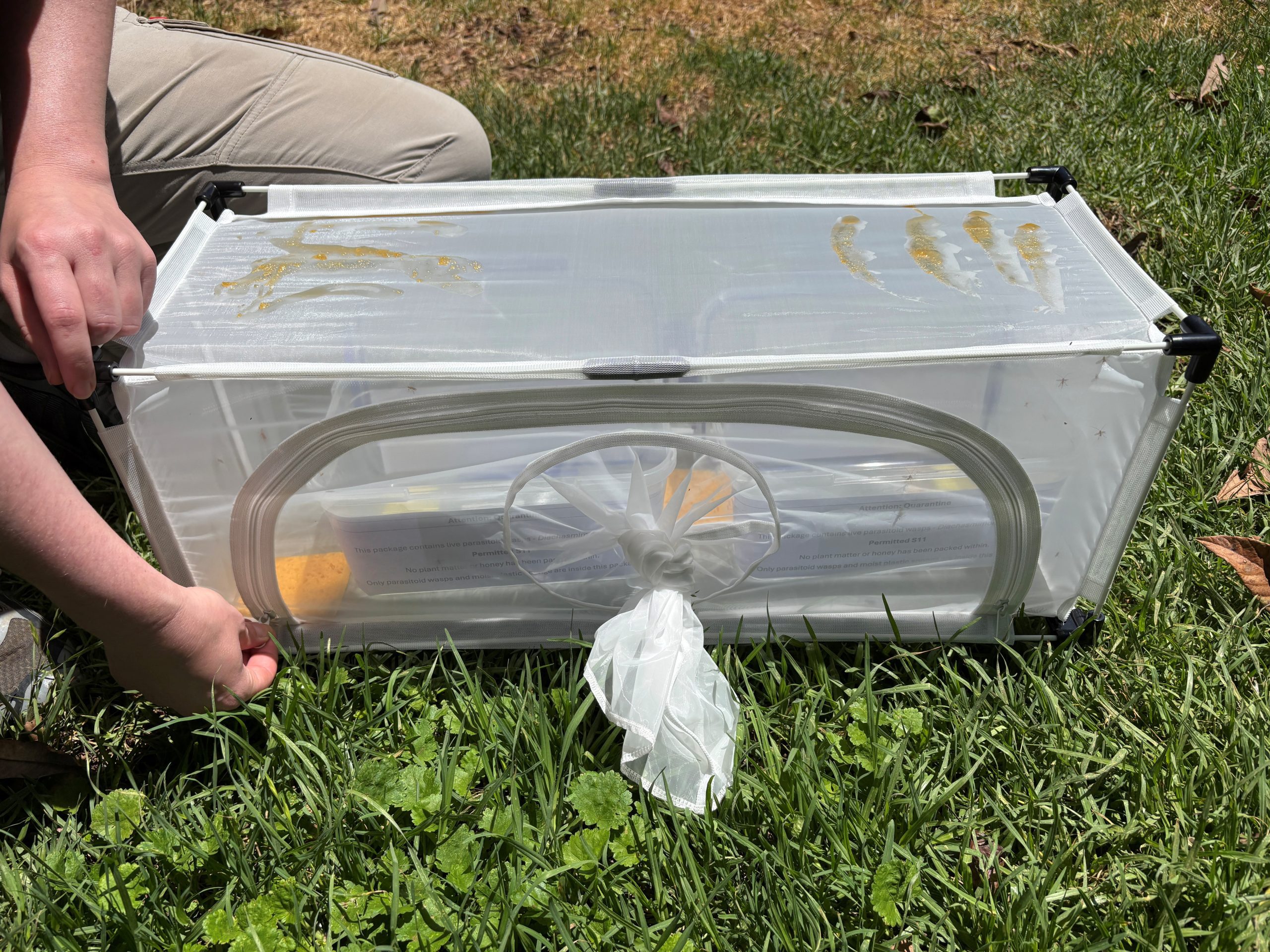
Photo: Diachasmimorpha kraussii in a BugDorm cage after being fed with honey.
Biocontrol agent release
January 2026 saw the same trend as January 2025, with Medfly numbers steadily increasing in the selected orchard from the start of the month. Numerous fruit fly stings could be seen on an early pear variety the day before the planned release.
The life cycle of D. kraussii is closely linked to temperature, with extreme temperatures unsuitable conditions for a release. Temperature data for Donnybrook in the days after the release are shown in Figure 2.

Figure 2: Mean and maximum temperatures in Donnybrook, Western Australia, since release. The green arrow indicates day of release.
With average temperatures between 25°C and 30°C, the life cycle of Medfly and D. kraussii is 27 to 30 days. Both males and females had been reared in the laboratory under good conditions, with a female-biased sex skew.
With no fatalities during transport, approximately 250 live specimens were released at 11am in Donnybrook on 14 January 2026 at a temperature of 28°C. The parasitoids were seen immediately investigating pears with fruit fly stings. These were encouraging signs that Medfly larvae would be targeted.
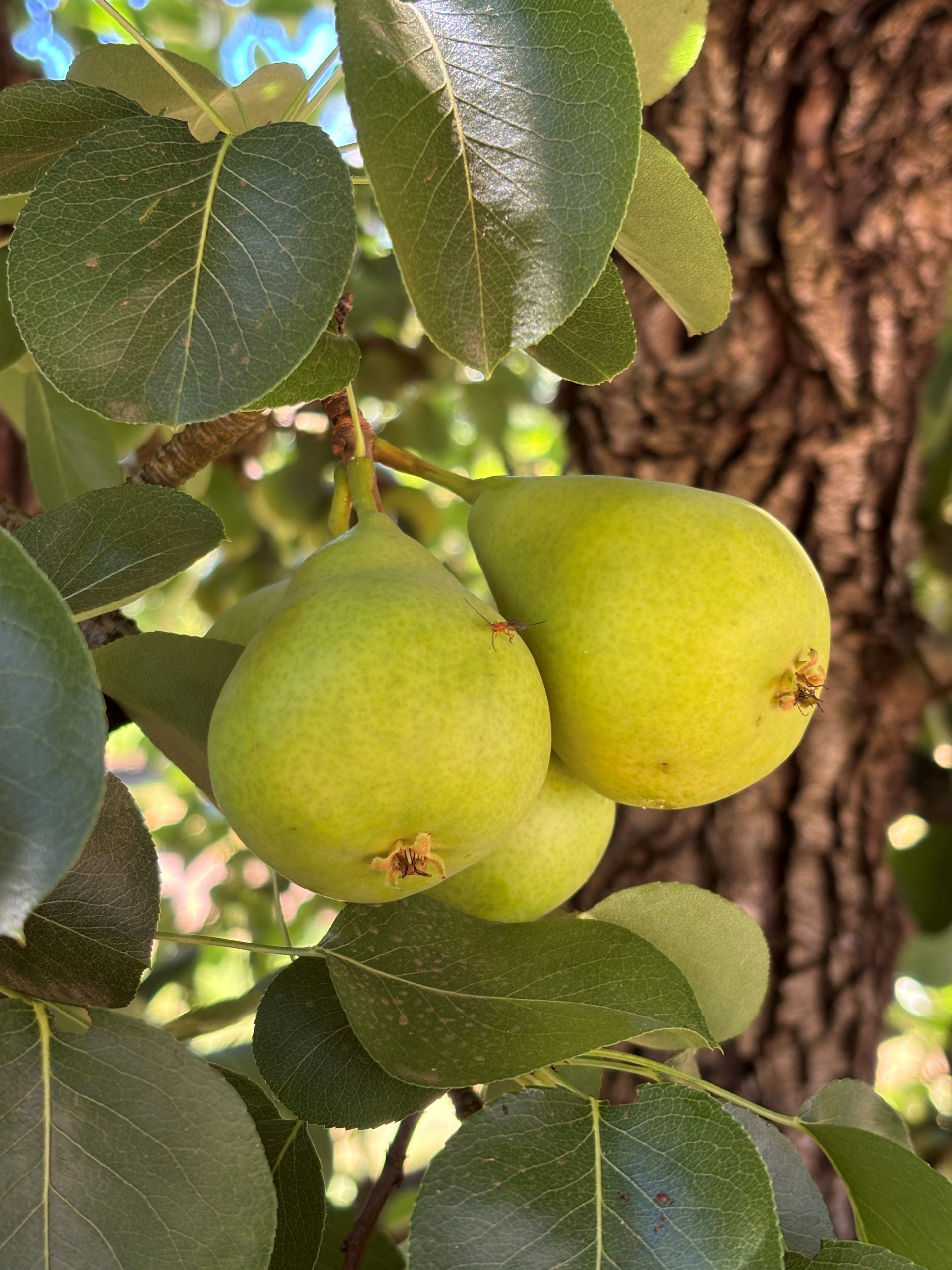
Photo: Diachasmimorpha kraussii hunting for Medfly larvae on pear. Note the Medfly sting on the right-hand side.
Post-release monitoring
Monitoring of Medfly populations has continued post-release, now with added sampling to assess whether D. kraussii is persisting in the orchard. Persistence has been measured fortnightly using Medfly-infested fruit as bait and rearing out in the laboratory to look for emerged adult parasitoids.
Excitingly, D. kraussii have been successfully reared from fully parasitised lemons, with both male and female wasps emerging on 20 March 2026. The presence of both males and females demonstrates the wasps are mating in the field, otherwise only males would have been detected.
Next steps
Recovery of D. kraussii in the WA trial orchard is a very promising result, but it is still too early to know if D. kraussii will establish and provide ongoing control of Medfly. Continued monitoring will assess persistence and spread of D. kraussii over multiple years and measure its impact on Medfly numbers and fruit damage.
Further information
Watch Jen Riseley from Pomewest and Greg Lefoe from Agriculture Victoria speaking about the cross-border PIPS partnership that has successfully reared, transported and released Diachasmimorpha kraussii:
www.youtube.com/watch?v=VYCTWeu71K8
PIPS 4 Profit Pest and disease management (AP22001) project:
https://apal.org.au/projects/ap22001/
Acknowledgement
 The PIPS 4 Profit Pest and disease management (AP22001) project is funded by Hort Innovation, using the apple and pear research and development levy, contributions from the Australian Government and co-investment from Agriculture Victoria. It is supported regionally by the Tasmanian Institute of Agriculture, Pomewest and NSW Department of Primary Industries and Regional Development. Hort Innovation is the grower-owned, not-for-profit research and development corporation for Australian horticulture.

This article was first published in the Winter 2026 edition of AFG.