
Managing apple yield and quality variability
AgVic researchers are investigating whether adapting to more focused management practices can reduce crop variability.
Key points
- Managing orchard blocks according to spatial zoning has the potential to improve premium packout and profitability.
- Orchard zoning and precise timing of management aim to reduce variability.
High levels of variability in marketable yield in an orchard block reduces profitability. However, these losses can be regained through precise and well-timed management practices that target crop load, fruit size and colour.
As part of the PIPS 4 Profit Program’s Optimising apple production systems (AP22004) project, Agriculture Victoria researchers are exploring the benefits of spatial (zoning) management to reduce crop variability. In addition to testing agronomical and technological applications, the economic impact of adapting to these more focused management practices will be assessed by considering the cost of using relevant technologies, and adjustments to labour hours, yield and packout.
Orchard block zoning is rapidly performed using mobile sensing technology, such as the Green Atlas Cartographer (Figure 1), that was tested and validated in the PIPS3 Advancing sustainable and technology driven apple orchards (AP19003) project. These sensing platforms can collect data on orchard flower density, crop load, fruit size and colour, and create colour-coded maps to display the differences within a block. Subdividing a block into management zones allows us to better target and apply appropriate management techniques.
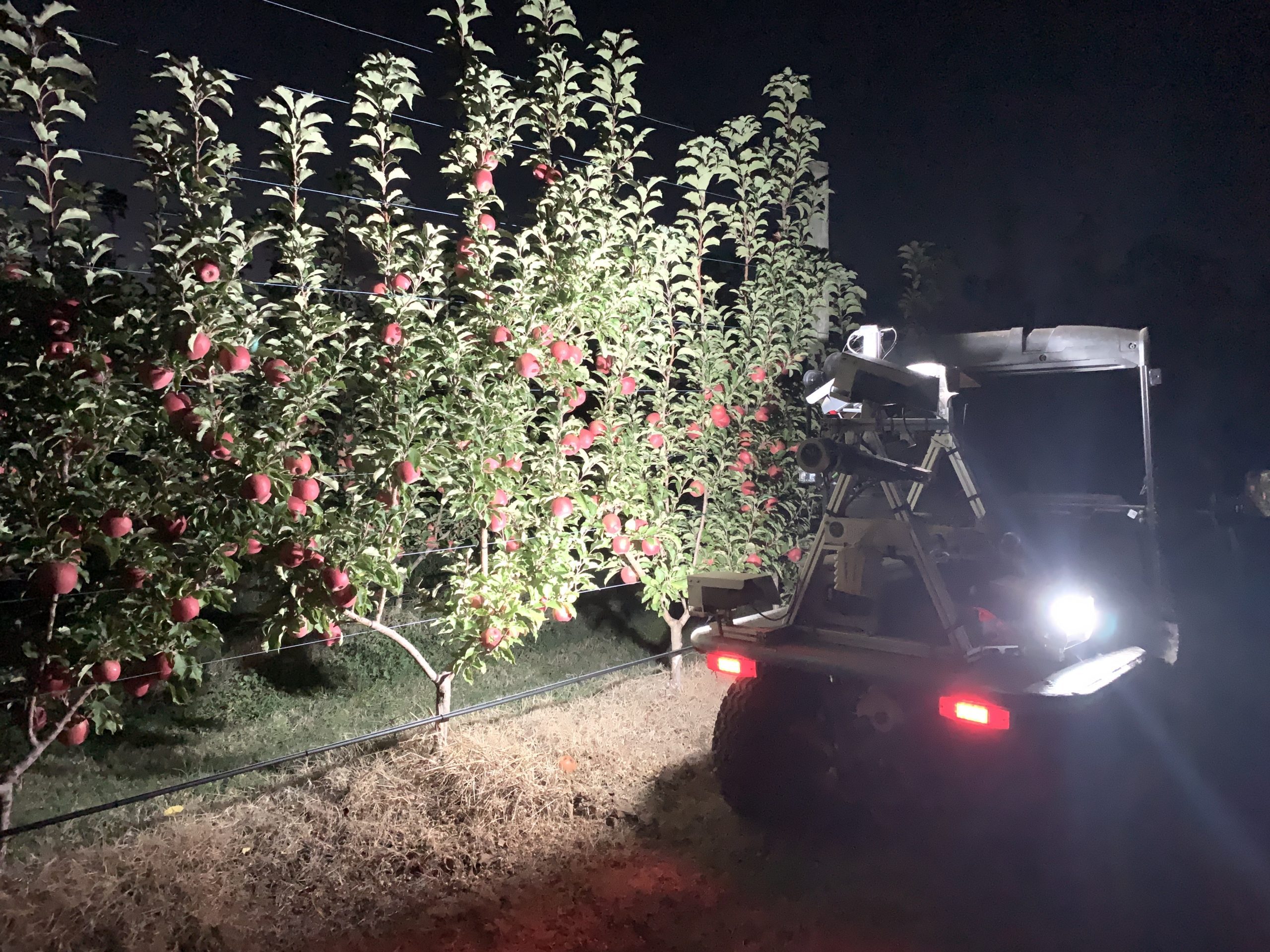
Figure 1: Green Atlas Cartographer in action taking yield and colour development index (CDI) measurements at night.
Crop load
Crop load directly affects marketable yield and negatively correlates with fruit size (i.e. a higher crop load results in smaller fruit). Crop load can be increased by improving pollination and fruit set, or decreased by thinning flowers, fruitlets and fruit. Flower thinning can be performed chemically, mechanically or laboriously by hand.
Over the course of this five-year project, different manual and chemical crop load regulation protocols will be evaluated using three georeferenced management zones requiring heavy, moderate or light thinning. Colour-coded maps (green, yellow, red) will be generated in electronic form and in printed versions, as shown in Figure 2. The electronic georeferenced maps allow end users to track their position within the map with a moving cursor. Different smartphone apps can import a spatial map like that shown in Figure 2 and, if location is set to active, a cursor will show the user position in the orchard. This is highly relevant for hand-thinners or manually operated variable rate sprayers. Experiments on hand thinning and chemical thinning are being undertaken on ANABP 01 (marketed as Bravo®) apples in the Sundial Orchard at the Tatura SmartFarm.

Figure 2: Flower density zones obtained using the Green Atlas Cartographer in the Sundial Orchard apple trees at the Tatura SmartFarm.
Colour development
Many modern cultivars rely on adequate red colour development to achieve premium specifications. The two most important environmental factors involved in red colour development are light and temperature. While air temperature is climate-dependent, there are simpler ways to improve light exposure of maturing fruit on the tree.
The most common methods employed these days are pruning, pneumatic defoliation (leaf blowing) and the use of reflective mulch in the weeks leading up to harvest. Timing of reflective mulch and leaf blowing applications is critical.
Experiments are being undertaken on Rosy Glow trees at McNab Orchards (Ardmona, Goulburn Valley, Victoria), incorporating different leaf blowing and reflective mulch regimes (examples shown in Figure 3). Untreated rows will be compared against rows receiving one pass of leaf blowing, two passes of leaf blowing, reflective mulch rolled out a few weeks before harvest, and leaf blowing combined with reflective mulch. These treatments will be applied based on the spatial differences in colour development index (CDI), a metric used for fruit colour assessment, after scanning with the Cartographer to produce colour-coded management zones of the experimental site. The effect of colour-enhancing treatments on fruit quality and maturity parameters will be measured at harvest.
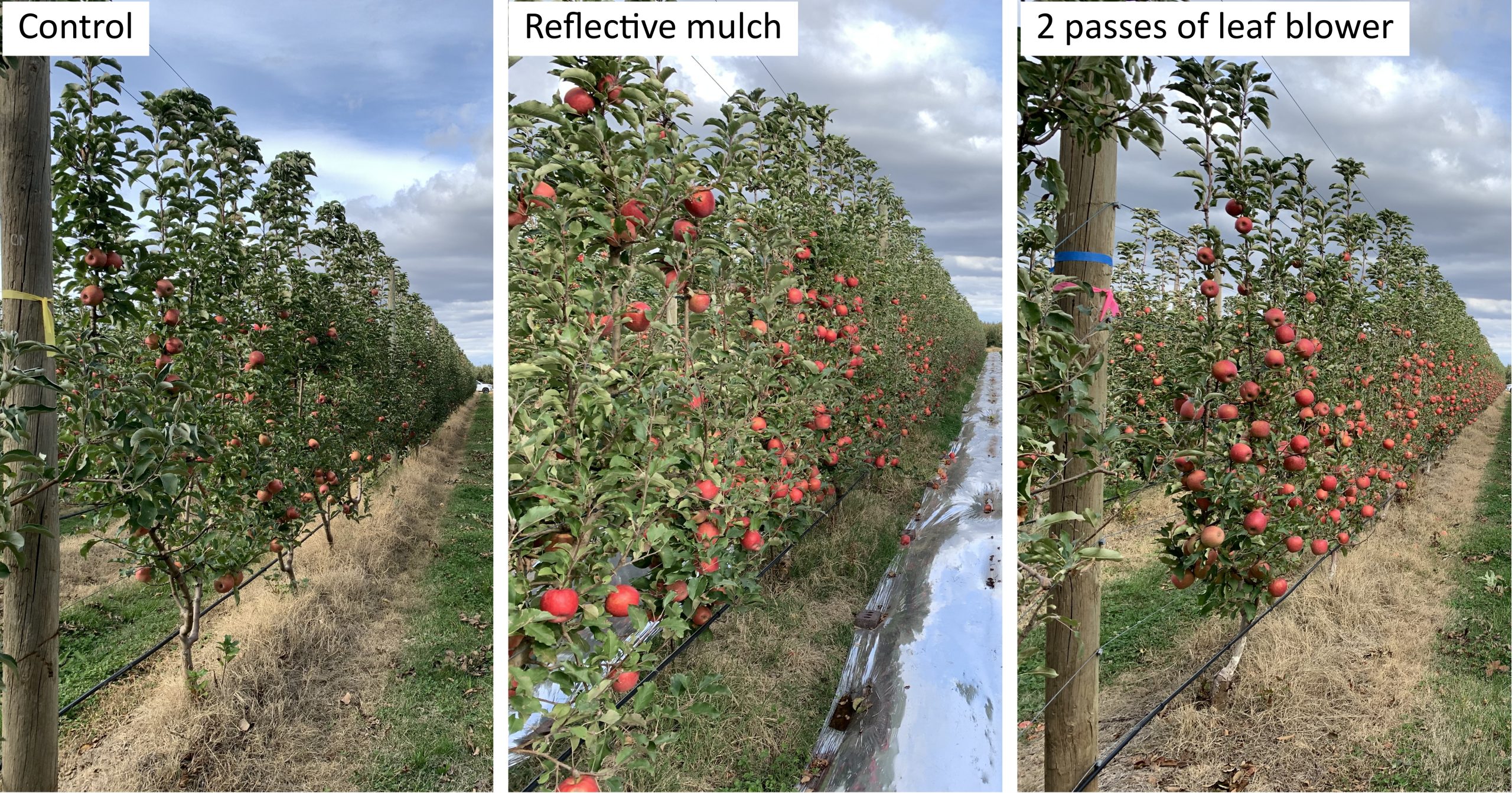
Figure 3: Effect of three colour-enhancement treatments applied in a commercial Rosy Glow orchard (McNab Orchards, Ardmona).
Conventional partial budgeting methods will be used to estimate benefit and cost items that differ between the practice being investigated and the control. This analysis will rely on measurements of crop yields and fruit quality attributes and input usage in the field.
The results from some of these experiments will be presented in January 2025 at the International Society for Horticultural Science’s XIII International Symposium on Integrating Canopy, Rootstock and Environmental Physiology in Orchard Systems, which will be held in Napier, New Zealand.
Acknowledgement
 This study is a component of the PIPS 4 Profit Optimising apple production systems (AP22004) project, funded by Hort Innovation, using the Hort Innovation Apple and Pear research and development levies, contributions from the Australian Government and co-investment from Agriculture Victoria. Hort Innovation is the grower-owned, not-for-profit research and development corporation for Australian horticulture.
This article will be published in the Spring 2024 edition of AFG.



