Early lessons on netting in young apple orchards
Researchers at Agriculture Victoria are evaluating netting management strategies to help growers optimise early tree growth, fruit set and profitability.
Key points
- Netting timing and colour affected fruit set and vegetative growth in young apples, with permanent grey netting showing the strongest impact.
- Unnetted trees had higher fruit set and fruitlet load, and grew slower than those under netting.
To cover, or not to cover? Installing hail netting over orchards is now a major strategic decision for apple businesses across the Goulburn Valley as the region faces increasingly erratic and extreme weather. While hail protection is the primary purpose, netting is also widely used to mitigate sunburn, bird damage and wind, all of which can severely reduce packout. Yet, increasing shade has potential downsides: reduced yield, colour and fruit quality, excessive vigour, and long payback periods for installation costs.
To help growers weigh up these trade-offs Agriculture Victoria researchers are evaluating how black and grey netting with low shade factors, deployed at different times of the season, influence the establishment and early performance of apple trees. This work forms part of the PIPS 4 Profit Optimising apple production systems (AP22004) project.
Plant material and orchard design
A Bigbucks Gala orchard was planted at the Tatura SmartFarm in winter 2024. Trees on M9 rootstock were spaced at 3m × 1.3m (2,564 trees/ha), with Granny Smith interplanted as pollinisers. Following planting, nursery rods were headed at 40–50cm and encouraged to develop a bi-axis structure. The two leaders are trained in a narrow spindle system, aiming for a canopy width of less than 65cm.
Flowers and fruitlets were removed in the first leaf to maximise vegetative growth. In the second leaf, approximately five fruit per tree were retained to allow assessment of fruit development and quality under each treatment.
Netting treatments
The experiment utilises Valente concrete posts and a retractable gabled netting system (Figure 1). Treatments include two netting timings (permanent and temporary) crossed with two netting colours (black and grey), alongside an unnetted control. Permanent netting is closed all year round, whereas temporary netting is closed from petal fall to harvest. Based on spectroradiometric measurements, the black and grey nets reduce incoming solar radiation by 21 per cent and 19 per cent, respectively. A further dynamic treatment with Wayki® black netting will be automated to close only during high-risk sunburn conditions (temperatures >32°C combined with high solar radiation). This aims to test whether selective shading can reduce sunburn without compromising growth and yield.
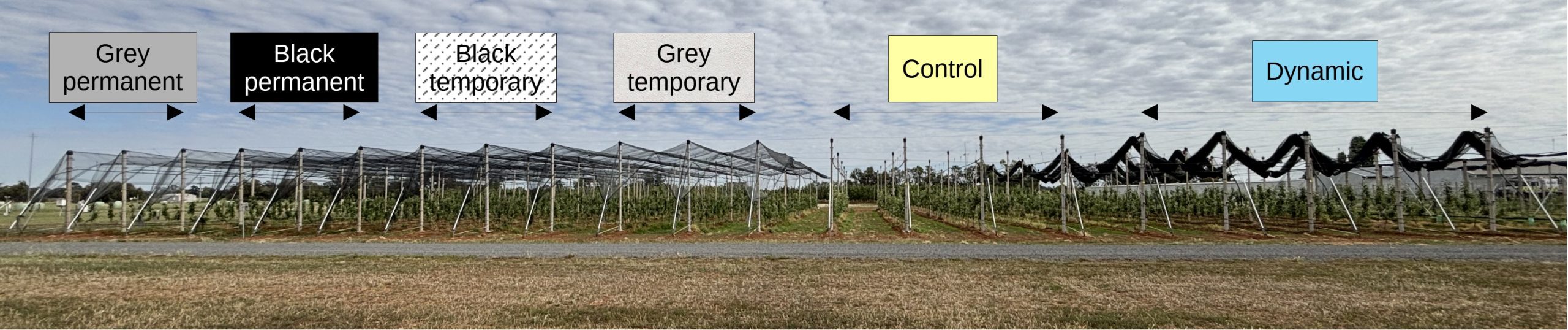
Figure 1: Front view of netting experiment at Agriculture Victoria’s Tatura SmartFarm.
Vegetative growth
By late November 2025, second leaf trees averaged 1.6m in height with no significant differences between treatments. Trees are on track to reach the target height of 3.3m (1.1 times the row spacing) by the end of their second growing season.
Shoot length and trunk cross-sectional area (TCSA) were lowest in unnetted trees (Figure 2), with significant differences (p <0.05) detected only between the control and the grey permanent treatment. More pronounced differences in vigour are expected as trees enter their third and fourth seasons.
From year three onwards LiDAR-based tools such as Green Atlas Cartographer will be used to quantify canopy development (area, density, width), providing deeper insight into how netting affects canopy architecture.
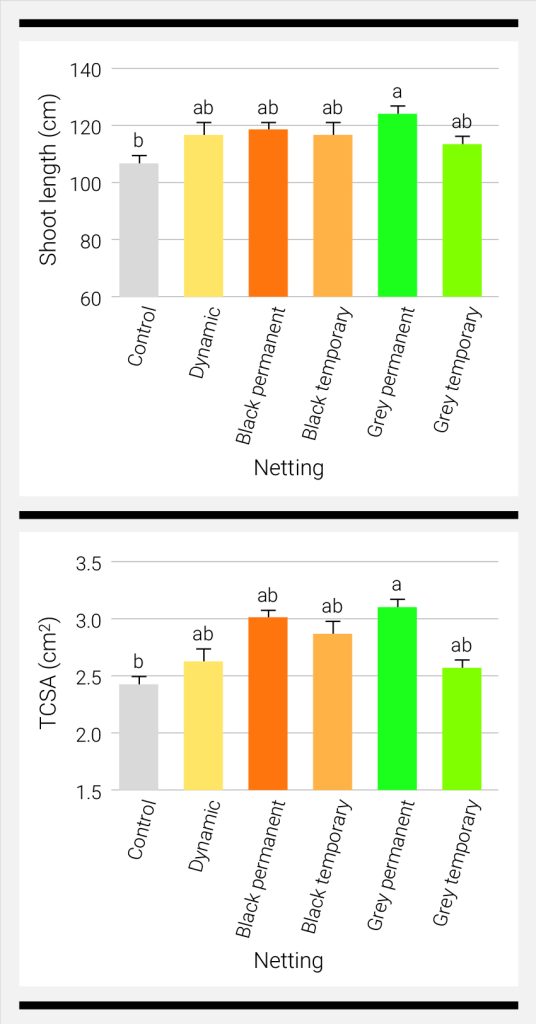
Figure 2: Shoot length and trunk cross-sectional area (TCSA) measured at springtime in trees at their second leaf. Different letters show significant differences (p <0.05).
Flowering and crop load
Visual assessments indicated strong flowering across the orchard, consistent with hand-counted flower clusters at 80 per cent bloom (Figure 3, left; Table 1). Flower density per TCSA did not differ markedly between treatments.
Fruitlet counts (Figure 3, right) in spring 2025 showed similar fruit numbers across treatments, but variability was higher under netting. When expressed per unit of TCSA, the control and dynamic treatments had the highest fruitlet loads; both significantly higher than the grey permanent treatment (p <0.05). The Green Atlas Cartographer successfully detected flower clusters and fruitlets in young high-density trees, with spatial heatmaps (Figure 4) corroborating a trend of higher fruitlet load in unnetted and dynamic experimental plots.
Differences between flower numbers and actual fruitlets raised the possibility that fruit set may be reduced under netting. This was confirmed when fruit set ratios were extrapolated (fruitlet number/flower clusters number, Figure 5), showing that the control and dynamic trees exhibited higher fruit set ratios. Grey-netted trees again tended to be lowest.
Fruitlets were thinned heavily to an average of two fruit/cm² TCSA, with approximately five fruit per tree retained to allow first assessments of fruit quality.
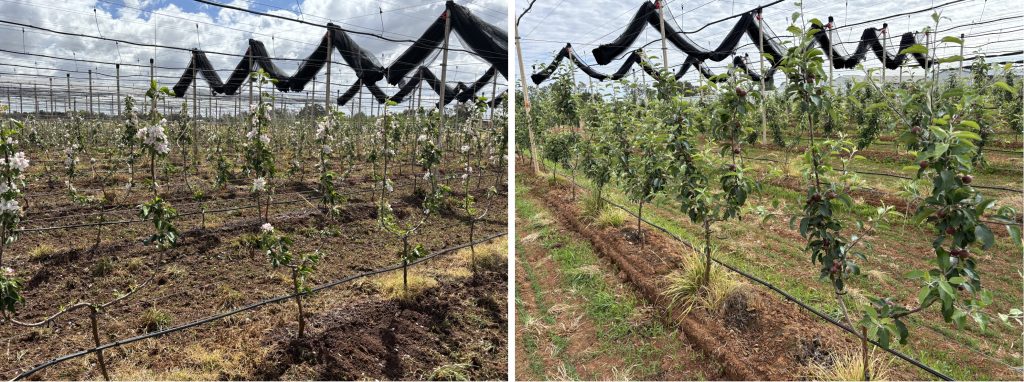
Figure 3: Bigbucks Gala trees in their second leaf, (left) trees at full bloom, (right) trees with fruitlets at average 22mm diameter.
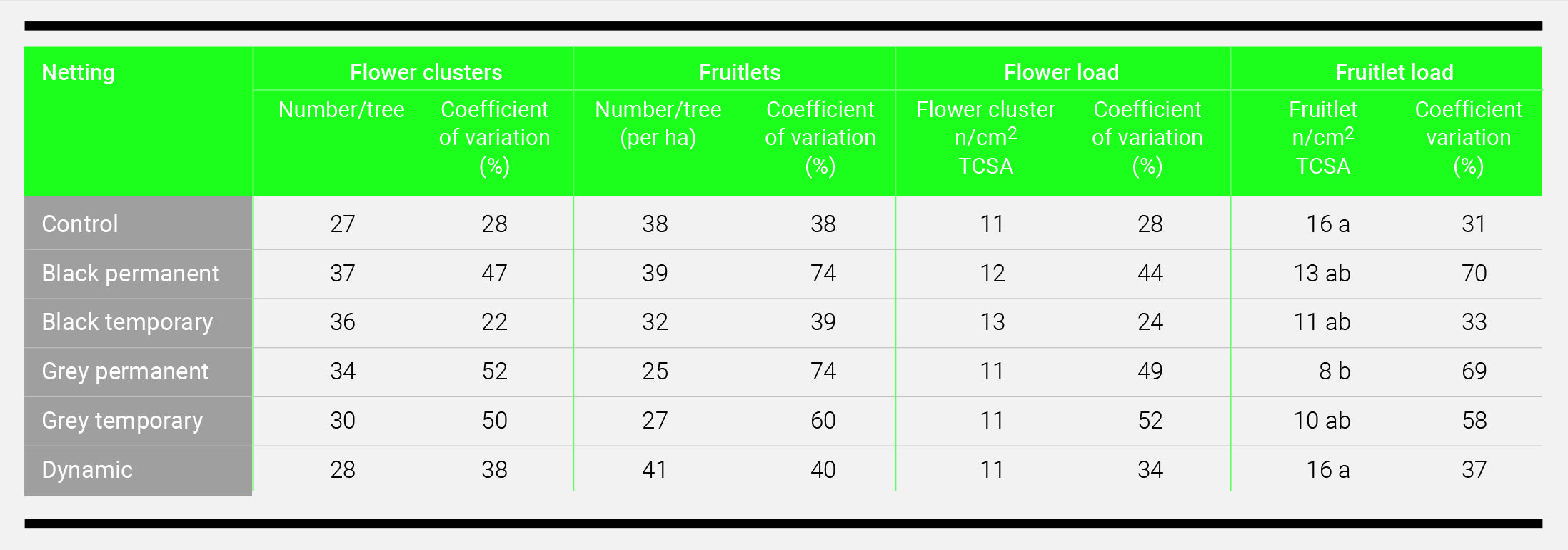
Table 1: Reproductive performance of Bigbucks Gala trees under netting treatments.
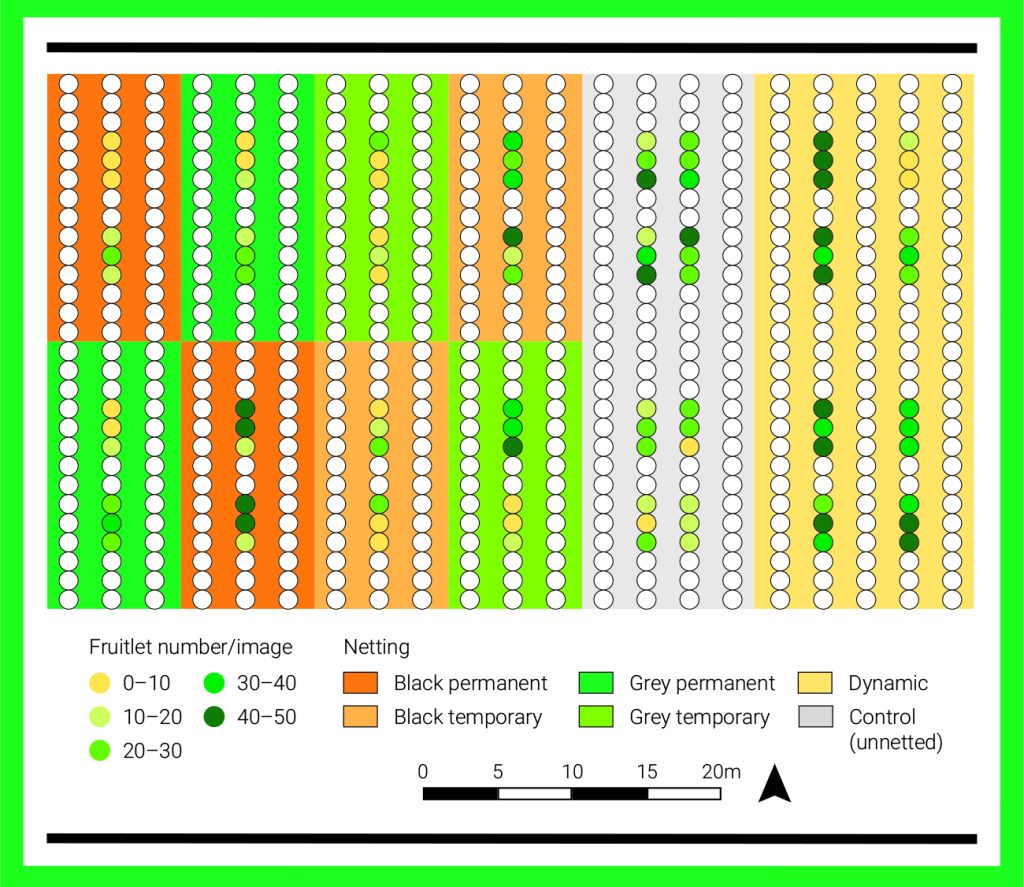
Figure 4: Spatial variability of fruitlet number measured using Green Atlas Cartographer.
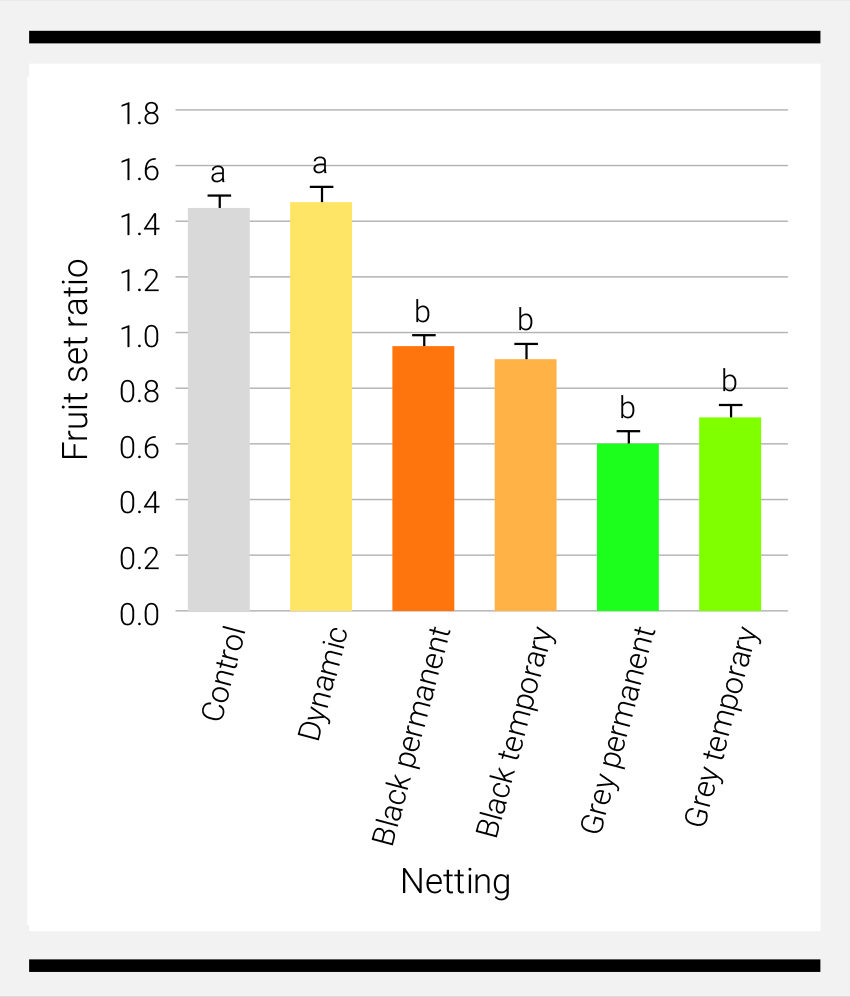
Figure 5: Fruit set ratio (i.e. fruit number/flower cluster number) in Bigbucks Gala trees under netting treatments.
Early results suggest that netting timing and colour both influence fruit set and vegetative development, even in very young orchards. Permanent netting – especially grey permanent – showed the strongest effects, reducing fruitlet load and fruit set while increasing vegetative growth. These responses can be advantageous in the first two years after planting, when establishing the tree structure takes priority over cropping, but may be detrimental in the long term.
These findings will help growers refine netting management strategies to optimise early tree growth, fruit set and profitability. As the study progresses until its end in 2028, the project will provide clearer guidance on:
- how permanent versus seasonal netting affects tree structure and crop potential
- whether dynamic netting can deliver sunburn protection without penalising productivity
- the economic return on different netting strategies across the establishment years.
For orchard businesses, this work will support more confident investment decisions, ensuring that netting systems protect the crop without compromising long-term productivity or financial performance.
Further reading
Beyond the cost barrier: Netting delivers growth, AFG Spring 2019
Acknowledgement
This study is a component of the PIPS 4 Profit Optimising apple production systems (AP22004) project, funded by Hort Innovation, using the Hort Innovation apple and pear research and development levy, contributions from the Australian Government and co-investment from Agriculture Victoria. Hort Innovation is the grower-owned, not-for-profit research and development corporation for Australian horticulture.

This article was first published in the Autumn 2026 edition of AFG.