Crop load in blush pears: what thinning strategies mean for yield, quality and profit
Researchers at Agriculture Victoria are investigating which pear crop load management strategies could lead to improved packout, higher fruit value and stronger revenue gains.
In pear production, the most profitable crop is not always the biggest. High yields only pay when enough fruit meets market specifications for size, colour, firmness and sugar. If crop load is too high, fruit can be smaller, lower value and more likely to miss premium price categories.
Thinning is therefore an economic decision as much as a production decision. It costs money, but well-timed thinning can improve packout, lift average fruit price and reduce the risk of carrying too much low-value fruit through to harvest.
The PIPS 4 Profit Pear production systems for future climates (AP22002) project is examining several strategies and tools to assist pear growers in developing profitable and cost-effective management strategies that optimise yield and fruit quality.
This article focuses on two case studies conducted at Agriculture Victoria’s Tatura SmartFarm that show the economic impact of different crop load management strategies. The first involved manual thinning using artificial bud extinction (ABE) and hand thinning (HT) in ANP-0118 (marketed as Lanya™). The second involved chemical thinning using the blossom desiccant ammonium thiosulphate (ATS) and the plant growth regulator 6-benzyladenine (BA) in Corella.
Case study details
Case study #1: ABE in ANP-0118 pear, 2024–25 season
This study has been ongoing for three seasons, commencing in September 2023. Trees were mature, regular bearing, trained to an open Tatura trellis system with four leaders per tree and planted at 1,111 trees per ha. The ABE and HT treatments are listed in Table 1. For comparison, the trial also included an unthinned control.
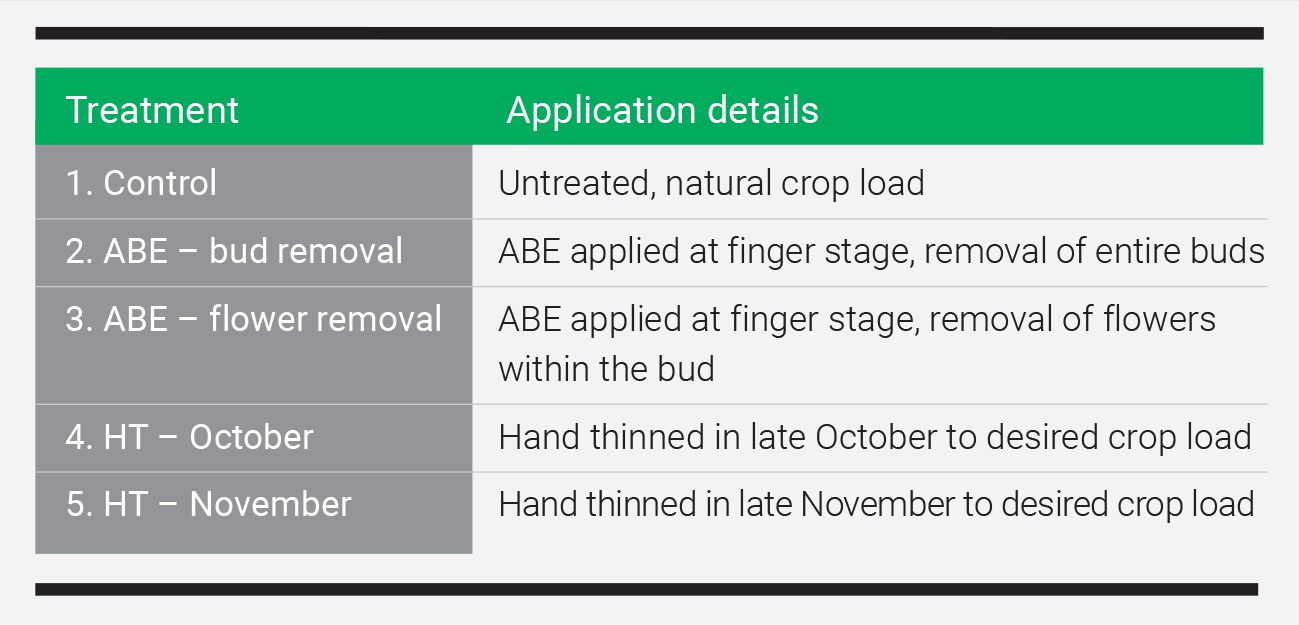
Table 1: Artificial bud extinction (ABE) and hand-thin (HT) treatments applied to ANP-0118 (marketed as Lanya™).
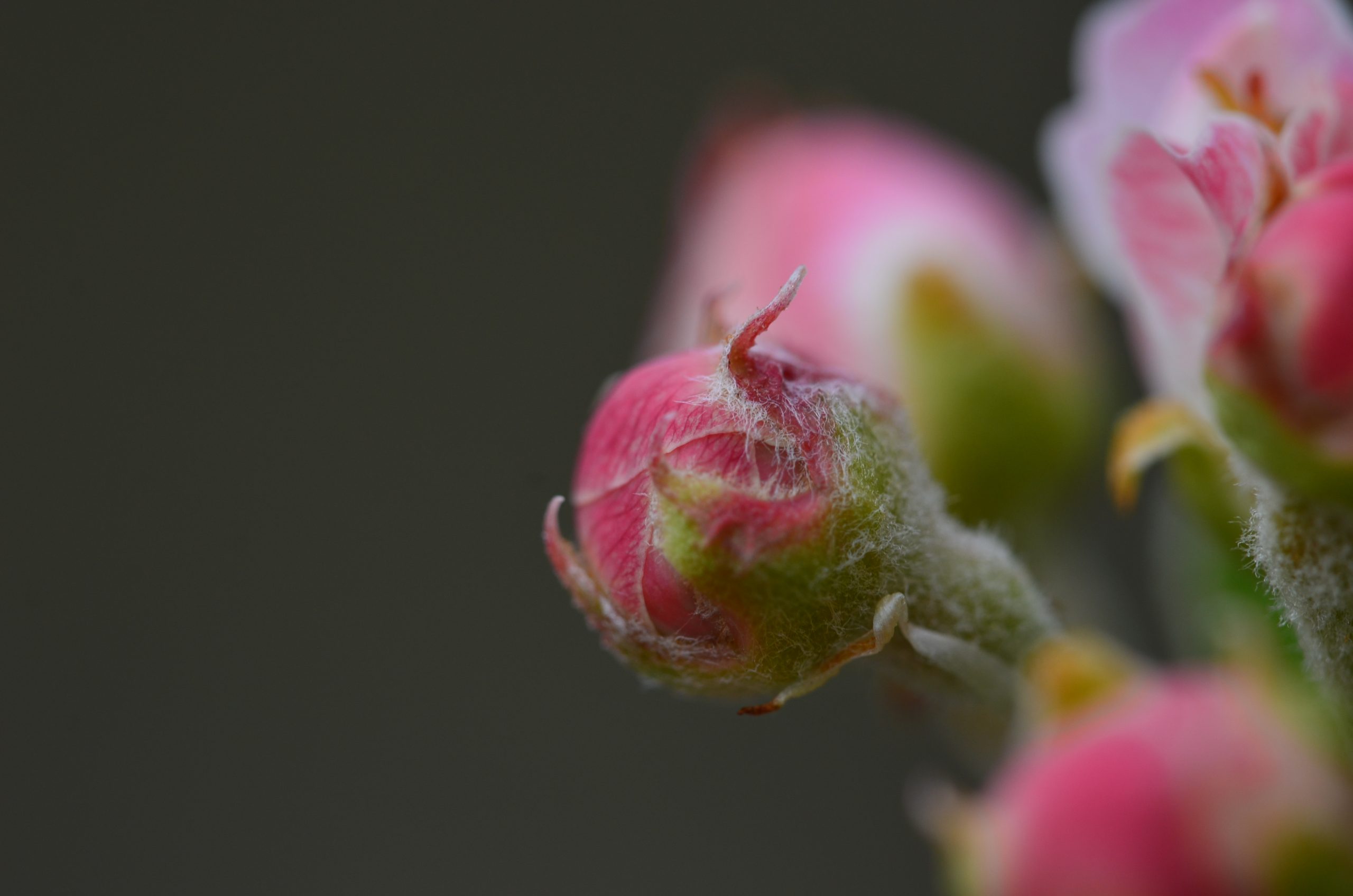
Figure 1: Pear flower bud.
Case study #2: chemical thinning in Corella pear, 2025–26 season
This study was established on 8-year-old Corella trees in September 2025. Trees were regular bearing and trained as a double-leader system, with 2,857 trees per ha. Treatments are listed in Table 2. Chemical treatments varied in the number of applications, chemical combinations and spray timings. The wetting agent Kendeen 20 was added to all applications. For comparison, the trial also included manual thinning using ABE and an unthinned control.
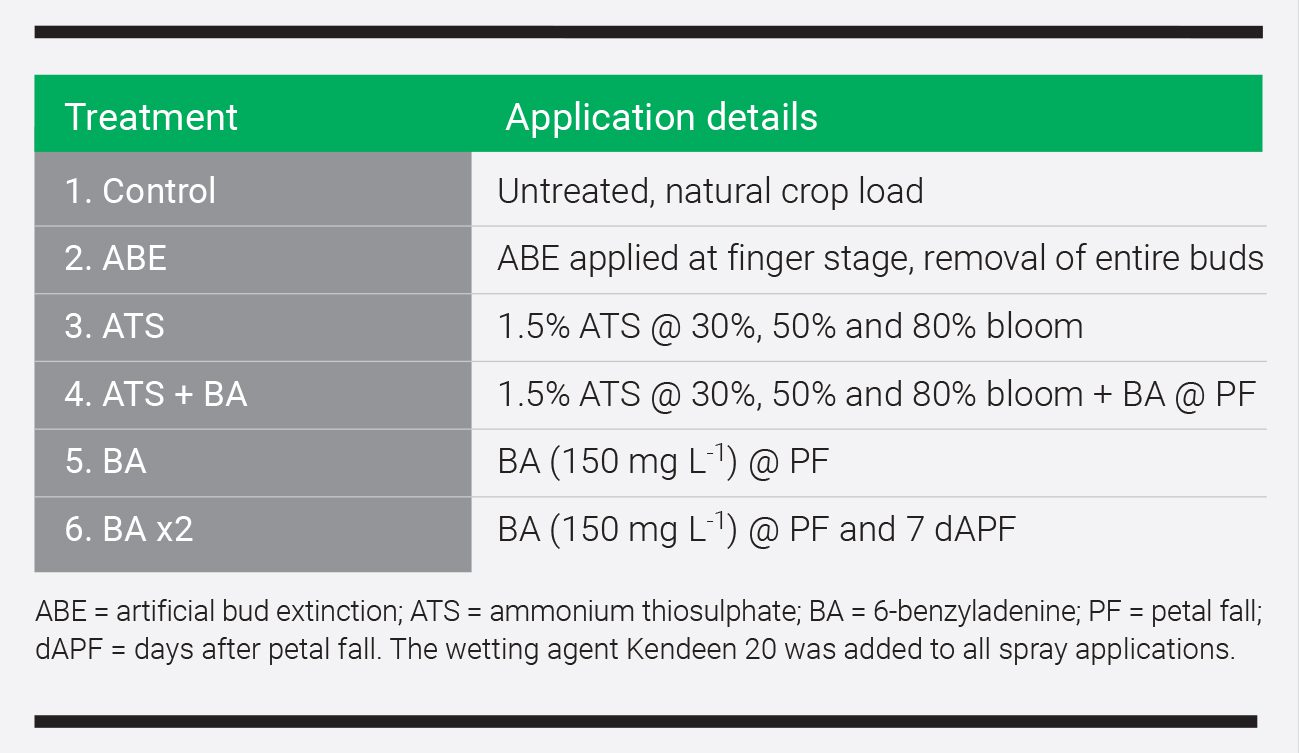
Table 2: Chemical thinning treatments applied to Corella.
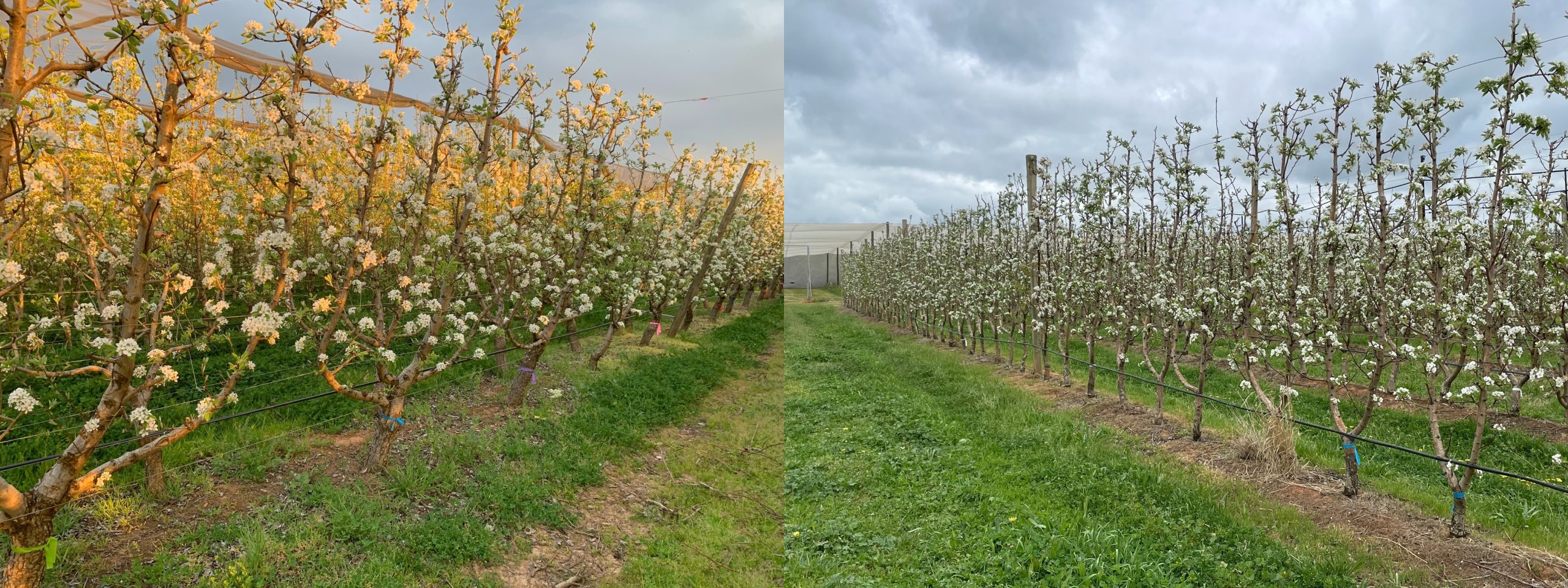
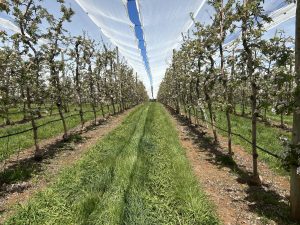
Figure 2: Trees used in the ANP-0118 (left) and Corella (right) experiments.
Putting a dollar value on thinning
The economic analysis involved weighing up the costs and benefits for each thinning treatment. Only benefits or cost items that changed because of the treatment were considered. Benefits were defined as increases in grower revenue arising from higher yields, improved fruit quality, or both. Costs were those incurred in implementing each treatment.
Quantifying benefits
Revenue for each treatment was estimated by sorting fruit into 12 quality groups based on size and colour, then applying the relevant unit price net of packhouse costs to the amount of fruit in each group. This provided an overall revenue estimate that reflected both yield and fruit quality. Harvest costs were also subtracted to allow for changes in the amount of fruit carried through to harvest.
Four size classes and three colour classes were defined based on supermarket specifications. ANP-0118, being a smaller fruit, has smaller size categories than Corella. Blush categories for ANP-0118 were based on those for ANP-0131 (marketed as Ricó™), a similar pear cultivar bred at Agriculture Victoria’s Tatura SmartFarm. Market prices for each size-by-colour category were estimated from five-year average, inflation-adjusted prices received at the packhouse for Packham’s Triumph Class 1, Class 2 and juice-grade fruit, with an added premium for blush colour. The orchard-gate prices assumed for ANP-0118 and Corella, after allowing for packhouse costs, are shown in Tables 3 and 4, respectively. These prices are analytical assumptions rather than current market prices.
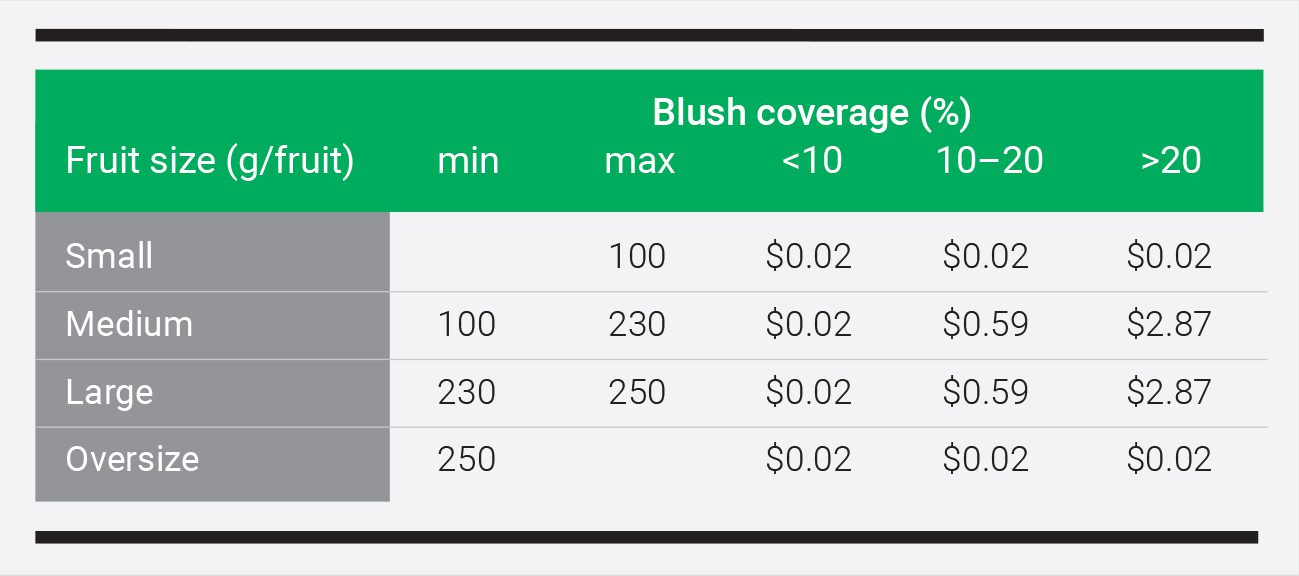
Table 3: Orchard-gate prices by size and colour classes for ANP-0118 ($/kg).
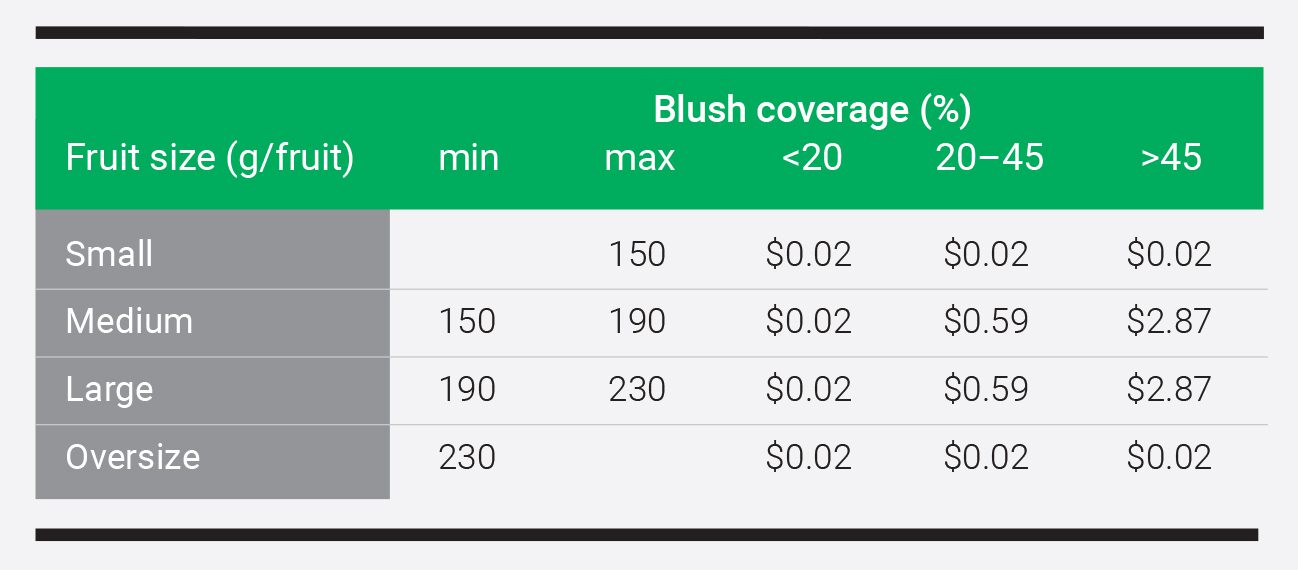
Table 4: Orchard-gate prices by size and colour classes for Corella ($/kg).
Quantifying costs
For ANP-0118, manual thinning costs were based on work rates recorded in the experiment adjusted for commercial work rates and a casual labour rate of $43.03 per hour, including on-costs. Table 5 shows the resulting labour costs for ABE and hand-thinning treatments.
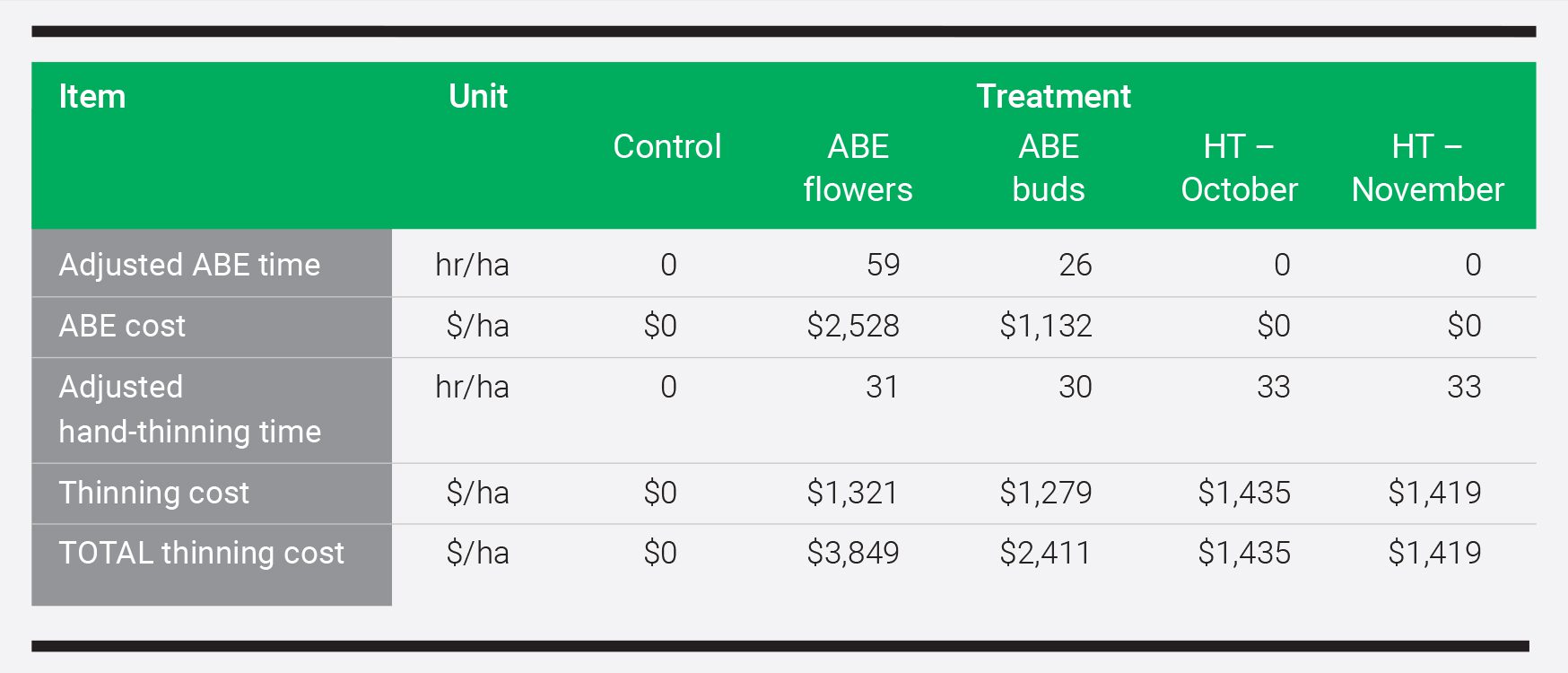
Table 5: Thinning times and costs for ANP-0118.
ABE was considerably more expensive than the HT treatments because it required additional early season labour. The higher-cost treatments needed to generate larger gains in fruit size, colour and revenue to justify the extra investment.
For Corella, spray costs included machinery ownership and operating costs, plus the cost of the chemical thinning agents (Table 6).
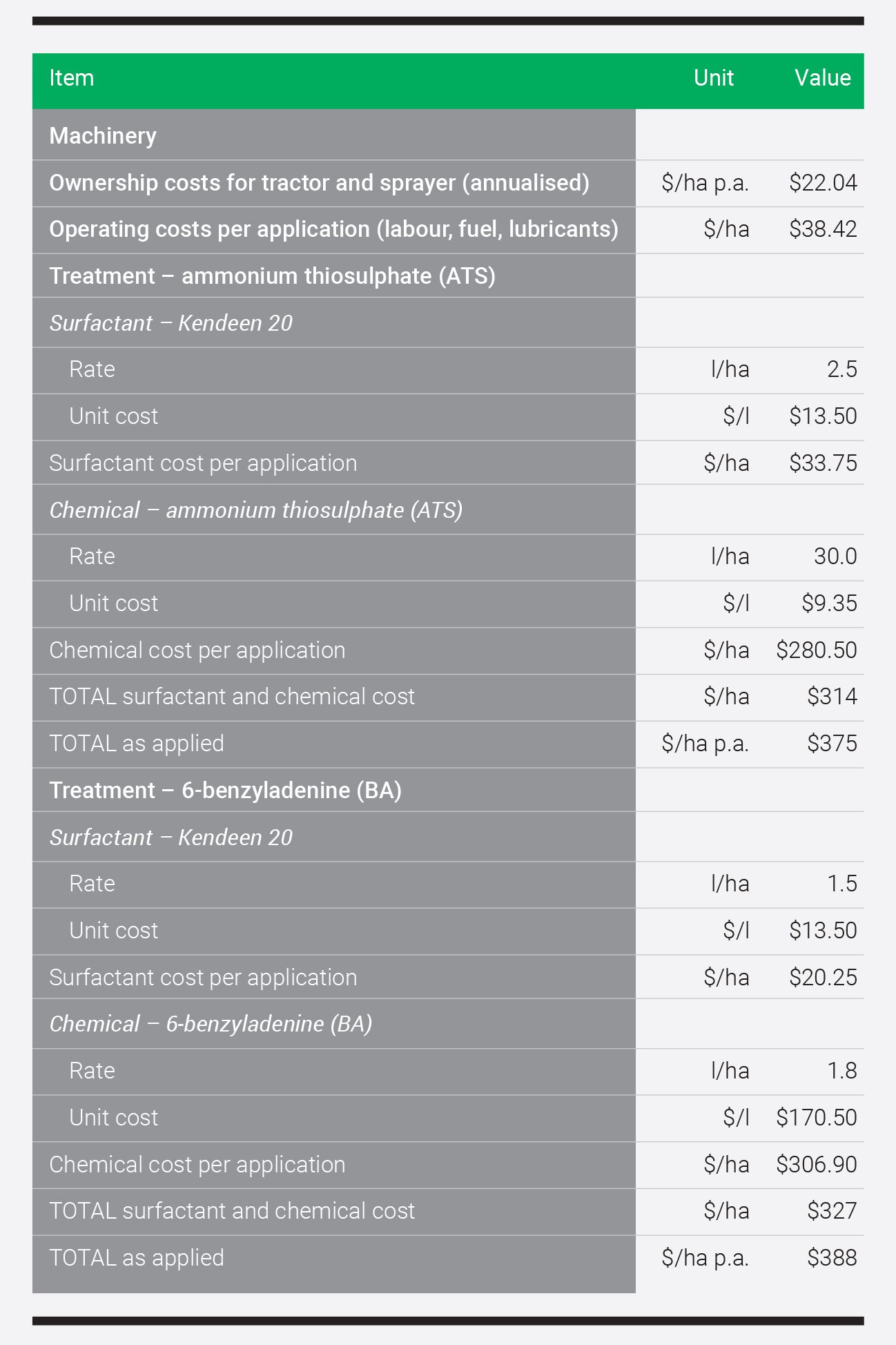
Table 6: Chemical and machinery costs associated with a single application on Corella.
A single chemical thinning spray cost $375 per hectare for ATS and $388 per hectare for BA once machinery and product costs were included. These costs were lower than labour-based thinning, but chemical thinning still needed to deliver reliable improvements in crop load, fruit quality and packout to be worthwhile.
Weighing up benefits and costs
Each treatment was assessed by comparing the extra revenue it generated with the extra costs, using the net benefit (benefits – costs) and benefit–cost ratio (BCR = B/C) as the economic performance measures.
Treatments were ranked by net benefit. The option delivering the highest net benefit contributed most to grower wealth. It may not necessarily achieve the highest BCR, because the BCR places greater emphasis on cost than on total economic return.
What did the economics show?
Tables 7 and 8 bring together the crop load, fruit quality and economic results for both thinning experiments. They show how each thinning strategy affected fruit number, average fruit size, total yield, the proportion of fruit meeting preferred size and colour specifications, and the resulting orchard-gate revenue. The tables also compare the costs of each treatment with the additional revenue generated, helping to show which thinning options delivered the greatest net benefit and which provided the strongest return for each dollar spent.
Table 7 shows why the cheapest or highest-yielding option is not always the most profitable. The unthinned control carried the heaviest crop load, at 276 fruit per tree, and produced the highest yield, at 56 t/ha, but most fruit fell outside the preferred size and colour categories, resulting in a much lower orchard-gate return (Figure 3).
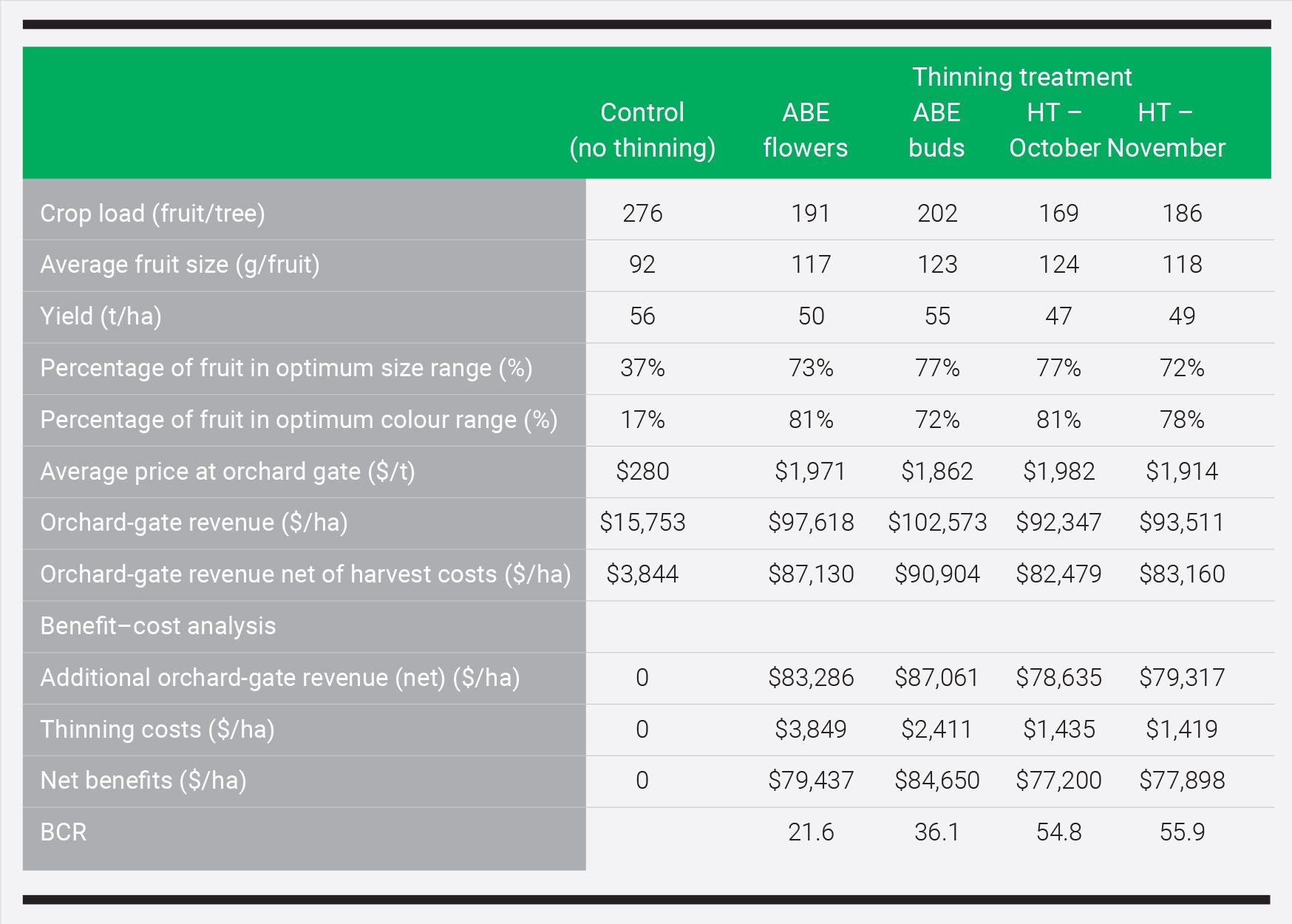
Table 7: Yield, fruit quality and economic performance of manual thinning treatments on ANP-0118, 2024–25.
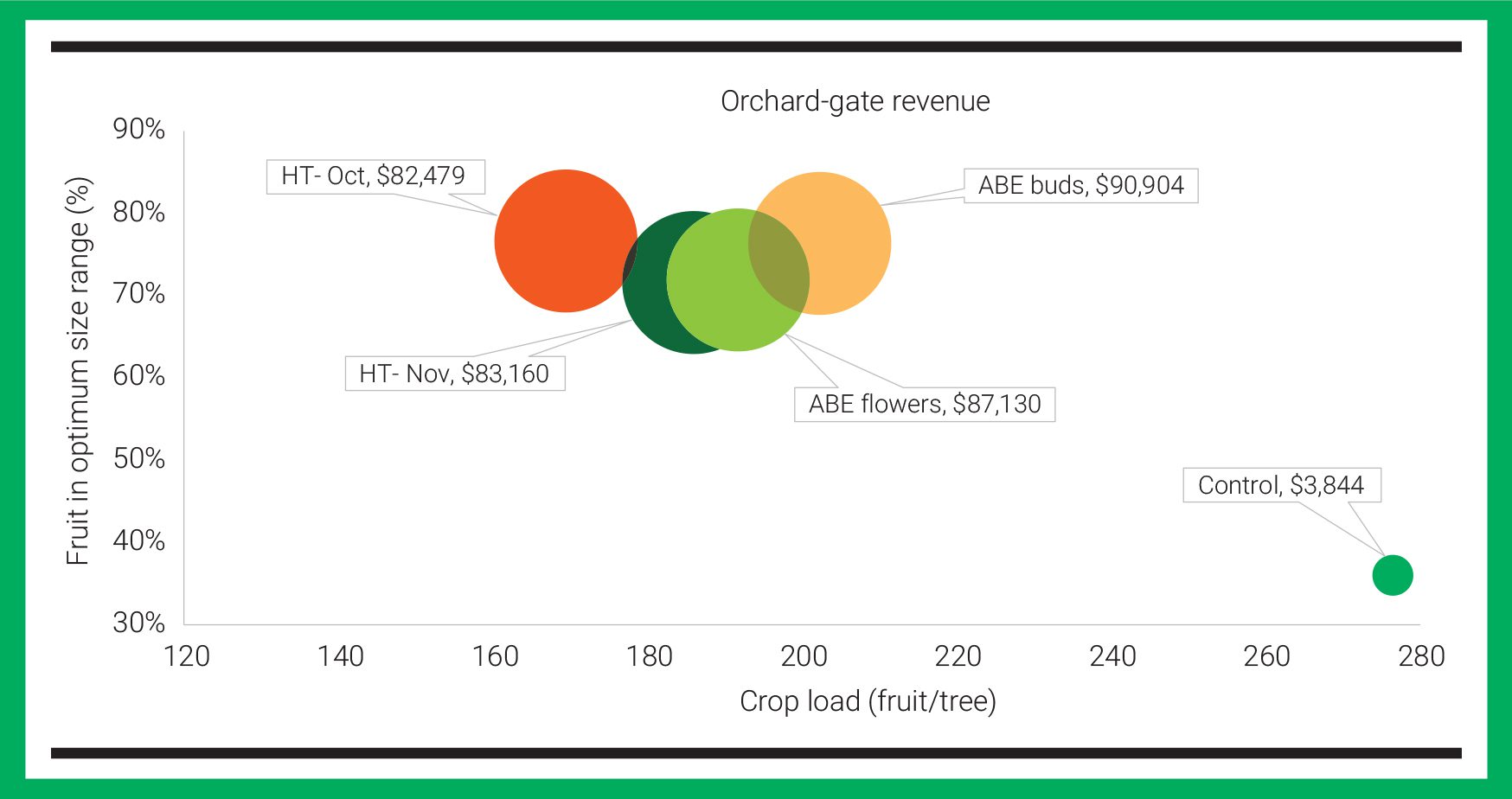
Figure 3: Orchard-gate revenue (bubble size, $/ha) by crop load and percentage of fruit in optimum size range for ANP-0118 (case study #1).
All manual thinning treatments reduced crop load, improved average fruit size, and greatly increased the proportion of fruit in the preferred size and colour ranges. The lowest-cost thinning options were hand thinning to singles, with labour costs of $1,419–$1,435 per ha, and these also delivered the highest BCRs because they generated strong revenue gains for a relatively low additional cost. However, the highest net benefit came from ABE buds, at $84,650 per ha, followed by ABE flowers, at $79,437 per ha, showing that extra early thinning effort could pay where it improved packout and price enough to offset the higher labour cost.
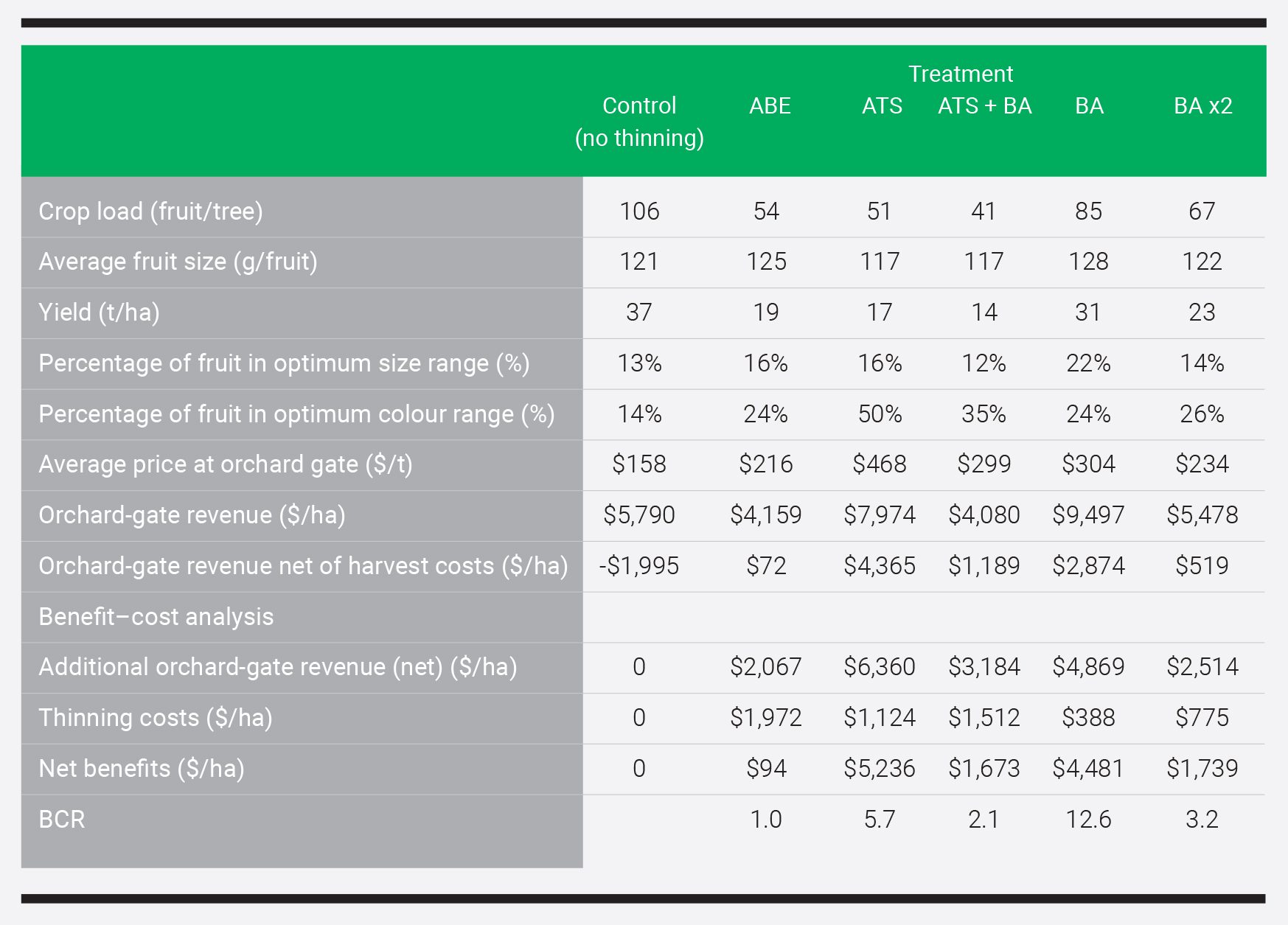
Table 8: Yield, fruit quality and economic performance of chemical thinning treatments on Corella pear, 2025–26.
In the Corella experiment (Table 8), the untreated control again carried the highest crop load and produced the highest yield, but fruit quality and price were low, resulting in poor net revenue once harvest costs were considered. The ABE treatment reduced crop load substantially but also reduced yield too much to deliver a strong economic result. The ATS treatment gave the strongest net benefit, at $5,236 per ha, supported by the highest proportion of fruit in the optimum colour range and the highest average price. BA also performed well economically, with the highest orchard-gate revenue and the strongest BCR of 12.6, helped by its relatively low treatment cost. The combined ATS + BA and double BA treatments delivered positive revenue but were less profitable than ATS or BA alone in this season.
It should be noted that, due to the late introduction of bees, pollination was poor in the Corella block. This led to lower-than-expected yields in some treatments and should be considered when interpreting these results.
Conclusions
These results should be interpreted in the context of the seasonal conditions prevailing at the time and the assumptions underpinning the analysis. The strongest message from these experiments is that crop load management can pay when it moves fruit into higher-value market categories. The untreated trees often carried more fruit and sometimes produced the highest yield, but much of that fruit missed the preferred size and colour specifications. In contrast, well-targeted thinning reduced crop load, improved packout, lifted average fruit value and delivered stronger revenue gains in these case studies.
For growers, the decision is not simply whether to thin, but how much value thinning can add after costs are counted. The best option will be the one that balances crop load, fruit size, colour, labour availability, treatment cost and likely market return in each orchard.
At this stage, the chemical thinning results should be treated as promising rather than prescriptive. More seasons of data are needed before specific recommendations can be made on chemical thinner rates and timings in pears. Growers should follow current label directions and seek local advice before using chemical thinners. The early economics suggest that profitable thinning depends on quality, price and net return, not yield alone.
Acknowledgement
 The PIPS 4 Profit Pear production systems for future climates (AP22002) project is funded by Hort Innovation, using the Hort Innovation apple and pear research and development levy, with contributions from the Australian Government and co-investment from Agriculture Victoria. Hort Innovation is the grower-owned, not-for-profit research and development corporation for Australian horticulture.