Colouring in pears
What are the effects of reflective foil on colour management in pears? Researchers at Agriculture Victoria have been undertaking experiments to find out.
Key message: Reflective foil should be installed 4–5 weeks prior to harvest to ensure maximum red colour response.
Reflective mulches have been a common sight in apple orchards for many years, utilising the causal relationship between light exposure and red colour development to improve packout of red and bicoloured apples. However, reflective materials are typically only used in higher value, late-season apple crops due to the cost of buying and installing materials and concerns about potential increased risk of sun damage during summer.
As part of the PIPS 4 Profit Pear production systems for future climates (AP22002) project, a reflective foil product was used in two experiments with the blush pear variety ANP-0118 (Lanya™) during the 2023–24 and 2024–25 seasons.
During the 2023–24 season, the foil was deployed for 95 days prior to harvest to quantify potential improvements in blush coverage and colour quality. Substantial improvement in blush coverage and redness (measured as hue) of the peel occurred, particularly in the lower part of the canopy (below 1.2m height) (Table 1.). Fruit in the upper canopy was not thinned and this likely compromised blush development due to shading within clusters of multiple fruit. Monitoring of fruit colour during the season showed that peel redness was similar in Control and Foil plots 50 days prior to harvest, but three weeks later (30 days prior to harvest), peel colour was significantly redder in Foil plots (Figure 1).
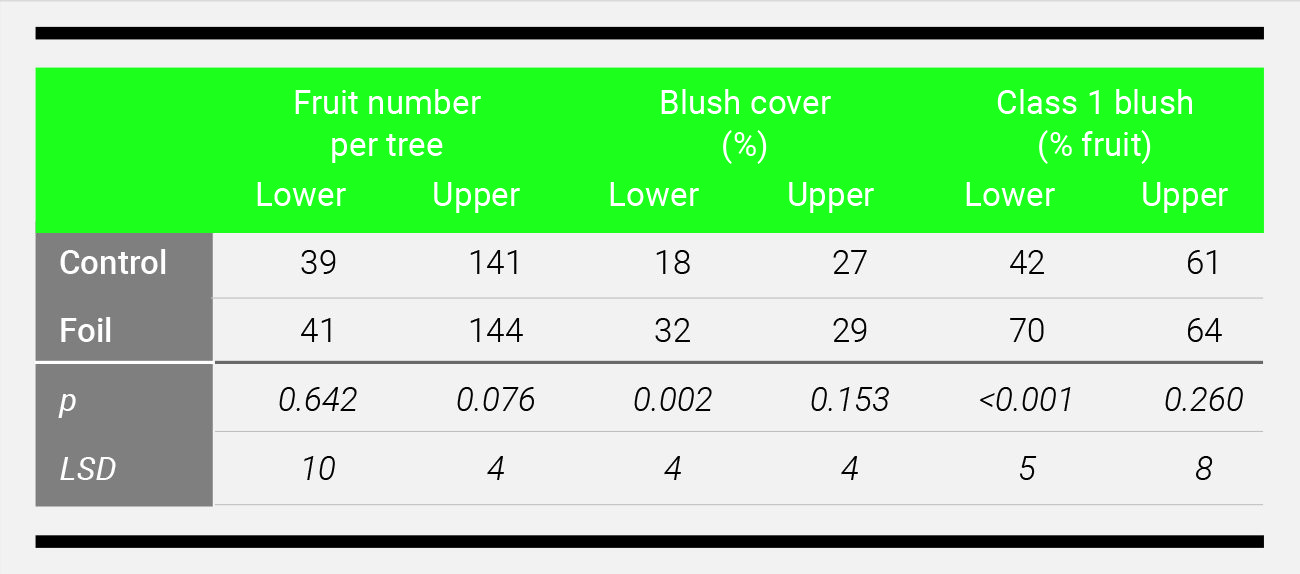
Table 1: Blush coverage at harvest of lower (below 1.2m) and upper (above 1.2m) canopy ANP-0118 fruit (2023–24 season). Class 1 blush is the percentage of fruit with greater than 20 per cent blush coverage. A p-value less than 0.05 indicates statistically significant difference between treatments; LSD is least significant difference.
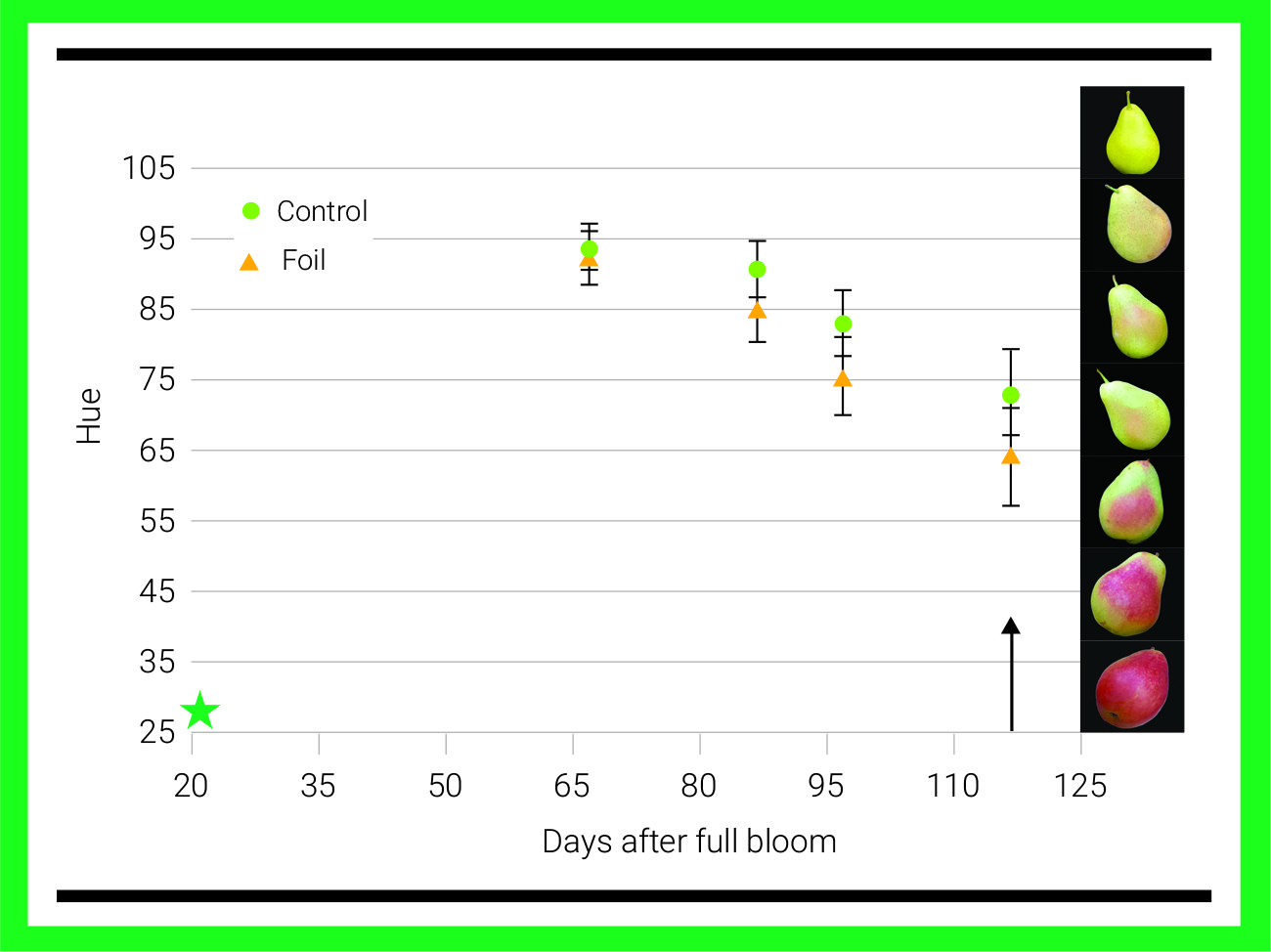
Figure 1: Progression of red colour development during the 2023–24 season. The green star indicates installation of reflective foil. Hue is a measure of redness; decreasing hue indicates increasing redness. Error bars show plus and minus one standard deviation. Arrow indicates harvest.
Previous research had shown that exposing shaded fruit to light within three weeks of harvest gave insufficient time for fruit to achieve colour development equal to that of exposed fruit. Two installation dates were examined in 2024–25 to clarify the time required to optimise red colour development: 19 November (Nov-Foil) and 17 December (Dec-Foil), 58 and 30 days prior to harvest, respectively. Regionally, 2024–25 was a good season for red colour development of blush pears. Although improvements in red colour (decreased hue) were observed initially in response to foil treatments, by harvest, colour differences were not significant between treatments (Figure 2). However, with regards to blush coverage, it was significantly improved in both the lower and upper canopy by both Nov-Foil and Dec-Foil treatments (Table 2).
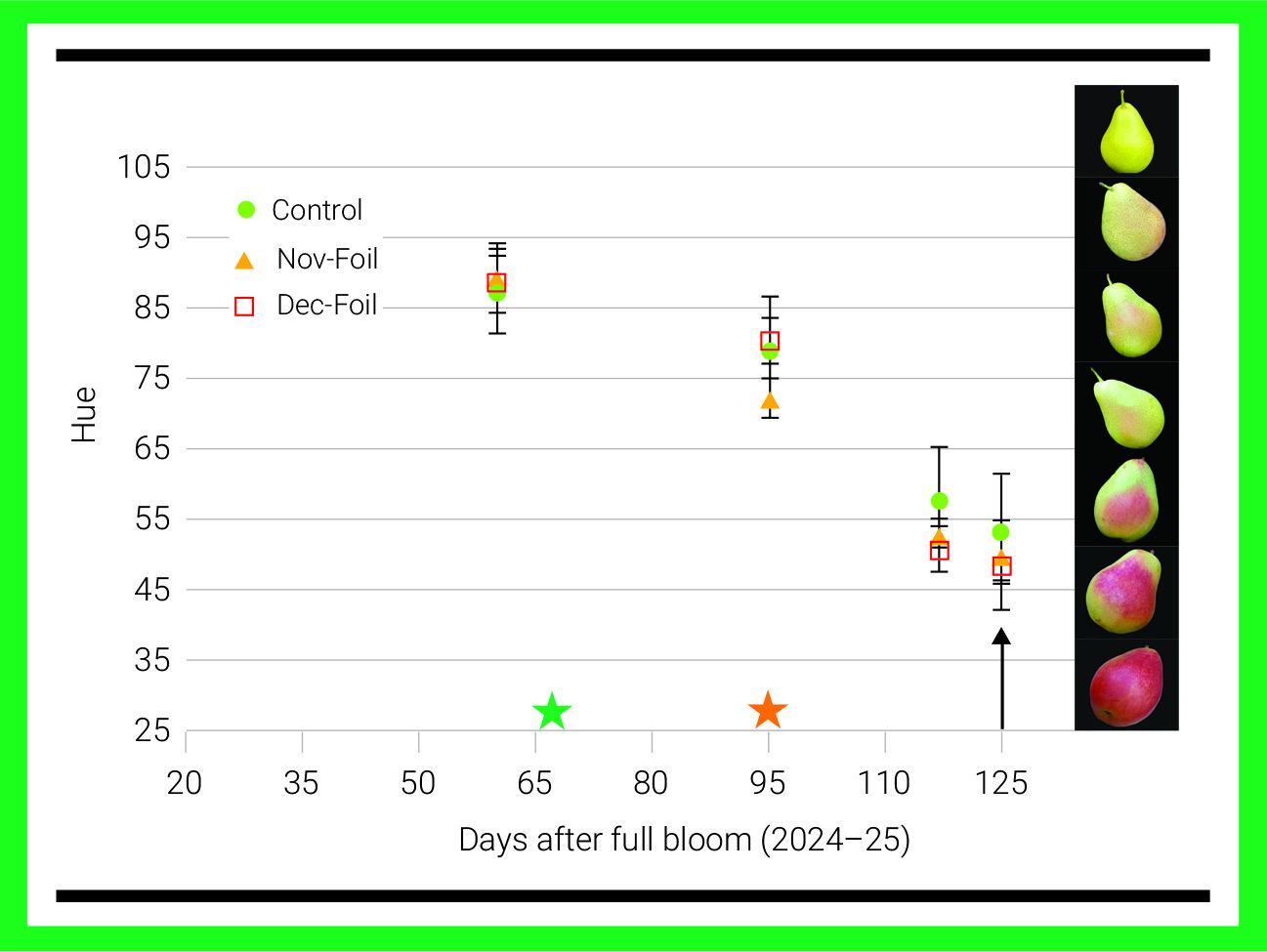
Figure 2: Progression of red colour development during the 2024–25 season. Stars indicate installation of reflective foil (green = Nov-Foil treatment, red = Dec-Foil treatment). Hue is a measure of blush redness; decreasing hue indicates increasing redness. Error bars show plus and minus one standard deviation. Arrow indicates harvest.
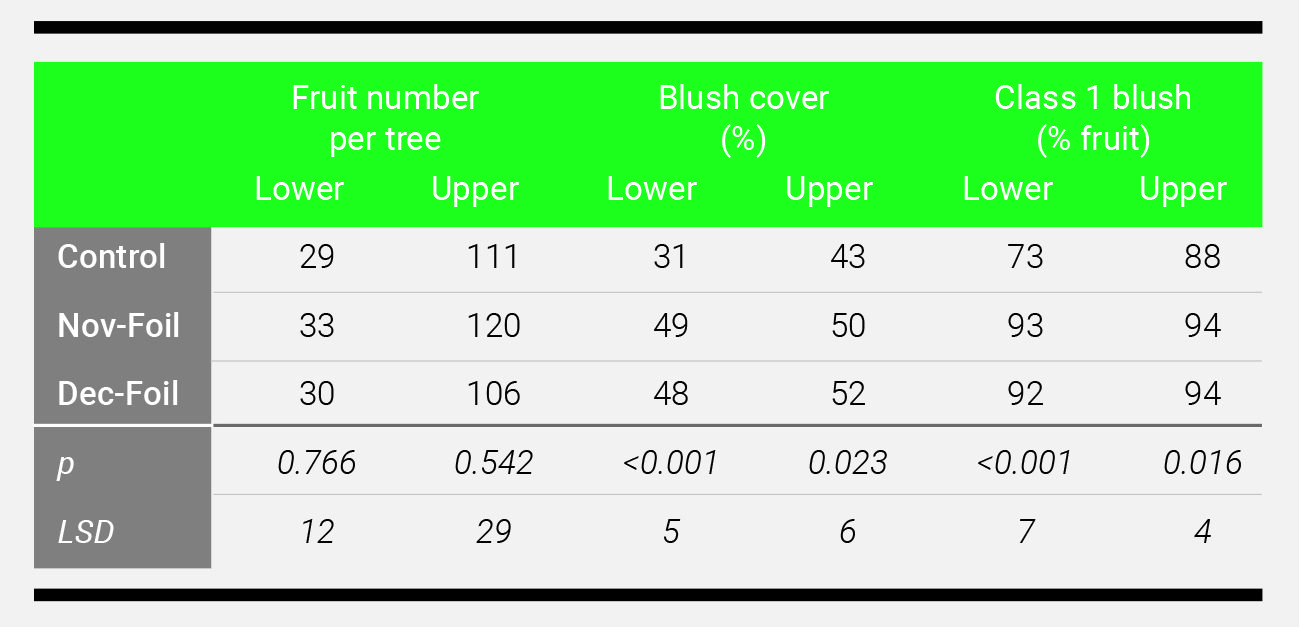
Table 2: Blush coverage of lower (below 1.2m) and upper (above 1.2m) canopy ANP-0118 fruit at harvest (2024–25 season). Class 1 blush is the percentage of fruit with greater than 20 per cent blush coverage. A p-value less than 0.05 indicates statistically significant difference between treatments; LSD is least significant difference.
A distinctive calyx-end sunburn was observed in both seasons in foil plots, along with more typical sun damage. Overall, there was a trend for increased sun damage in foil plots in the second season; however, the differences were not statistically significant (Table 3).
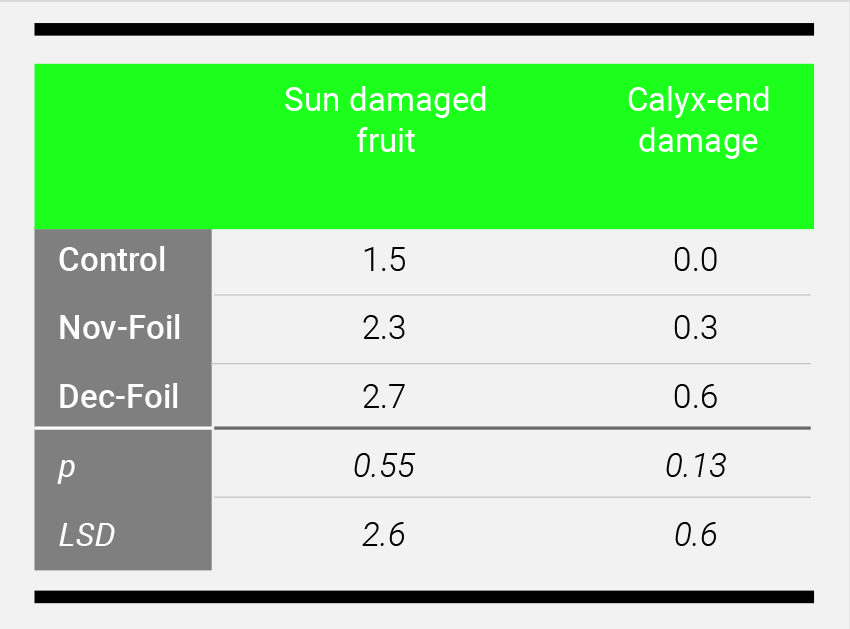
Table 3: Number of sun damaged fruit in the lower canopy per tree. Total includes mild, moderate, and severe sunburn, photooxidative damage and calyx-end damage (sunburn and photooxidative).
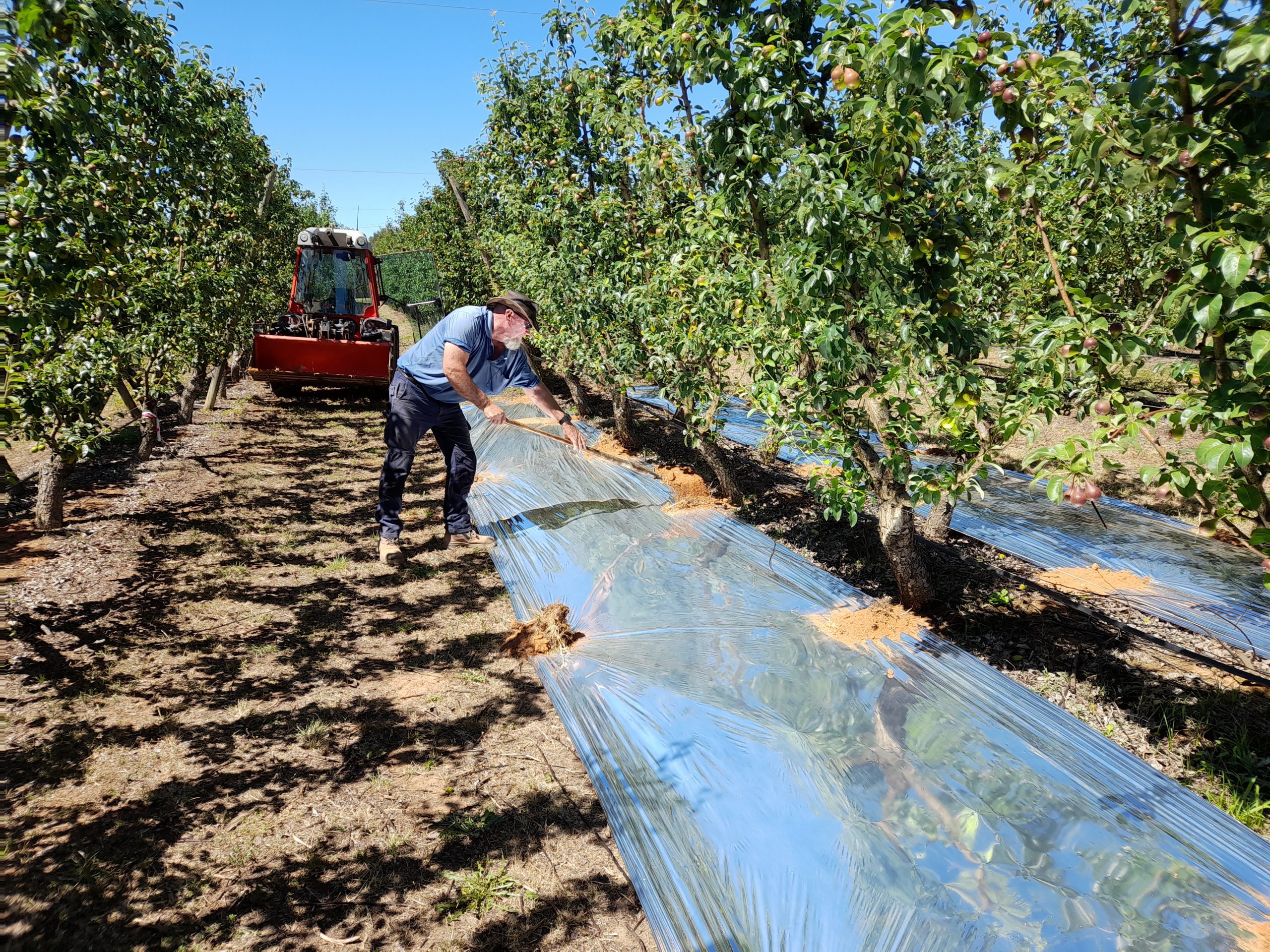
Figure 3: Installation of reflective foil at the Tatura SmartFarm in November 2024.
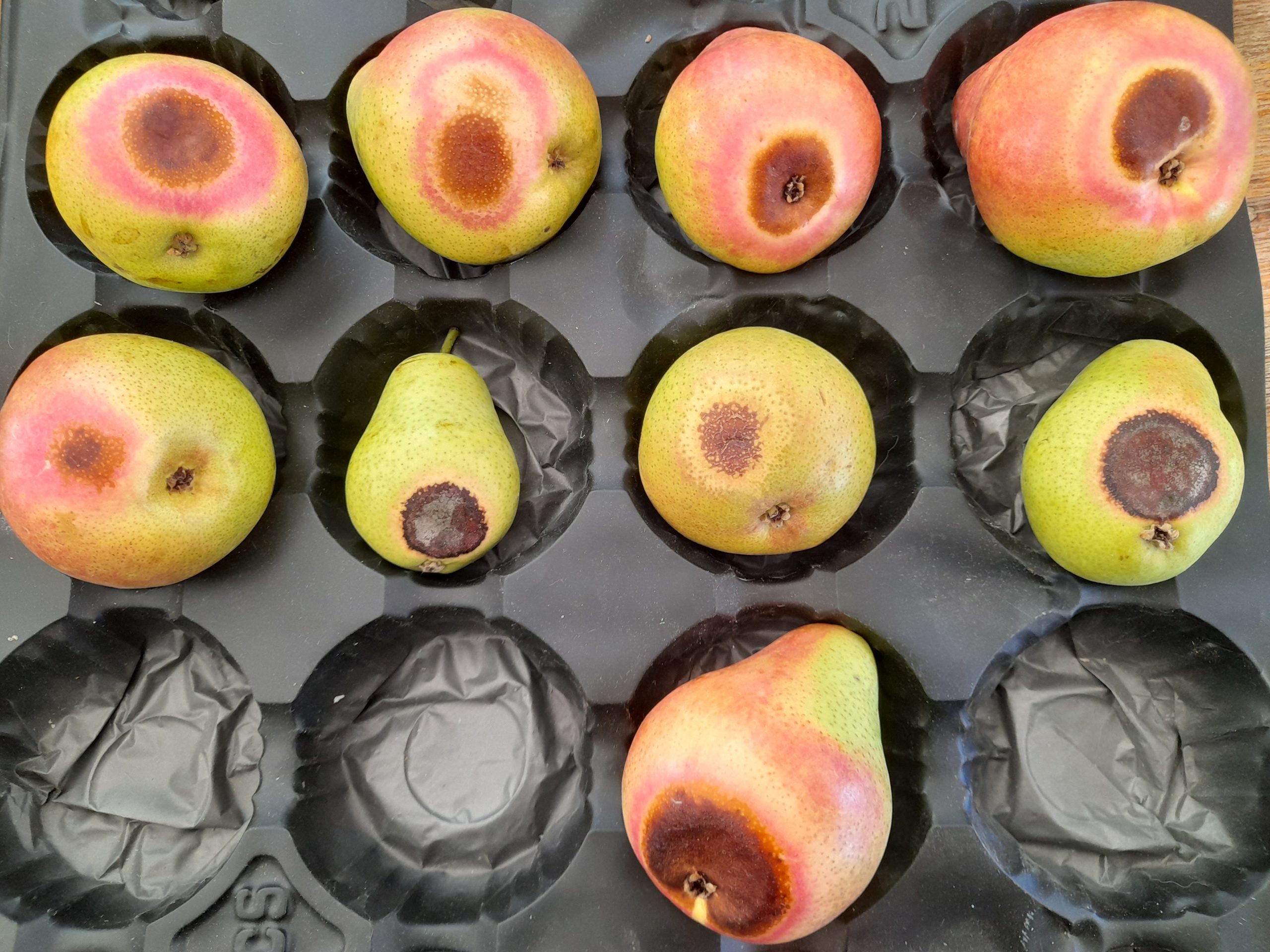
Figure 4: Severe calyx-end sunburn was observed on nine fruit (total) from eight reflective foil plots (32 trees).
Acknowledgment
 The PIPS 4 Profit Pear production systems for future climates (AP22002) project is funded by Hort Innovation, using the Hort Innovation apple and pear research and development levy, with contributions from the Australian Government and co-investment from Agriculture Victoria. Hort Innovation is the grower-owned, not-for-profit research and development corporation for Australian horticulture.

This article was first published in the spring 2025 edition of AFG.