Chemical thinning planning
September 2009 | Presented by Craig Hornblow and Ross Wilson, AgFirst | Future Orchards® Orchard Walk notes and presentation
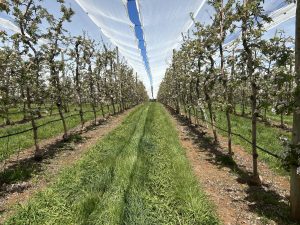
Chemical thinning is most effective when it is treated as a block-specific crop-load strategy rather than a fixed recipe. Craig Hornblow and Ross Wilson of AgFirst explain how growers can build a thinning plan around clear objectives for yield, fruit size, colour, return bloom and picking efficiency, while accounting for variation between and within orchard blocks.
The presentation shows why factors such as tree age, vigour, pruning style, pollination, flower density, row orientation, wet feet, biennial status and weather all influence thinning response. It also reviews the main tools available to growers, including ATS, NAA, Ethrel®, BA and Carbaryl, and stresses that application timing, sprayer calibration, water volume and target coverage are integral parts of the thinning decision.
A Pink Lady example demonstrates how a target of about 55 tonnes/ha and 180 g fruit can be translated into different strategies for blocks with different tree and flowering characteristics. The resource also explains that ATS can affect both flowers and leaves, that water rate and minimising rewetting matter, and that weather information is critical when deciding whether to proceed or adjust a planned application.
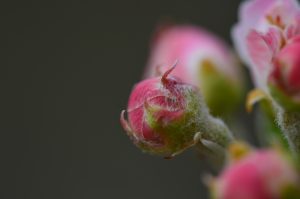
The central message is to start the season with a plan but remain flexible. Growers are encouraged to walk blocks frequently during bloom, monitor flower strength, timing and fruitlet abortion, keep good records, leave unsprayed controls and adapt the program to each block rather than assuming the same recipe will work everywhere.