Tasmanian trial highlights issues impacting post-storage quality
What factors are limiting quality in long–term storage of Gala, Jazz, Ambrosia and Kanzi apples in Tasmania?
Four key factors that limit the quality of apples held in long-term storage and impact late marketed fruit in Tasmania have been identified in a trial carried out last season. The factors included fruit firmness and poor texture, particularly in Gala, lenticel spot and blotch in Kanzi® and Jazz™ apples, and storage rots and russeting in Gala. The Future Orchards® monitoring trial was led by front line advisor Sophie Folder, Pear Consulting, and Jonathan Brookes, AgFirst, and undertaken by four northern Tasmanian orchardists and members of the Tasmanian Active Community Orchard Group (ACOG). It set out to address the question: What factors are limiting quality in long-term storage of Gala, Jazz, Ambrosia™ and Kanzi apples in Tasmania?
Fruit monitoring and storing
Fruit from nine orchard blocks across four orchards was monitored through the 2021–22 growing season and post-storage in November 2022. Each grower selected both a Gala block and either a Jazz, Ambrosia or Kanzi block for the monitoring program (Table 1).
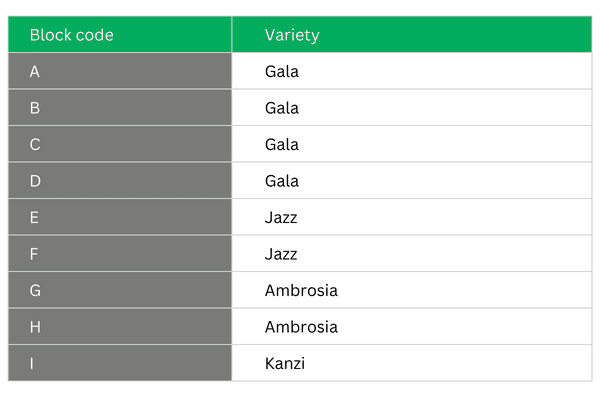
Table 1: Orchard blocks and varieties included in the Tasmanian ACOG monitoring trial. Block names and orchards have been coded (A–I) to maintain confidentiality.
The growers monitored the fruit in the orchard and, at harvest, collected a sample of 100 fruit from each block to be stored in a controlled atmosphere coolroom until November 2022 to simulate a long-term storage program.
The fruit was removed from cool storage on 10 November 2022 and stored at ambient temperature for 7 days to simulate a retail environment, prior to a sensory taste panel assessment on 17 November 2022.
Results
Eating quality
Fruit eating quality was measured using the assessment by the sensory taste panel. Panellists were provided with a cut segment of fruit from each block (Figure 1). They were asked to rate the fruit texture, juiciness, sweetness and flavour, to note the chance of purchasing again and to rank the fruit from most to least preferred (Figure 2).

Figure 1: Fruit taste panel samples and score sheet.
Overall, different varieties scored differently, which can be attributed to personal eating quality preferences. Jazz scored highly, particularly for texture, juiciness and flavour. Different blocks of the same variety scored differently, highlighting differences in eating quality of fruit harvested from different blocks.
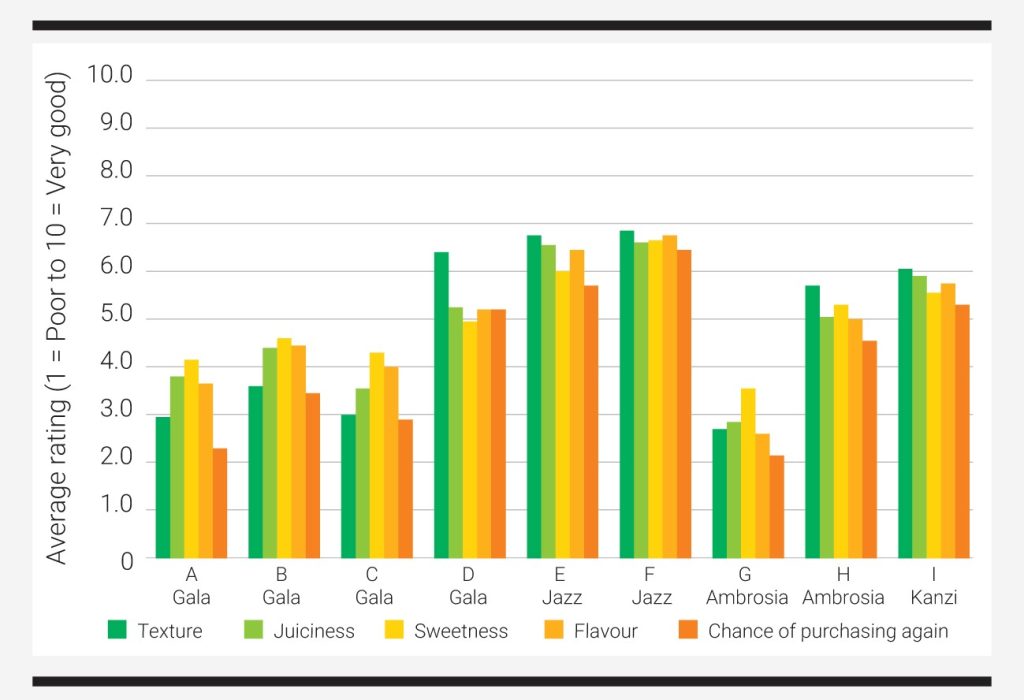
Figure 2: Taste panel average ratings for texture, juiciness, sweetness, flavour and chance of purchasing again.
The fruit texture and chance of purchasing again were closely related. Texture, firmness, crunch, flavour, sweetness and juiciness were listed frequently for preferred apples.
Defect analysis
Storage rots and fruit defects, including bruising, discolouration, russeting, insect damage, lenticel blotch and mechanical damage/stem punctures, were assessed on 15 November 2022. The incidence of post-storage fruit quality defects for each block is shown in Figure 3. Storage rots were present across all varieties (Figures 4 to 7), lenticel blotch was an issue in Kanzi and Jazz, and russeting was an issue in Gala. Mechanical damage from stem punctures occurred in all blocks except one, and bruising from picking occurred in three Gala blocks and one Ambrosia block.
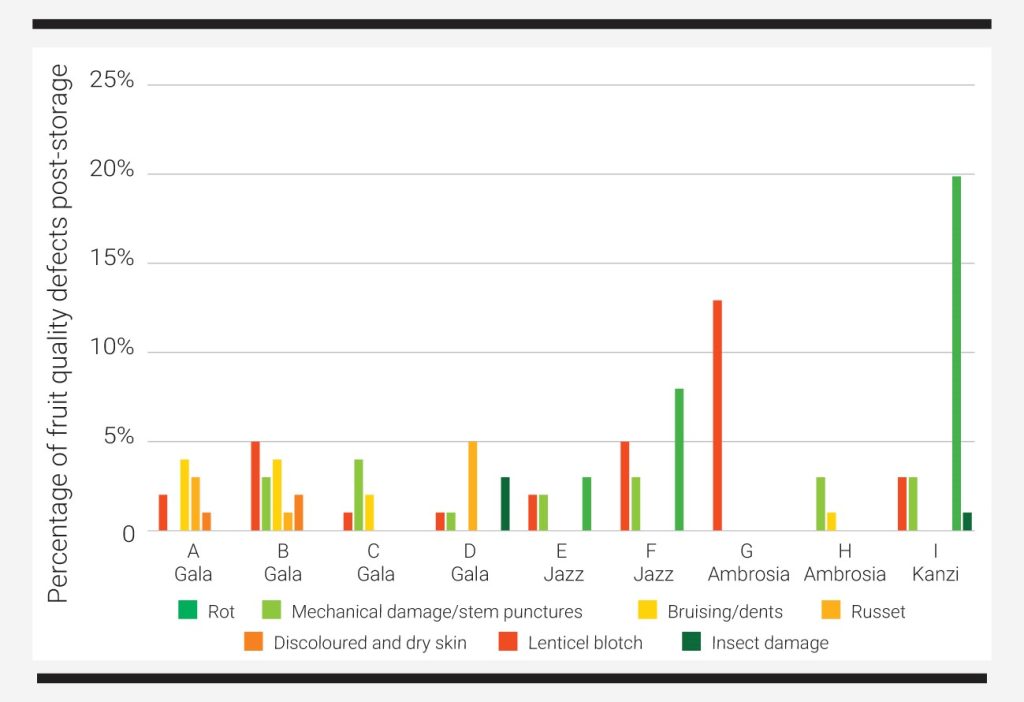
Figure 3: Percentage of fruit quality defects post-storage.
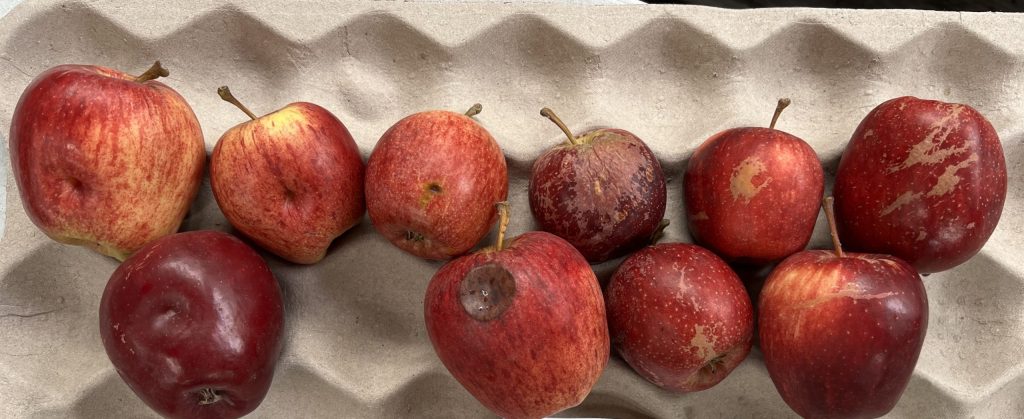
Figure 4: Insect damage, storage rot, stem puncture and russet, D – Gala.
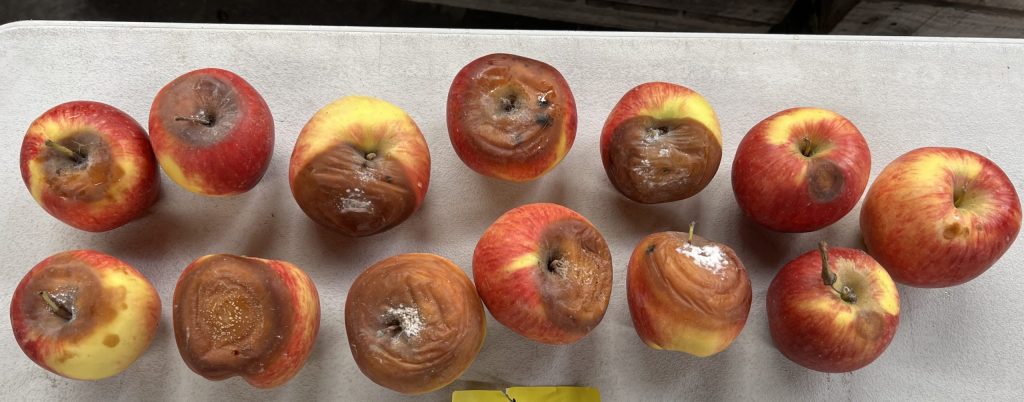
Figure 5: Storage rot, G – Ambrosia™.
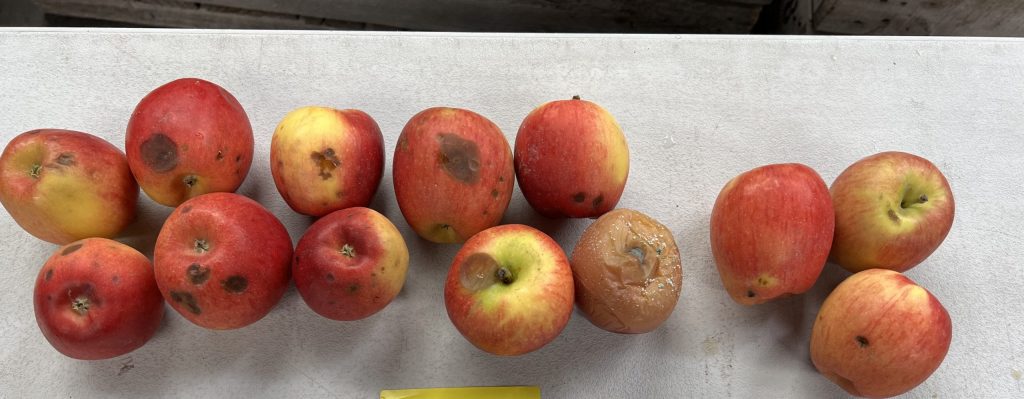
Figure 6: Lenticel blotch, rot and stem punctures, F – Jazz™.

Figure 7: Lenticel blotch and rot, I – Kanzi®.
Fruit maturity
Fruit firmness (pressure) and Brix (total soluble sugars) were measured at harvest by the orchardist and then again after storage on 15 November 2022.
All Gala blocks were above minimum market specifications of being above or equal to 6.5kg pressure at harvest and post-storage. Some blocks dropped pressure in storage a lot more than others – this was also reflected in low texture scores from the fruit taste panel – while other blocks had higher fruit pressures post-storage.
Brix increased during storage as the starch that was accumulated in the growing season converted to sugars. Three of the Gala blocks (A, C and D) and Kanzi were below the minimum market specifications for Brix of 12 (Gala) and 13 (Kanzi) at the time of harvest and therefore storage was necessary to increase Brix prior to marketing. The Ambrosia and Jazz blocks recorded the highest Brix.
Fruit dry matter
Fruit dry matter can be an indicator of potential storage ability and fruit eating quality, with higher dry matter being preferred. The dry matter results of this trial supported this assumption for some, but not all, varieties. The Ambrosia blocks were higher in dry matter than the other varieties in the trial and, on average, the Gala blocks had the lowest dry matter percentages.
Fruit nutrients
Throughout the growing season, each grower recorded and monitored crop load and fruit size, entering the results into OrchardNet. Growers also recorded fertiliser, fertigation and foliar nutrients applied to each block. At harvest, a sample of 10 fruit per block was sent for dry ash (fruit nutrient) analysis. Despite large differences in the units of nutrients applied to the blocks, there were not large differences in fruit nutrient content at harvest.
Limiting factors identified
All of the monitoring results were then analysed to identify the limiting factors impacting fruit quality after long-term storage for each variety. Four key factors were identified:
- fruit firmness and poor texture, particularly in Gala
- lenticel spot and blotch in Kanzi and Jazz
- storage rots in Gala
- russeting in Gala.
Improving fruit texture in Gala
The sensory taste panel results highlighted that fruit from the Jazz, Kanzi and Ambrosia blocks were better suited to long-term storage than the Gala blocks because the fruit was firmer and the texture was rated more favourably than the Gala.
Gala eating quality was hampered by poor texture and reduced fruit firmness after storage. Note: the lack of post-harvest treatments, e.g. SmartFresh, may have influenced this result in the trial.
In a 2020 Tasmanian COG trial, harvest date was shown to have a high influence on Gala fruit maturity and texture at marketing. In the 2020 trial, late picked Gala was less firm at marketing and texture was rated poorly by the sensory taste panel. The use of a plant growth regulator was shown to delay the commercial harvest date by 10 days, allowing for greater red colour development in the fruit without detriment to eating quality (Folder et al. 2020).
The take home messages from the 2020 trial are relevant to managing Gala texture:
- Focus on harvesting Gala at the optimum maturity and if maturity is slipping or labour resources are limited then consider the use of a PGR such as Harvista™.
- If starch pattern index is above 2.5 then the consumer eating experience may be impacted post-storage.
Further investigation and improved knowledge on maintaining texture in late marketed Gala would have high industry relevance, as Gala is a widely grown variety in Tasmania.
Managing lenticel breakdown and blotch
Lenticel breakdown and blotch was identified as a post-storage quality issue in the Kanzi and Jazz blocks – a known disorder for both varieties. The incidence of lenticel blotch in Jazz was comparative with commercial packout reports for 2022 season fruit reported by the growers. The high incidence in the Kanzi trial fruit was not reflected commercially, although the fruit was marketed earlier in the season (June) than the trial fruit (November).
A number of factors increase the risk of lenticel disorders (Blakey 2018), including unbalanced nutrition, rapid changes in weather and growth, advanced maturity and post-harvest management. Growers of varieties susceptible to lenticel blotch should pay particular attention to managing these risk factors to the risk of lenticel spot and blotch in their fruit and consider marketing fruit prone to lenticel spot and blotch earlier rather than later in the season.
Given that the fruit in this trial did not undergo any post-harvest treatments, sorting or packing, the pre-harvest factors would be most relevant in identifying possible causes of lenticel breakdown and blotch found in this trial.
Managing storage rots
Storage rots were present in most of the trial blocks. Note: the storage protocol for this trial did not fully reflect commercial storage practice, which may have influenced fruit quality.
The risk of storage rots can be reduced through pre-harvest fungicide programs and good harvest management techniques, including picking fruit at the right maturity and picker training to reduce bruising and mechanical damage or stem punctures to fruit. Stem clipping in varieties at risk of stem punctures, e.g. Jazz, has been shown to reduce the incidence of stem punctures and resulting storage rots. Temperature management after harvest is also very important as warm temperatures encourage pathogens to grow.
Managing russet in Gala
Russet results from various forms of damage such as frost, reactions to chemical or foliar applications, pathogens or nutritional imbalances, and often occurs early in the fruit development. Russet was identified as a post-storage defect in three of the four Gala blocks in the trial. Russet increases fruit moisture loss in storage, reducing fruit pressure and increasing the incidence of fruit shrivel, russeting also reduces the fruit appearance and marketability.
Different apple varieties have different levels of russet development risk. Factors that reduce the incidence of russet include pruning to improve air circulation, management of frost conditions and following best-practice management guidelines for spray and foliar nutrient application.
What’s next?
Further studies are recommended on the following topics to better understand the cause and risk factors relevant to Tasmanian orchards and storage situations:
- Lenticel disorders in Kanzi and Jazz
- Maintaining firmness and fruit texture in late marketed Gala
- Russeting in Gala
- Storage rots.
Further information
This article is drawn from the Future Orchards trial report What is limiting quality of long-term storage of apples in Tasmania? by front line advisor Sophie Folder, Pear Consulting, and Jonathan Brookes, AgFirst. To read the full trial report, visit https://apal.org.au/wp-content/uploads/2023/03/TAS-ACOG-trial-2022-final-report-long-term-storage.pdf.
Acknowledgements
Thank you to the following people for their assistance in this trial:
- Brett Squibb (RW Squibb & Sons), Troy Layton (Paramatta Creek Orchards), Rodney Hogan (Montague Legana) and Brent McClintock (AAAW Legana) for your willingness to participate in the Tasmanian ACOG and trial.
- Brett Squibb (RW Squibb & Sons) for providing the cool storage of the trial fruit.
- The Tasmanian growers and industry personnel who participated in the sensory taste panel of the trial fruit at the Future Orchards Spring Orchard Walk in November 2022.
References
Blakey R (2018) “Managing Lenticel Breakdown – Don’t get caught by the snowball”, Stemilt Growers LLC, Sourced at www.hort.cornell.edu/expo/proceedings/2018/Managing%20Lenticel%20Breakdown%20summary.pdf.
Folder S, Hornblow C and Squibb B (2020) Future Orchards Demonstration Trial: Final Report, Investigating Gala apple eating quality, APAL.
This article was first published in the Autumn 2023 edition of AFG.