
States ramping up fruit fly prevention campaigns ahead of summer
Around Australia, state governments and local councils are conducting public awareness campaigns about the risks that fruit fly poses to the horticulture industry. Many domestic gardens contain unwanted or unmanaged fruit trees that can be a source of food and a breeding ground for fruit flies.
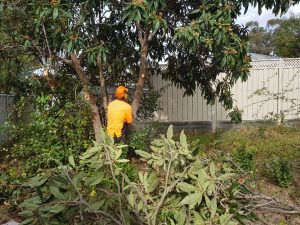
The removal of unmanaged or unwanted fruit trees has a disruptive effect on fruit fly habitat by reducing potential breeding grounds. Photo: Goulburn Murray Valley Fruit Fly Project
In Victoria’s Goulburn Murray Valley, residents with a fruit tree they no longer want are being encouraged to have them removed through a free Fruit Tree Removal Program.
Goulburn Murray Valley Fruit Fly Area Wide Management Program Coordinator Ross Abberfield said: “A single female fruit fly can lay up to 800 eggs and reproduce another generation within 4–6 weeks, so it is very easy for large increases in fruit fly populations to occur very quickly and this means attempts to stop this spread are essential in effectively controlling fruit fly.”
The tree removal program is provided free of charge to land and property holders and allows for the removal of unmanaged fruit trees and plants from backyard orchards, private residences and public areas such as nature strips.
Tasmania is an internationally recognised fruit fly pest-free area and Biosecurity Tasmania wants to keep it that way. Tasmanians are being asked to be vigilant for fruit fly and work together to keep the state free of fruit fly.
Biosecurity Tasmania’s commitments to help ensure the state’s ongoing fruit fly freedom are outlined in Maintaining Tasmania’s Freedom From Fruit Fly – A Strategy for the Future 2022-2027.
Fruit Growers Tasmania is currently developing a map of abandoned orchards and self-sown fruit trees across the state, which will be used to assist with biosecurity planning and incursion response activities.
In late September the South Australian Department of Primary Industries and Regions (PIRSA) joined forces with Gardening Australia, which aired a segment on keeping the state fruit fly free.
Presenter Sophie Thomson and PIRSA’s Nick Secomb spoke about how gardeners can do their bit to prevent outbreaks, signs to look for and methods for reducing fruit fly.
During October two detector dogs are being used in a new and innovative PIRSA trial to find fruit fly larvae in orchards and help in the fight against outbreaks in the Riverland area. Community fruit fly information sessions are also being held in areas prone to outbreaks, and a voluntary fruit tree replacement pilot is due to begin in the coming weeks.
Further reading
Tips for Qfly control as we head into spring
Biosecurity Tasmania – fruit fly



