
Driving sales with quality in 2025
Retail training program set to transform apple and pear displays nationwide.
Hands-on training aimed at improving the quality and presentation of apples and pears in retail stores is being provided to staff at Woolworths, Aldi and independent retailers such as Drakes and Ritchies this season. The initiative is designed to improve consumer satisfaction and boost sales.
Building on the successes of the 2021–22 and 2022–23 seasons, the quality education and merchandising program will once again be delivered by Strikeforce, targeting 965 stores nationwide. In 2025 the program will be delivered in two parts, from March to May over 11 weeks (to coincide with the arrival of new season apples and pears) and again from August to October for a further 11 weeks.
Funded by Hort Innovation using the apple and pear levy, this program has been approved by the industry Strategic Investment Advisory Panel (SIAP). SIAP members collaborated with Hort Innovation and Strikeforce to develop the program, ensuring strong alignment on objectives, strategies and activities.
The challenge
Poor quality apples and pears on supermarket shelves have been shown to impact sales and grower returns. Research conducted by Kantar revealed that a significant barrier to apple purchase for consumers is ‘bruises easily’ (19 per cent) and ‘poor quality’ (12 per cent), with only 55 per cent of consumers satisfied with the quality of their apples overall.
Defective or improperly stored produce not only diminishes consumer appeal but also reduces profitability for both retailers and growers. Addressing this issue was critical to improving consumer satisfaction and increasing demand for apples and pears.
“This initiative continues to empower fresh produce staff with the knowledge and tools to optimise apple and pear stock management – from delivery and coolroom storage to shelf presentation,” said Hort Innovation Senior Brand Manager Joanna Krol-Slocombe. “The ultimate goal is to ensure the highest quality fruit reaches consumers.”
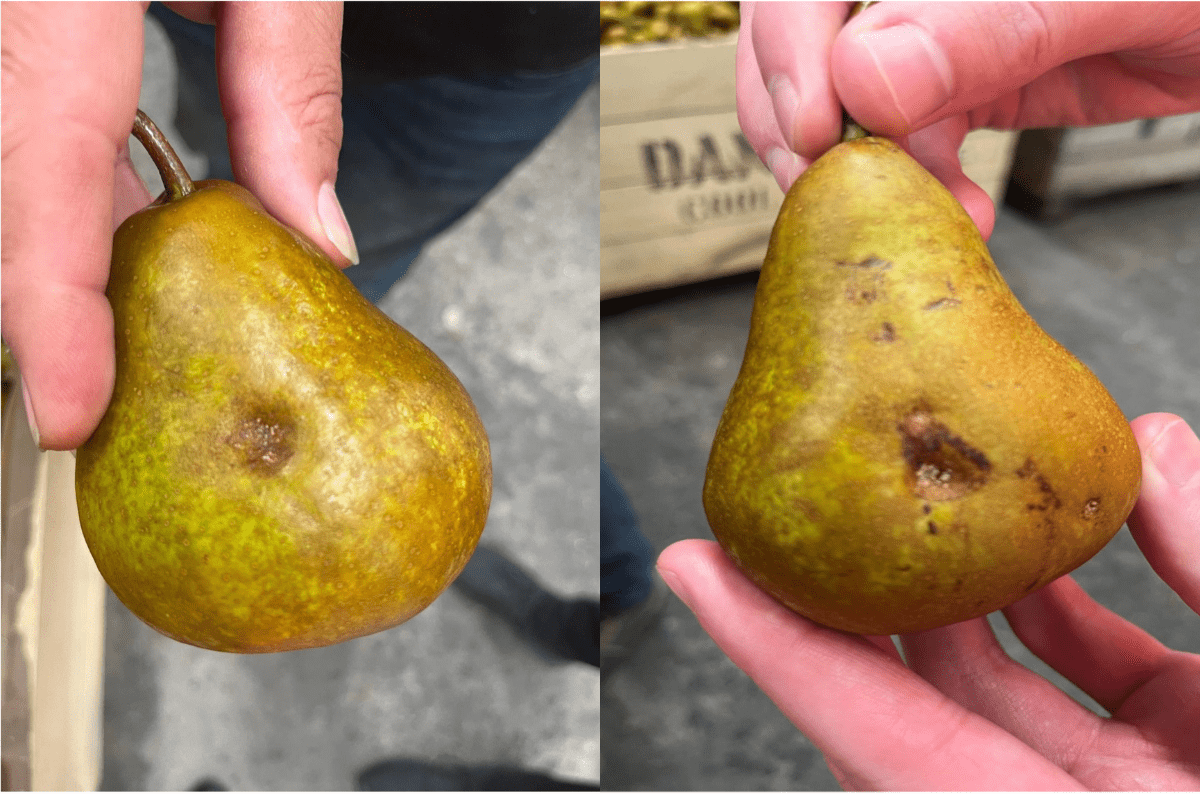
Store staff working in the fresh produce section are taught how to spot the difference between a hail mark (left) and a stem puncture (right).
The response
Store staff will be educated on the critical importance of adhering to best-in-class merchandising standards. By demonstrating the direct impact of merchandising on the visibility, appeal and ‘shopability’ of apple and pear displays, the initiative aims to increase staff engagement and make fruit more appealing, thereby boosting purchases.
Despite participating in recent years, Coles is not partaking in the 2025 program since it is no longer allowing external merchandising, education, training, auditing of stock, replenishment, or point of sale programs within its produce sections. While this decision is disappointing, it presented an opportunity to broaden the program’s focus beyond the major players.
This year’s initiative will target independent retailers, such as Drakes and Ritchies, as well as Aldi, while continuing to collaborate with Woolworths.
Staff engagement at Woolworths – the largest contributor to apple and pear sales – constitutes a significant proportion of the program, with 625 stores targeted in total. As a retailer previously targeted in the 2022 and 2023 programs, it is important to continue to educate staff in these stores to ensure consistently high standards, especially given the high staff turnover in the retail sector in recent years.
Aldi is the third-largest contributor to apple and pear sales and 200 Aldi stores will be targeted in the program this year, presenting an exciting growth opportunity. Timing store visits alongside Woolworths will allow the project team to draw direct comparisons between the retailers, benchmark the program’s impact on Aldi staff, and facilitate future assessments of the program’s impact on sales and shopper engagement.
The program will also target independent retailers Ritchies (70 stores) and Drakes (70 stores) – ideal candidates for the retail education program due to their emphasis on community engagement and product quality.
The current program includes the following:
- Comprehensive in-store staff training programs aimed at increasing staff knowledge and skills in managing and merchandising apple and pear produce effectively.
- Clear, engaging resources including video tutorials, briefing materials, feedback templates, FAQs and online training modules. These resources ensure staff are well-equipped with the knowledge and skills to execute optimal merchandising practices.
- Data-driven store audits to gather unbiased insights, which are then used to refine educational content and measure program effectiveness.
- Tailored education utilising business intelligence tools to analyse data on product quality and defects is used to tailor staff education to address specific knowledge gaps in each store.
- Regular merchandiser reporting to track progress, monitor program impact and continuously adapt activities based on performance and feedback.
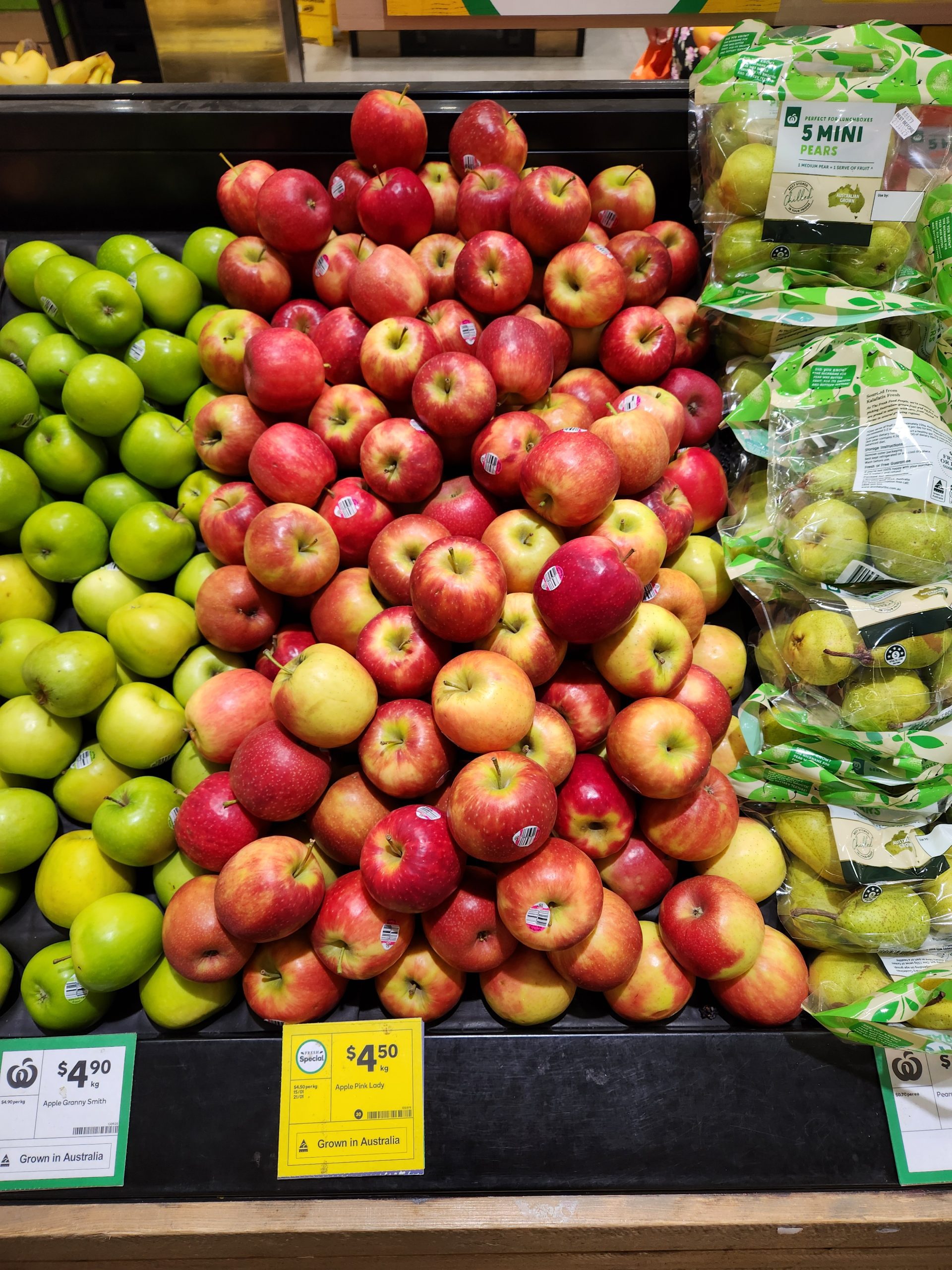
Better displays translate into better sales.
The track record
The current program builds on successes from the 2021–22 and 2022–23 programs, which saw significant improvements in display quality, fruit availability, and a reduction in defects.
Most importantly, better displays translated into better sales. Over the 2021–22 program, there was a measured improvement in sales across the merchandised stores of 3:1 when compared with stores not merchandised.
In 2022–23, fruit quality across the program was two per cent higher in 2023 compared to that of 2022, driven by continual improvements in the quality and consistency of apples and pears throughout the program period.
This progress is expected to continue with the 2025 program, elevating retail standards by ensuring fresher, more visually appealing apples and pears are displayed in stores, leading to increased consumer purchase intent, basket spend and overall sales.
Additional benefits include:
- improved staff education and display standards
- positive behavioural changes within retailer teams
- increased sales for participating retailers
- reduced long-term R&D investment as program activities become embedded in retail processes
- improved display, produce quality, shopability, stock availability and product rotation.
Ultimately, this program aims to foster a quality-first mindset within the retail environment, benefiting both retailers and growers through enhanced consumer satisfaction and increased sales.
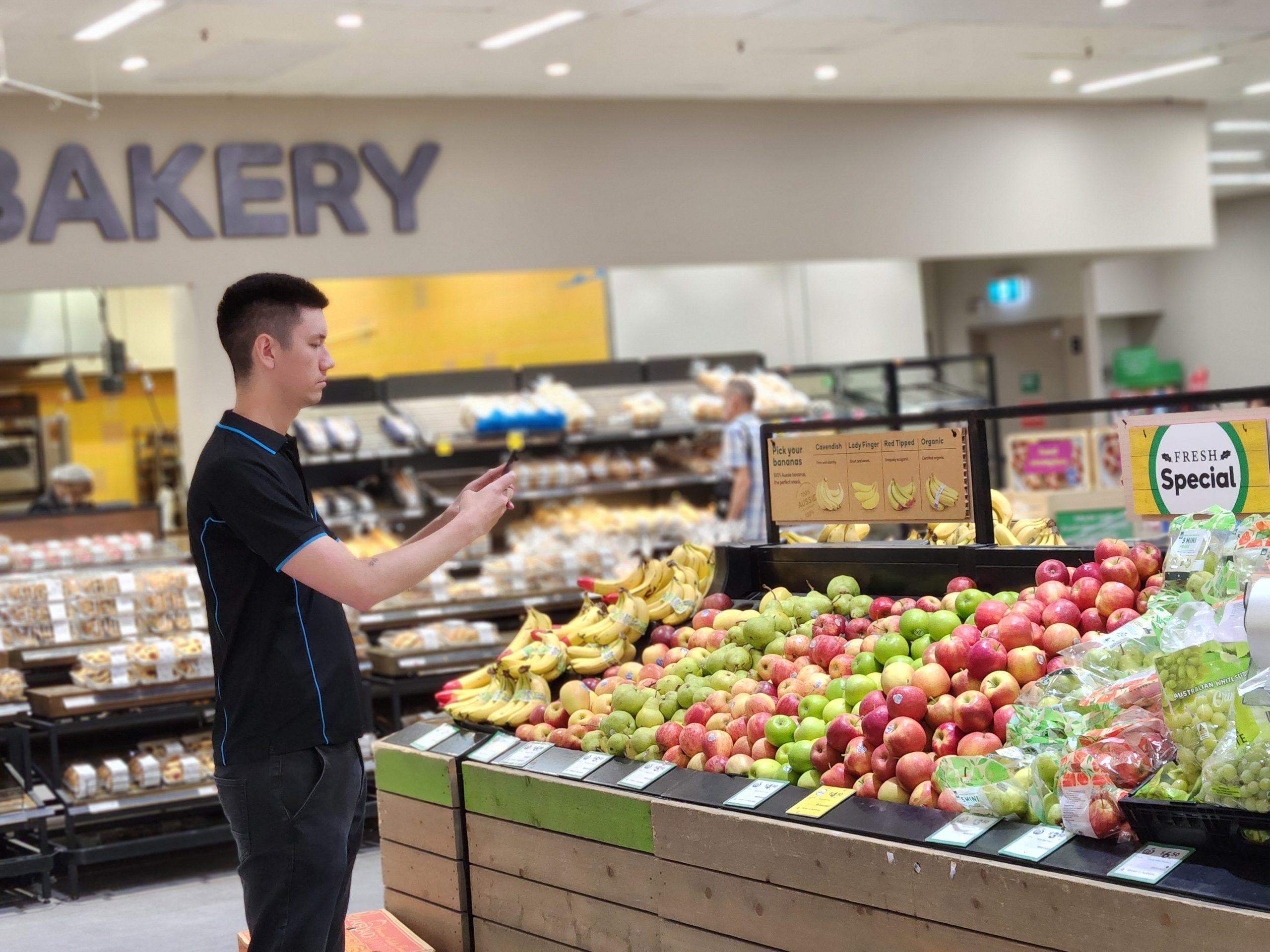
A Strikeforce merchandiser conducting merchandiser reporting.
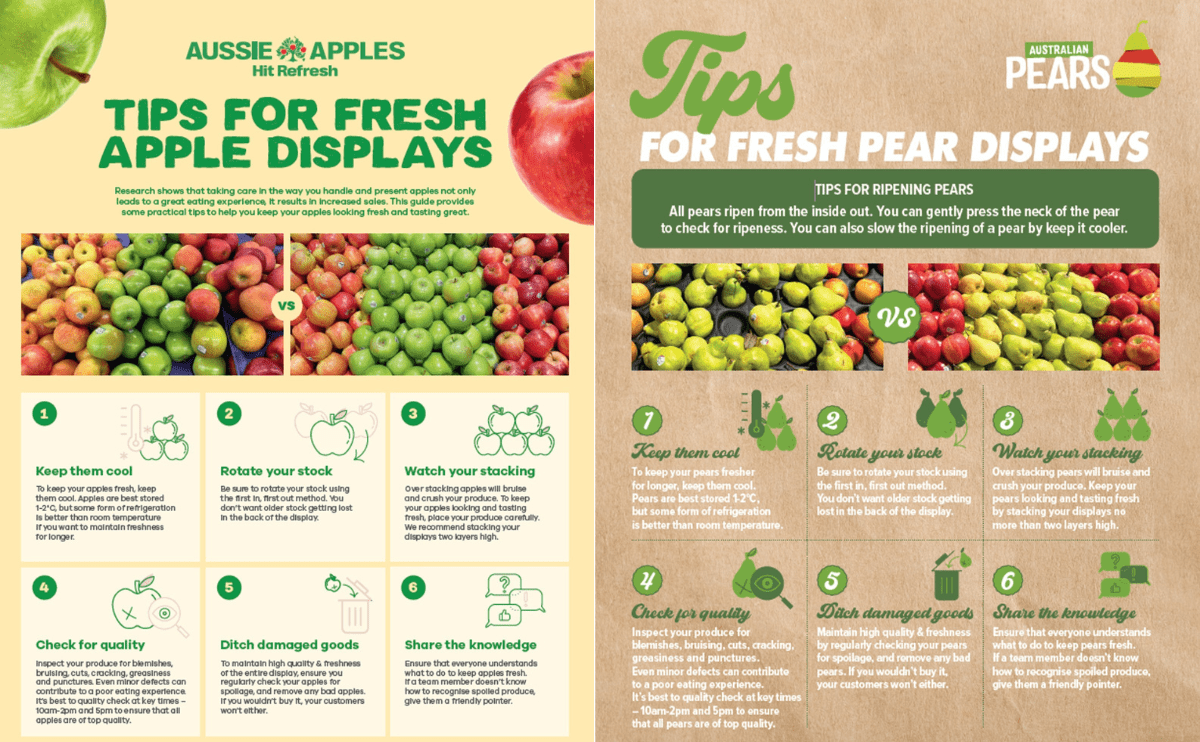
Following in-person training in stores, staff are provided with information about creating apple and pear displays, plus QR codes to watch a short video on merchandising and complete a questionnaire and feedback survey.
Further reading
“Enhanced shopping experience for apple and pear customers” (November 2022), www.horticulture.com.au/growers/impact-update/impact-update-articles/enhanced-shopping-experience-for-apple-and-pear-customers/
“In-store merchandising: A shared responsibility” (June 2022) https://apal.org.au/in-store-merchandising-a-shared-responsibility/
This article was first published in the Autumn 2025 edition of AFG.



