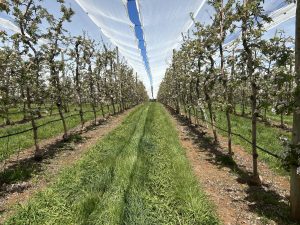
The evolution towards more competitive apple orchard systems in the United States
February 2007 | Dr Terence Robinson | Future Orchards® technical paper
This paper reviews the shift in United States apple production toward more intensive orchard systems and the biological and economic reasons behind that change. It examines the interaction between tree density, rootstock vigour, precocity, yield efficiency and orchard profitability.
Robinson discusses the strengths and limitations of commonly used dwarfing rootstocks, including M.9 and M.26, as well as newer Geneva rootstocks selected for traits such as fire blight resistance, Phytophthora resistance and high yield efficiency. The paper stresses that orchard density and rootstock must be matched to soil, climate and management capacity.
The broader lesson is that competitive systems aim for rapid canopy establishment, early cropping, high light interception and efficient labour use while keeping vigour under control. The resource is useful for growers comparing rootstocks and planting systems during orchard redevelopment.