
Microplastics in the orchard
Gordon Brown reviews research investigating the impacts of microplastics on seedling apple rootstock performance.
Plastics have become a common and useful material for modern living. In apple and pear production some plastics are obvious such as those used in hail netting, bird netting, weed mulches, reflective cloth and irrigation systems. As plastics age they break down into microplastics which fall into the orchard soil.
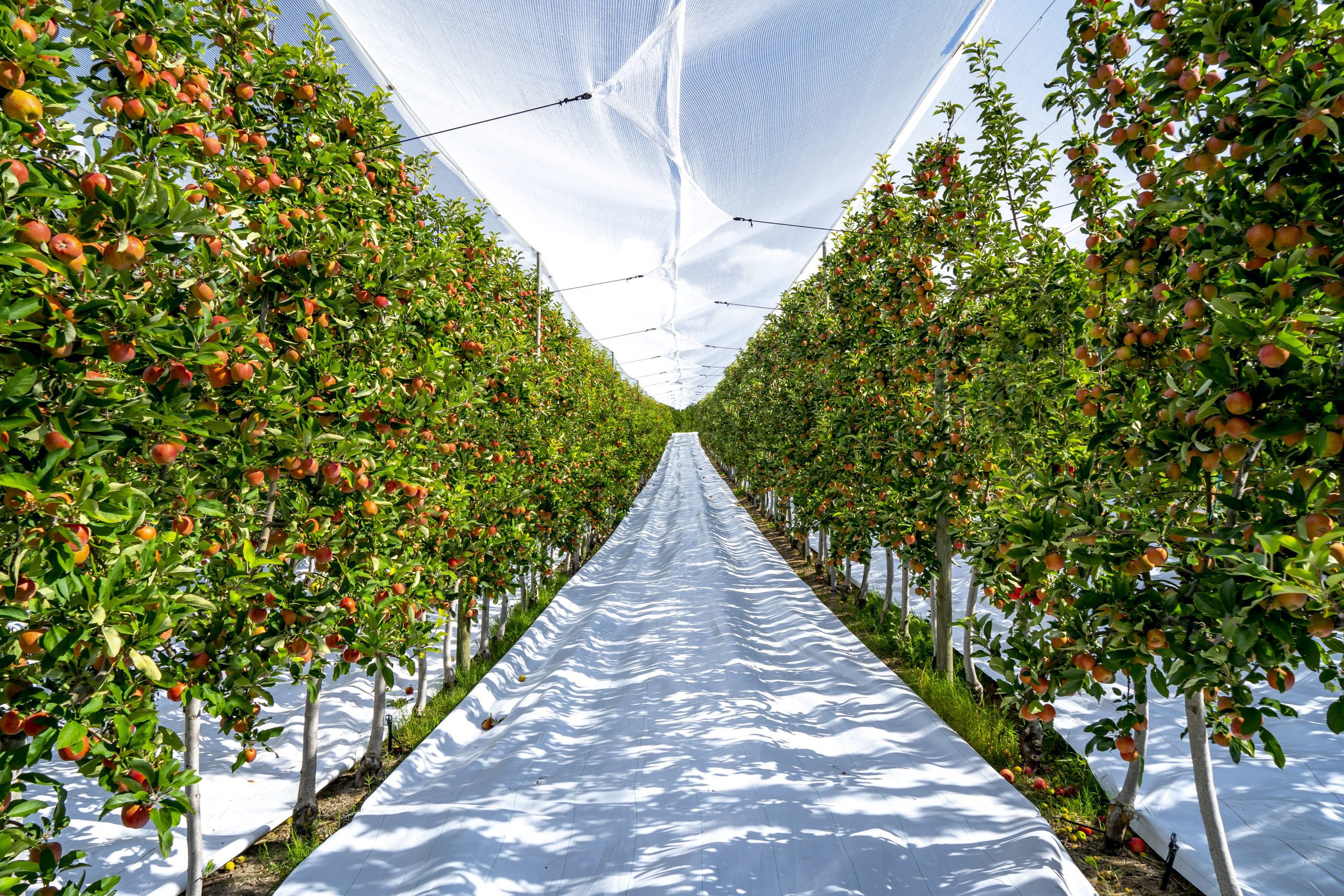
Plastics, such as those used in hail/bird netting, weed mulches and reflective cloth, degrade over time, breaking down into microplastics.
In China the concentration of microplastics in farmland under plastic mulches is three times higher than that in unmulched farmland. In addition to these microplastics, others are unknowingly spread on the orchard floor in slow release fertilisers and, more recently, as biosolids (dried sewerage sludge from urban areas). While contamination of biosolids destined for agriculture in Australia have to meet certain standards for heavy metals and pesticides, the standards do not measure or consider the microplastics they contain. It is estimated that currently up to 7,000 tonnes of microplastics per year are applied to agricultural land in Australia through the application of biosolids.
Microplastics have a large surface area with an affinity for nutrients such as nitrogen and phosphorous, hence their use in slow release fertilisers. They also have capacity to attract heavy metals such as cadmium, copper and zinc. The potential problem with binding these heavy metals is that, as they age, microplastics break down into nanoplastics which can enter plants through the root pores and transport these toxic heavy metals to other plant organs where they injure the plant.
The negative impacts of microplastics in marine environments are well documented, hence the development of biosolids as fertilisers to avoid these marine problems. Unfortunately their impact in terrestrial environments is not well known. In late 2023 a scientific review of research identified that they reduce the performance of maize, rice, cress, rye grass, lettuce, wheat, onion, lotus, radish, clover, brassicas, mung bean, Arabidopsis, soybean, sweet potato and Spirodela. No research was identified on any fruit crop; however, it can be expected from the above findings that there would be negative impacts.
Today we will be looking at Chinese pot-based research into the impacts of microplastics on seedling apple rootstock performance. This trial added microplastics to the soil at a concentration typically found after plastic weed mat has been used. It was conducted over a 35-day period, which is an extremely short period of time for a perennial fruit crop. It is, however, the only information available for the impacts of soil borne microplastics on fruit trees. Until more thorough, long-term research results become available, this is the only scientific information available for orchard management decisions.
Methods
After washing orchard soil to remove soluble nutrients, half of the soil used in these trials had microplastics added (1.5% polyethylene (PE)). Eighteen-centimetre-tall rootstock seedlings were planted into the soils (with and without microplastics) and were irrigated with complete fertiliser solution every three days for the 35 days of the trial. At the end of the 35 days, the rate of photosynthesis of the trees was measured as well as the weight of roots, shoots and leaves.
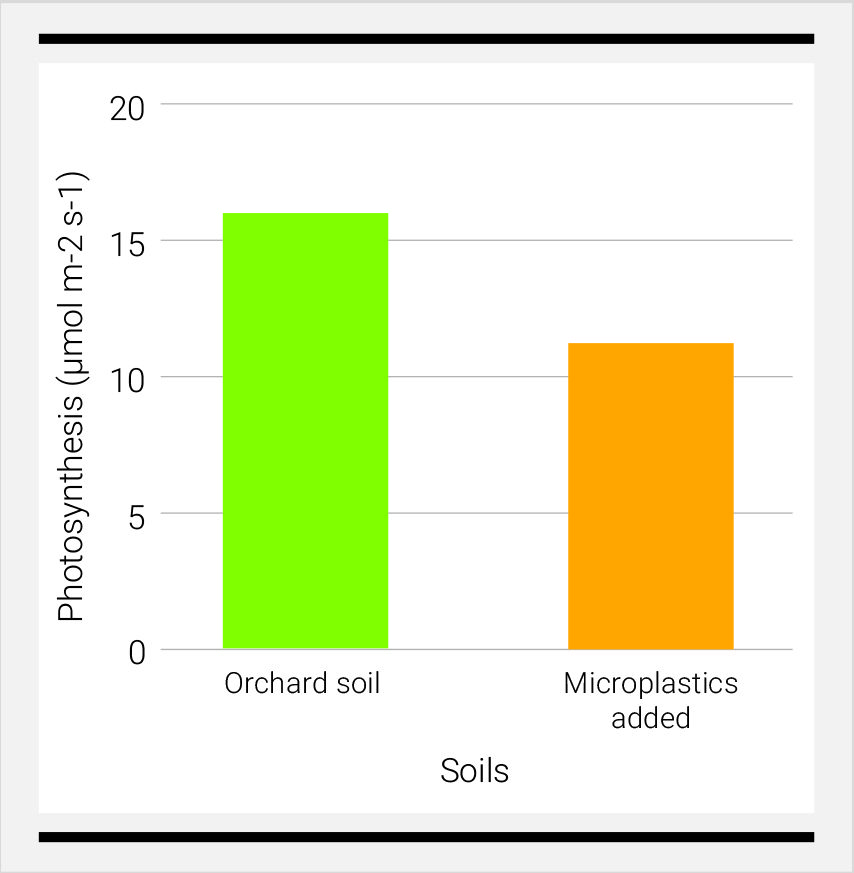
Figure 1: The rate of photosynthesis of seedling apple trees growing in orchard soil with added microplastics.
Results
It was found that adding microplastics to the orchard soil reduced the rate of photosynthesis of the trees by just over 30 per cent (Figure 1). This represents a large reduction in sugar production by the leaves, with potential to reduce yield by 30 per cent. In this short-term trial it would be expected that this reduction in the rate of photosynthesis would be reflected in the dry weight of the trees. This was found to be the case, with a reduction in dry weight of 20 per cent by the microplastics (Figure 2). It should be noted that this dry weight includes the weight of the trees at the start of the trial, when they were 18cm tall. Hence, the loss in dry weight while the trees were growing in microplastic-contaminated soil was greater than 20 per cent. To account for this, a baseline of 2g/plant has been arbitrarily applied in Figure 2. The percentage weight reduction due to the microplastics for the roots, shoots and leaves was 23, 16 and 20 per cent respectively. This indicates that the impact on the tree was across all tree parts, with potential for a large impact on the roots, essential to support future tree growth.
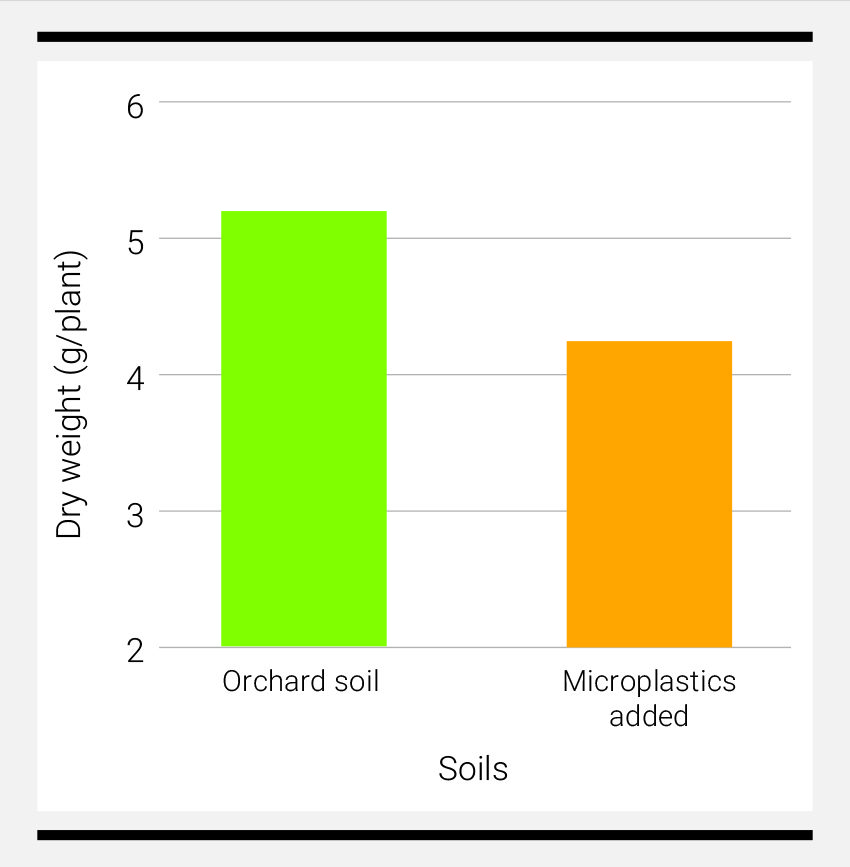
Figure 2: The dry weight of seedling apple trees growing in orchard soil with added microplastics after 35 days of growth.
This short-term pot experiment has highlighted that microplastics in orchard soils probably reduce the performance of apple trees in the orchard. The exact mode of action is not identified in this report although the authors suggest it may be due to blockage of the root pores that prevents nutrient absorption into the root system or the release of toxic materials such as benzene from the microplastics as they break down. If it eventuates, with further research, that microplastics have this impact on apple trees over many years, and given the long life of microplastics in the soil, there is a need to consider how to minimise the release of microplastics to the orchard floor. Hence it would be wise to adopt microplastic minimisation practices such as not using slow release fertilisers or biosolids, and replacing plastics such as netting and reflective cloth prior to them disintegrating with old age in the orchard.
Take home messages
- Microplastics in the soil increase with the use of plastics in the orchard.
- Microplastics in the soil have been shown to reduce the performance of many annual crops.
- The impact of microplastics on perennial fruit crops has not been studied.
- This short-term experiment has shown that microplastics in the soil have the potential to reduce the performance of apple trees by 30 per cent.
- Long-term trials are required to confirm these results on adult trees in the field.
- In the short term, avoid using slow release fertilisers or biosolids (processed sewerage).
- Replace plastic netting and cloths prior to disintegration in the orchard.
Further reading
- “Microplastics aggravate zinc deficiency-induced inhibition of physiological-biochemical characteristics in apple rootstock Malus hupehensis (Pamp.) Rehd seedlings”, https://doi.org/10.1016/j.emcon.2024.100421
- “Microplastic stress in plants: effects on plant growth and their remediations”, https://doi.org/10.3389/fpls.2023.1226484
- “Use of biosolids in agriculture”, www.dpi.nsw.gov.au/__data/assets/pdf_file/0011/277355/Use-of-biosolids-in-agriculture.pdf
- Use and disposal of biosolids products, www.epa.nsw.gov.au/sites/default/files/biosolidsguidelinesnsw.pdf
- “More than 1,200 tonnes of microplastics are dumped into Aussie farmland every year from wastewater sludge”, https://theconversation.com/more-than-1-200-tonnes-of-microplastics-are-dumped-into-aussie-farmland-every-year-from-wastewater-sludge-137278
This article was first published in the spring 2025 edition of AFG.



