
Grower of the Year finds networks invaluable for learning and support
The 2025 Grower of the Year, Brett Squibb, is a leader in the Tasmanian apple industry who is well-known for his fruit quality and crop performance, and his willingness to share his knowledge.
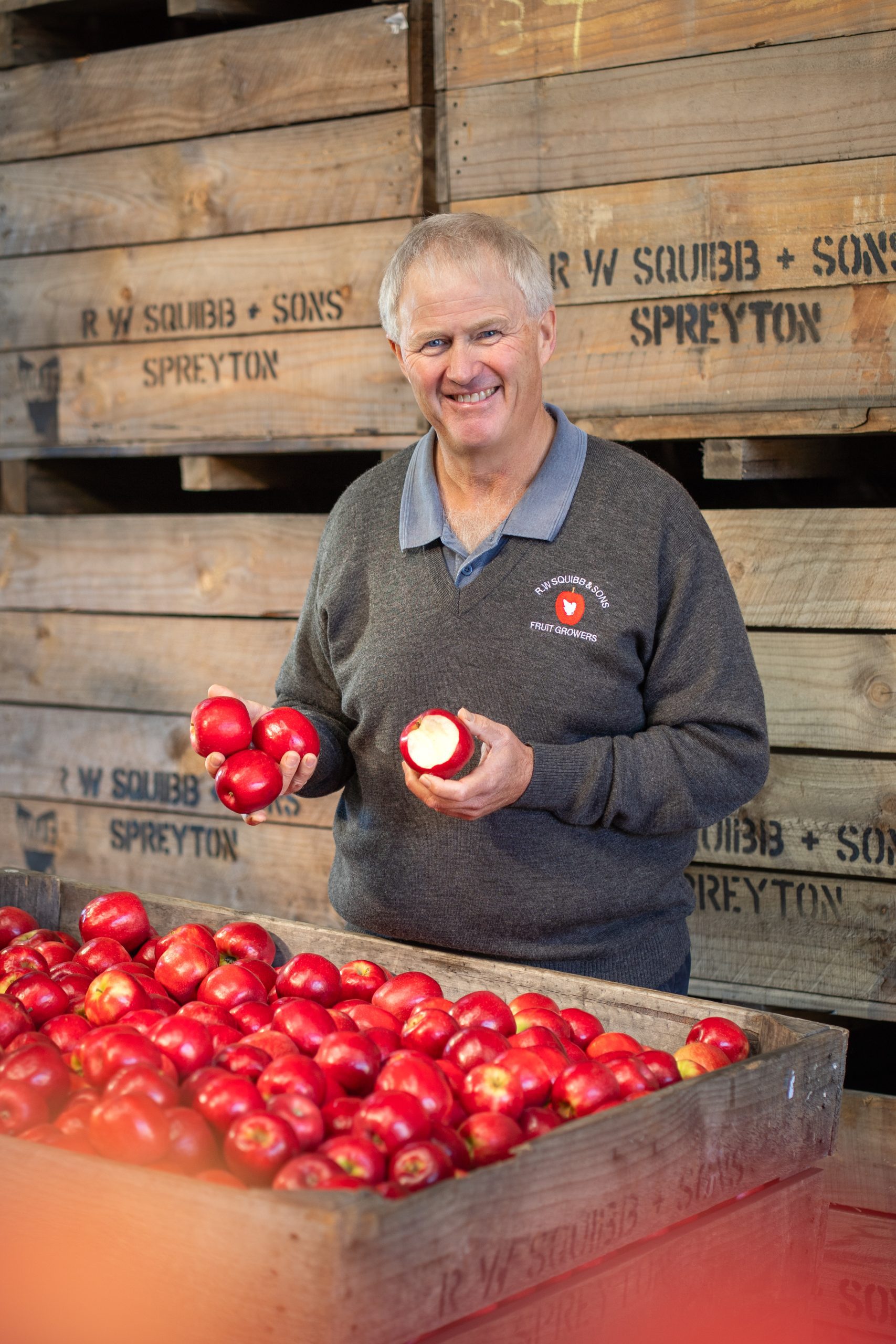
Photo: Jacqui Beven Photography
Brett Squibb, the APAL Grower of the Year, appreciates the value of living his whole life in Spreyton in northern Tasmania, on the outskirts of Devonport, where tourists from the mainland file off the Spirit of Tasmania ferry and into the Squibbs’ farm shop to buy delicious apples, pears and local produce.
Brett’s grandfather, Reginald Walter or RW Squibb, bought his first block of land at Spreyton in the early 1940s, then went off to war. He died when Brett was a teenager and the farm was run by Brett’s father and uncle under the banner of RW Squibb & Sons before it was passed on to Brett and his wife Linda.
An important part of Brett’s life is meeting regularly with his local orchardist friends to discuss the latest data and how to implement best-practice management.
“The Spreyton network is fantastic; we’re all the same age and grew up together and our parents were good friends. We have a coffee and a chat every couple of weeks and go through ideas, what we’ve been doing and can do better, and share staff and equipment,” said Brett.
Spreyton is also the perfect place to grow apples, he said. The orchard still contains a row of heritage Gravenstein, Cox’s Orange Pippin, Crofton and Cleopatra apples, quinces and pears, alongside the commercial crops of Granny Smith, Gala, Cripps Pink and club varieties.
The farm shop started life as a cellar door to sell award-winning wines from the vineyard that the Squibbs had leased 15 minutes away from their farm. After 10 years they decided to discontinue the lease to give Brett more time to concentrate on growing apples.
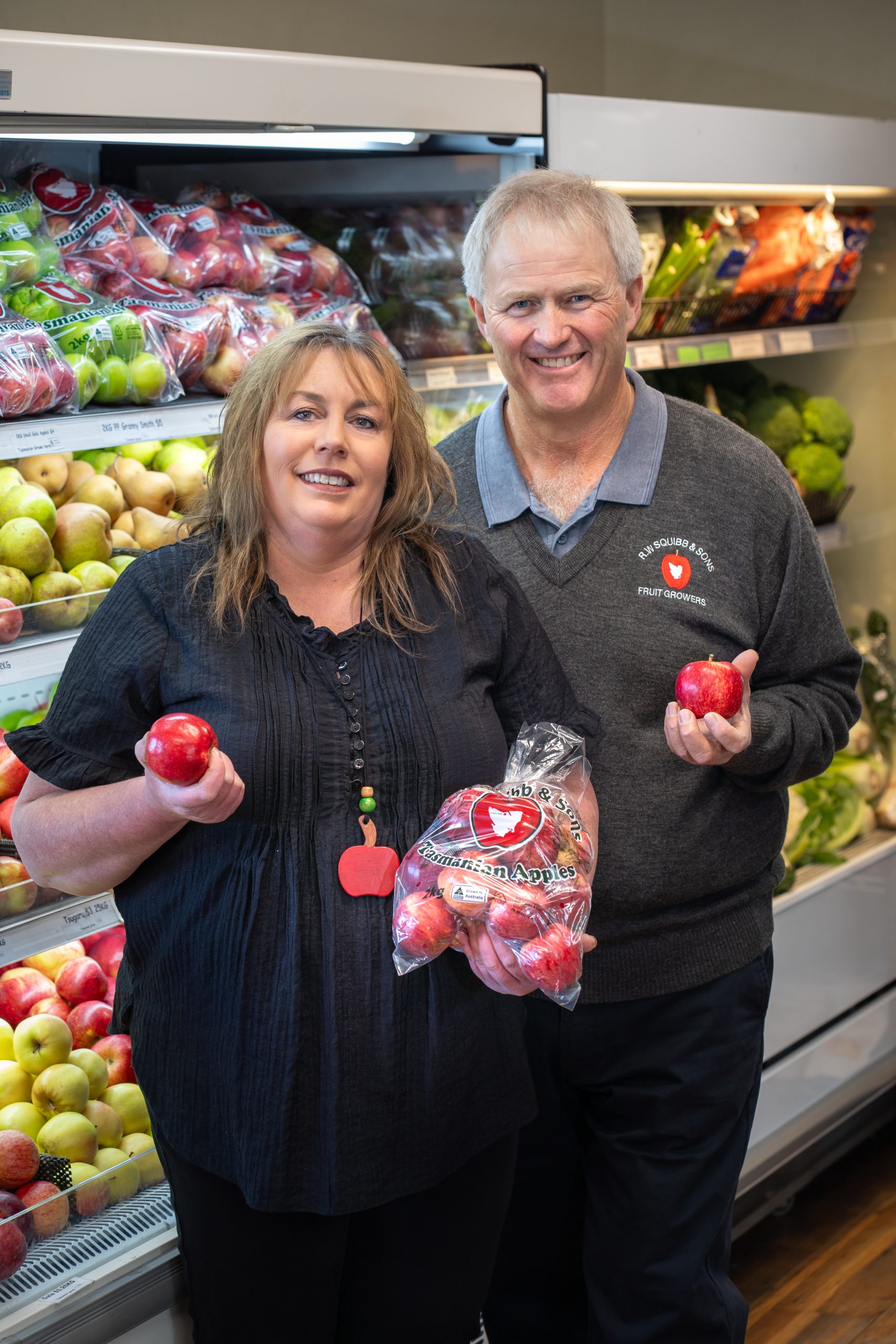
Brett and his wife Linda stock their own apples and pears plus other locally grown, seasonal fruit and vegetables in the farm shop at RW Squibb & Sons. Photo: Jacqui Beven Photography
“Linda stocks our apples and pears plus a lot of locally grown, seasonal fruit and veg lines. Tasmanian jams, preserves and honey are extremely popular as well. We have a really good local clientele as well as travellers and tourists in the shop every day,” he said.
“People say they’ve never seen fruit like ours in the supermarket and that’s because we are really fortunate in that we can grow a really good red apple. We’ve got a great little microclimate here in Tassie. The apples are on the tree for a very long time and we don’t get extremes of temperature, so they’re full of flavour and the colours are predominant.
“People love the Gravensteins and Cox’s Orange Pippins in the shop. We have them putting in orders from Christmastime so they don’t miss out.”
Renowned for his fruit quality and crop performance, Brett is described by leading agronomists and orchardists as ‘probably the best apple grower in Tasmania right now’.
He’s extended his local networks by initiating and organising regular industry gatherings, informal orchard walks and barbecues for growers and agronomists in the northern production areas of the state.
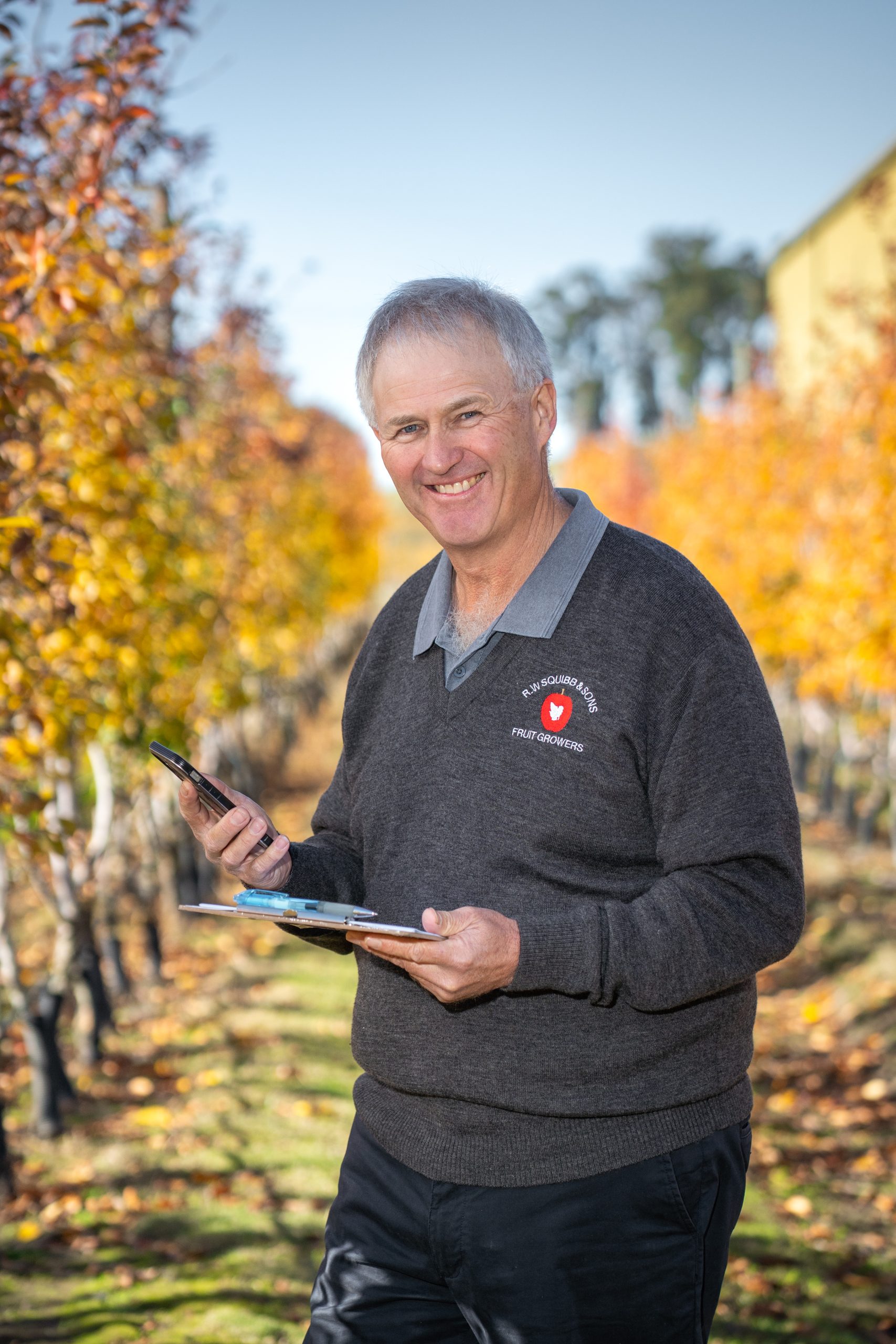
A self-described ‘numbers man’, Brett proactively documents all the elements of crop development so he can make data-based management decisions throughout each season. Photo: Jacqui Beven Photography
The orchard walks are an invaluable opportunity to combine the decades of experience of growers in the region, to share agronomic knowledge, discuss challenges and, most importantly, support each other through challenging periods.
A self-described ‘numbers man’, Brett proactively documents all the elements of crop development so he can make data-based management decisions throughout each season.
“Data takes the guesswork out of it. We go out and measure fruit every week, look back over all the spreadsheets I’ve got from past years, and if it’s not on par with the previous year we know we have to address something – fertiliser, thinning, water and so on.
“How you use numbers is the critical thing. But we’re in a lucky age, we’ve basically got a computer in our pocket, so we can whip the phone out and quickly check past data or Google, or check soil moisture, weather, anything from the orchard.
“It’s just made our jobs and our industry so much better.”
Brett utilises the latest technology, including soil moisture probes for irrigation scheduling and weather station-based pest and disease modelling to implement his integrated pest and disease management (IPDM) strategies. He’s a vocal advocate for the Productivity, Irrigation, Pests and Soils (PIPS) programs and an enthusiastic participant, hosting trials on product storage, stem clipping and more.
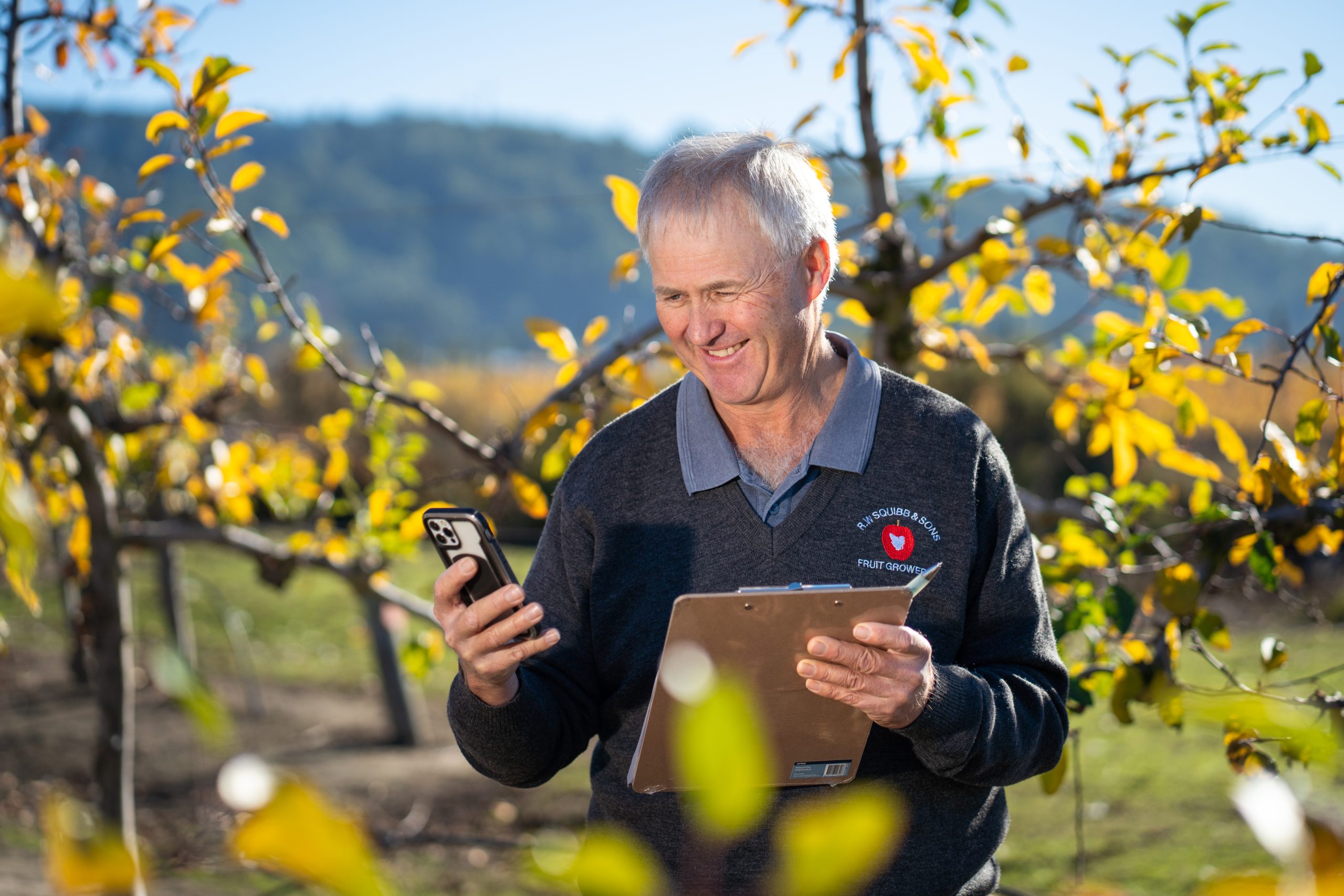
The microclimate in Spreyton, northern Tasmania, means that Brett can grow a really good red apple that’s full of flavour. Photo: Jacqui Beven Photography
“I’ve always been keen on giving back to the industry, so we’ve hosted trials for everything from chemical thinning to biofumigants and codling moth, to try to improve outcomes for the whole industry,” Brett said.
“A few years ago we were asked to be part of an irrigation planning and recording trial with Swan Systems from Western Australia and that has been an absolute game changer. It’s taken out the guesswork and produced some of the best fruit we’ve grown in the past couple of years.
“It allows us to drill down to become much more precise. Instead of guessing, the model forecasts weather and irrigation and tells us how much to put on and when.”
So what does he see as the challenge for the future?
“No matter how hard we work and how much effort we put in, we’re only going to be as successful as our customers will let us be. It’s getting harder as an industry to make a successful business out of primary production.
“Labour, insurance, all our costs are going up, but the sale price for our product isn’t going up at the same rate. So that’s the challenge. There’s a lot of people working on it but I don’t have the answer.”
For now, Brett is feeling ‘quite overwhelmed’ to be the recipient of the Grower of the Year Award.
“It’s amazing. You generally just go along doing the best you can. An award like this is quite humbling,” he said.
This article was first published in the Winter 2025 edition of AFG.



