
Engaging with the Sustainability Framework
PIPS 4 Profit investigates evidenced supported environmental sustainability indicators for apple and pear orchards.
Apple and pear businesses participate in assurance and performance programs for different purposes and markets. While the specific elements needed to protect and audit food safety and quality requirements are well developed, ‘environmental sustainability’ requirements for farm businesses are not so well defined. The 2023–24 Australian-grown Horticulture Sustainability Framework (Sustainability Framework) (Hort Innovation, revised 2023) sets out sustainability goals and indicators to measure progress towards these. Some measures rely upon data collected in the orchard and packhouse, others need alternative approaches such as industry surveys. The Sustainability Framework does not specify industry roadmaps for determining priority goals and indicators, or the data needed to establish industry benchmarks and monitor progress.
Why should we respond to the Sustainability Framework?
With increasing scrutiny over water use, carbon emissions, pesticide residues and labour practices, the Sustainability Framework offers a structured approach to identify and manage sustainability risks. The apple and pear industry can respond to growing domestic and international market demands of proven sustainability practices by telling a credible, unified and evidenced story about environmental responsibility practices. Such transparency builds consumer trust, brand reputation and, potentially, price premiums.

What is PIPS 4 Profit doing?
The projects of the PIPS 4 Profit program are cooperatively undertaking work across growing regions to determine in-orchard and packhouse data that can evidence practices and performance of the industry that manage environmental sustainability risks and consumer concerns. They are asking what needs to be measured and how growers can effectively and efficiently collect data and track trends to make more informed production and environmentally sustainable management decisions.
With a strong focus on commercial implementation, PIPS 4 Profit is conducting this work in parallel with orchard design, growing system and management practice R&D to accelerate profitability while embedding sustainability benefits.
The aim of the PIPS 4 Profit work is to help growers determine their own practical response to the Sustainability Framework and market expectations. An individual response is likely to depend upon several factors, such as current and planned future systems and practices of the business, the resources on hand or plans to invest in new assets and resources, and what specific markets are demanding from their suppliers. PIPS 4 Profit is also demonstrating how continuous improvement strategies will make longer-term differences to environmental sustainability. Measuring, tracking, reviewing and then adjusting practices to achieve more profitable and sustainable outcomes is good business.
Water management
Water is the life blood of the industry. Whether through rainfall or irrigation, water inputs into the orchard system need to be of good quality and efficiently used to maximise production outcomes and reduce unnecessary loss. The Sustainability Framework outlines a goal for Responsible and efficient use of allocated water to optimise production per unit of water (R.6). The measurable indicators set to evaluate progress towards the goal are:
- R.6.1 Irrigation water use efficiency (ML/ha)
- R.6.2 Water use efficiency (yield/ML)
- R.6.3 Water use productivity (GVP $/ML)
PIPS 4 Profit is delivering R&D to better plan, monitor and actively manage water efficiency. R&D underway will show how in-field equipment, supported by the right industry informed and evaluated decision support technologies can automate data collection, analysis and reporting.
Building sustainable soils (AP22003)
The Tasmanian Institute of Agriculture (TIA) has partnered with SWAN Systems to integrate back-end models of previous PIPS research, and new apple-specific functionality, to optimise irrigation applications (timing and rate) and maximise tree health and fruit quality.
The web and app based platform collects data from networked field devices (weather stations, soil moisture probes and irrigation controllers), or accepts manually recorded flow data if required. Along with soil characteristics and block variety information, the data is used to predict daily soil moisture to determine what is needed to match tree demand and minimise wastage (Figure 1). By partnering with four growers across regions, the project is showing how the platform supports live data feeds for daily decision support and includes a facility for performance reporting on the season’s actual data.
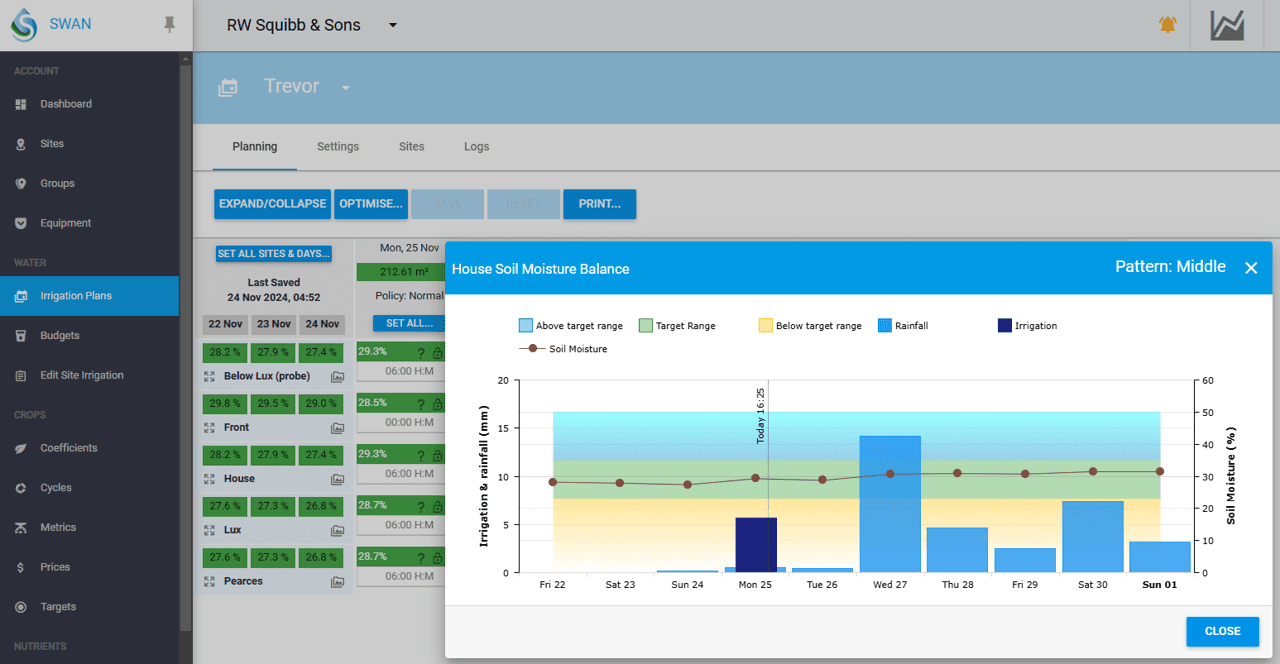
Figure 1: SWAN Systems supports growers to optimise irrigation inputs. Source: John Bussell, SWAN Systems
Pear production systems for future climates (AP22002)
Agriculture Victoria has installed water meters in 15 blocks across the Goulburn Valley to monitor irrigation efficiency over three seasons. Actual applied irrigation is being compared to irrigation requirements estimated from reference crop evapotranspiration adjusted by a crop coefficient (see Irrigation budgeting and scheduling tool for pears, https://apal.org.au/programs/more-industry-programs/pips3program/ap19005/, developed by previous PIPS research). The benchmarking exercise will identify if trees are over-irrigated and provide a demonstration of a simple tool (a water meter) that can provide data to support environmental sustainability. Irrigation systems are also being evaluated to determine where improvements can be made to optimise their operation to minimise unnecessary water loss.
What growers can do now to improve water use
- Use weather forecasts to schedule
- Monitor soil moisture
- Monitor trunk shrinkage and expansion using dendrometers
- Match irrigation to orchard demand.
Nitrogen management
Compared to broadacre and intensive livestock systems, apple orchard nitrogen (N) inputs are relatively small, but they remain an expensive part of the system for growers. A mismatch between supply and demand can adversely impact fruit yield and quality, and off-farm losses can impact catchment water quality. The Sustainability Framework outlines a goal to apply nutrients matched to crop needs (R.3). The measurable indicator set to evaluate progress towards the goal is:
- R.3.2 Nutrient use efficiency (NUE) (no metric provided)
PIPS 4 Profit is delivering R&D to better plan, monitor and actively manage NUE, drawing upon work undertaken in previous PIPS R&D.
Building sustainable soils (AP22003)
PIPS 4 Profit is delivering R&D to progress the industry’s seasonal N planning tool, SINATA (Strategic Irrigation and Nitrogen Assessment Tool for Apples, https://apal.org.au/wp-content/uploads/2024/09/SWAN-Systems-Info-to-support-SA-Video.pdf) by integrating it with SWAN Systems’ existing functionality. The project is drawing upon previous PIPS work that developed detailed modelling of soil and tree N balance. SWAN Systems is currently building functionality that will leverage data already collected by the system (irrigation, fertiliser, yield, soil moisture) and provide sustainability indicator-focused analysis for apple growers. The new feature will overlay the timing of plant N uptake against the actual N applications, irrigation and drainage (for example, from significant rainfall events).
Additionally, the project is investigating orchard floor management options to cycle nutrients and maintain good soil organic matter levels within the orchard. Improved soil health decreases the need for synthetic N inputs, and previous PIPS research has demonstrated that soil N reserves are remobilised for tree uptake to buffer seasonal variability.
What growers can do now to improve NUE
- Soil test approximately every two years to understand the current nutrient balance of blocks on different soil types and varieties and develop nutrition programs accordingly (refer to the Apple Soils website developed by previous PIPS research, www.applesoils.com).
- Leaf test blocks around mid-November and preharvest to guide precision post-spring and postharvest nutrient requirements.
- Consider other sources of N in the orchard (soil organic matter, composts and legume ground cover), and the timing of soil N mobilisation (release for tree uptake), when preparing annual N programs.
Soil health and productive capacity
A healthy, living soil with a strong microbial network stores more carbon and water, and plays an important role in broadly addressing other climate challenges. Goal R.2 Soil health and productive capacity is maintained or improved of the Sustainability Framework is underpinned by several indicators, two requiring soil and plant data measures that are being investigated by PIPS 4 Profit:
- R.2.2 Percentage of farms with organic carbon in topsoil steady or improving
- W.1.1 Carbon sequestration of horticultural plantings (CO2e)
Building sustainable soils (AP22003)
PIPS 4 Profit R&D is seeking to understand biological, chemical and physical parameters of apple and pear soils that best have potential to act as progress indicators for the industry. They seek to show that demonstrated and researched orchard floor practices build more resilient, healthier soils while delivering production and quality targets. Importantly, these are being researched across growing regions to reflect the impact of local climate variability.
Given the current focus on carbon accounting schemes and emissions reporting, research components are looking into mechanisms to improve carbon sequestration and how soil organic carbon stores are built and lost in apple production systems, including quantifying these.
What growers can do now to enhance the potential of their soils
- Minimise soil disturbance to protect the soil biology (for example, microbes cycle nutrients and make them available to the tree).
- Keep the orchard floor covered, preferably with a more diverse range of plant species that deliver several functions (i.e. rooting depth for soil structure, nitrogen fixing legumes, flowers for pollinators).
- Avoid practices that compact soil in the inter row.
- Reuse and recycle organic matter as much as possible (for example, mow and throw).
- Manage pests and disease with less chemicals.
- Upskill on soil carbon basics (refer to “Homegrown soil carbon – soil carbon basics” in AFG Autumn 2024, https://apal.org.au/homegrown-soil-carbon-soil-carbon-basics/)
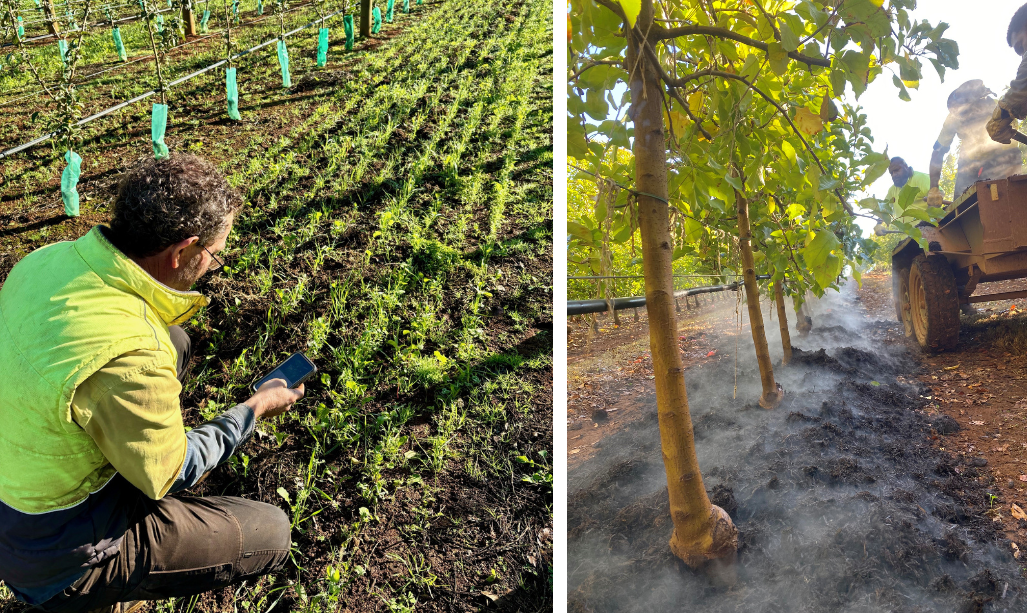
Figure 2: (left) Sean Whittaker of Ladycroft Orchards, Manjimup, inspects the regeneration seed mix sown in the inter row to bring a diversity of physical, chemical and biological functions to the orchard floor. (right) Compost is applied to the tree line to increase organic matter. Are there specific indicators of improved soil health that can be determined to also deliver beneficial yield and quality outcomes? Photos: Jen Riseley, Pomewest
Integrated pest and disease approaches
Managing pests, diseases and weeds is essential to reduce crop losses and keep trees healthy. However, management programs often rely on synthetic pesticide inputs to maintain damage at acceptable levels, resulting in control programs that are largely pesticide centric. Goal R.11 Responsible management of pests, weeds, diseases and agricultural inputs highlights integrated pest, disease and weed management as a sustainable approach to building industry capability to protect profitability and biodiversity. PIPS 4 Profit R&D is setting the foundation for potential data collection and analysis. The Sustainability Framework sets out only two measurable indicators specific to pest and disease management:
- R.11.1 Industry capability to effectively manage pests, weeds and diseases
- R.11.2 Capability, understanding and adoption of integrated pest, disease and weed management (IPDM and IWM) and resistance management strategies
Pest and disease management (AP22001)
PIPS 4 Profit research into biological control options for key apple and pear pests and diseases is being led by Agriculture Victoria, with regional partners, TIA, NSW DPIRD and Pomewest. As a component of studies and monitoring programs, the long-term efficacy and economic impact of establishing natural enemies and attracting native beneficials is being assessed. These options, when managed as part of a broader IPDM program, support growers to reduce their reliance on traditional chemical approaches and therefore decrease chemical resistance risk for the industry and residue concerns for consumers. Although indicators set by the Sustainability Framework do not quantify reduction targets for chemical use and resistance, PIPS 4 Profit research outcomes will provide industry with a strong evidence-based platform to determine industry-specific indicators, should markets demand this in the future.
It is important to recognise that strategies and indicators associated with building more sustainable soils and IPDM straddle one another, as do pollination services and activities that encourage biodiversity.
What growers can do now to transition towards integrated management programs
- Consider how long-term objectives of the business will drive adoption of IPDM.
- Identify key pest, disease and weed risks and the tactics that have or haven’t worked in the past.
- Seek information on current best-practice IPDM and prioritise those approaches that best achieve the objectives of the business.
- Develop a monitoring program to track performance and plan for potential changes in pest or disease pressure as a more integrated program is implemented.
- Evaluate the impact of interventions and strategies each season.
- Use the IPDM Manual for Apple and Pears (2021) (https://extensionaus.com.au/ozapplepearipdm/ipdm-manual-for-apples-and-pears/) and read the quarterly IPDM in Focus article in AFG.
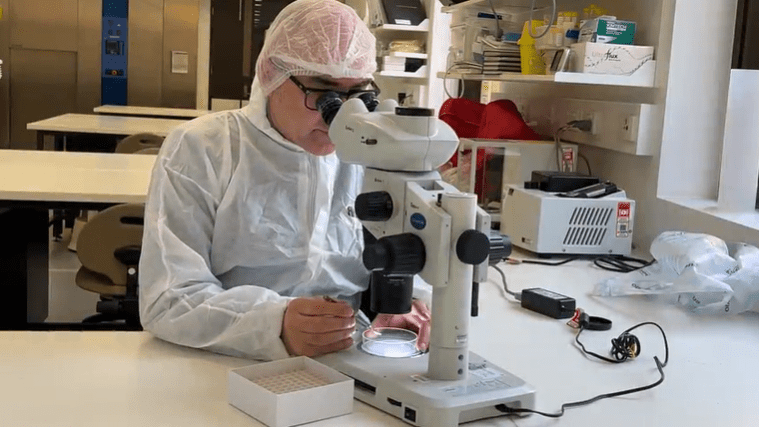
Figure 3: Research into biological control methods for both pests and diseases will support transitioning to IPDM programs that reduce industry reliance upon chemicals.
Labour efficiency and business profitability
Ultimately, the economic sustainability of the industry relies upon percentage (%) of higher yielding crops achieving premium packout, and the efficient use of labour and capital investment costs to deliver this. P.1 Vibrant, productive, profitable enterprises, along with P.2 Maximise the quality and utilisation of all produce, speak to the sustainable economic benefit of streamlined business and farming systems. There are several indicators that PIPS 4 Profit is addressing in the economic evaluation of the R&D strategies being tested and demonstrated:
- P.1.2 Volume of production
- P.1.3 Costs of production
- P.1.4 Labour productivity (gross value of production/full time equivalent)
- P.1.5 Return on capital
- P.2.1 Marketable yield (packout) as % of harvested yield
The PIPS 4 Profit projects are working with agricultural economists and business advisors to determine the economic impact of investing in sustainable production and labour efficiency practices and technologies, both immediate and long term. This work will support growers to evaluate economic indicators relevant to their business, such as break-even points for owning and operating new technologies to reduce manual labour inputs, or return on investment timeframes for renovating versus replant to convert to more efficient, quality-driven varieties and growing systems.
Conclusion
By engaging now with the Sustainability Framework, apple and pear growers not only demonstrate their commitment, but they also strengthen their position in a competitive market, reduce risks and futureproof their businesses. PIPS 4 Profit is supporting the industry to achieve this by determining how practical, effective and efficient data can be captured and used to establish benchmarks and track progress towards the broader goals of Australian horticulture.
For further information on the breadth of research informing potential environmental sustainability indicators (‘eco-credentialling’) for apples and pears, visit the PIPS 4 Profit webpage: www.apal.org.au/pips-4-profit-program
Further reading
2023–24 Australian-Grown Horticulture Sustainability Framework (Hort Innovation, revised 2023): www.horticulture.com.au/contentassets/f629a21ab8514f16882f40764927d09f/2023-horticulture-sustainability-framework-003.pdf
Acknowledgment
 The PIPS 4 Profit Program has been funded by Hort Innovation, using the Hort Innovation apple and pear research and development levy, with contributions from the Australian Government. Hort Innovation is the grower-owned, not-for-profit research and development corporation for Australian horticulture.

This article was first published in the spring 2025 edition of AFG.



