Connection and knowledge sharing – CEO Report Spring 2023
Getting together as an industry in the regions remains a powerful way to connect, learn and share experiences in improving orchard practices. In August, we saw more than 120 growers, packers, service providers and researchers come together in the Goulburn Valley for a fantastic program of activities that formed the APAL Technical Symposium.
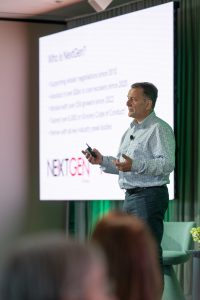
The first day featured presentations from international experts including Dr Ken Breen on planar orchard systems, and AgFirst’s Ross Wilson on the costs of growing apples and pears. The comprehensive day also covered topics from soil preparation to disease management and fungicide resistance, irrigation, netting and pollinators, as well as updates on the PIPS program.
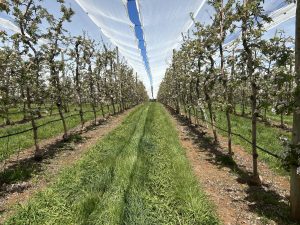
Day two saw a successful turnout at AgVic’s Tatura SmartFarm, with over 70 attendees present for the machinery demonstrations and tech presentations, followed by discussions at the Plunkett, Lenne and McNab orchards on managing high-density and multi-leader orchard systems. The exchange of experiences and challenges proved both engaging and valuable to attendees.
A dedicated evening event aptly named ‘Pears in the Pub’ concluded day two and was followed by a final day of packhouse tours, including the new state-of-the-art Jeftomson packing facility and Plunkett’s dynamic packhouse with its apple pre-sizing machine and packing lines.
Across the three-days, we’ve never had a more captive audience, with guests from all over Australia engaged, asking questions and sharing their own learned experiences. The authentic and genuine lessons shared between growers across the industry are invaluable, and APAL takes pride in delivering events of such calibre. You can read more about the APAL Technical Symposium presentations in the Future Orchards® section of the magazine.
Horticulture sector joins forces to protect honey bees
While our primary focus remains on the apple and pear industry, there are times when broader collaboration within the horticulture sector becomes necessary.
At the time of writing this column, media reports highlighting the spread of the Varroa mite into previously uninfested regions has emphasised the need for a unified response.
APAL, alongside 15 other peak industry bodies (PIBs), is a signatory to the Emergency Plant Pest Response Deed (EPPRD) and has been actively involved in the sector-wide response plan aimed at eradicating the Varroa mite. This includes the decision-making process for mounting and managing a response and the industry’s subsequent cost-sharing obligations.
Through joint efforts by the NSW Department of Primary Industries, Plant Health Australia and the PIBs involved, the response plan had mostly controlled spread, keeping Varroa mite contained to the main infested areas in the greater Newcastle and the Central Coast regions. However, the situation continues to evolve daily.
APAL will continue to work closely with the National Management Group (NMG) as the situation unfolds, ensuring industry stakeholders are kept informed about the status of the response plan, while adhering to the constraints of the non-disclosure agreement. Industry will be kept up to date through APAL’s various communication channels, including Industry Juice and eDMs, and across social media channels.
Upskilling next-gen orchard managers
Protecting today’s apple and pear industry is paramount, but preparing for future success is equally important. APAL is sharpening its focus on the next generation, looking at opportunities to upskill orchard managers of the future.
In August, a member of the APAL Industry Services team travelled to South Africa to participate in an intensive pome fruit industry short course with the view to take learnings from the curriculum and develop a training course localised for Australia.
Aimed at enhancing grower skills beyond practical knowledge gained from time spent on the orchard, APAL hopes to roll out its first week-long intensive training course in 2024, followed by a subsequent leadership course 12 months later, taking the training program to completion.
Stay tuned for further information on this training program in the coming months.
This article was first published in the Spring 2023 edition of AFG.