
Biochar for control of apple replant disease
Gordon Brown reviews research investigating whether the application of biochar to soil can alleviate symptoms of apple replant disease to a similar level to soil fumigation.
Apple replant disease (ARD) affects almost all apple orchards when they are replanted. The disease dramatically reduces the growth rate of the newly planted orchard, with a devastating effect on yield and orchard viability.
Thirty years ago, fumigation of the soil with methyl bromide was the most reliable control method and this could double the growth rates of the trees, with a corresponding increase in yield. With the banning of methyl bromide, chloropicrin was found to be effective as a direct replacement, although dazomet or metham sodium were found to provide good control if correctly applied.
The options for organic growers 30 years ago were limited to the use of vigorous or resistant rootstocks or the use of brassica cover crops which are not particularly effective. Then it was identified that on acidic soils a heavy application of lime could disrupt the soil microbiome sufficiently to help control the disease. More recently it has been identified that Bacillus amyloliquefaciens applied to the soil (Serenade® Prime) provides good protection of the trees to the disease. Serenade Prime is certified for use in organic production systems.
In the October 2013 edition of Australian Fruitgrower, Alieta Eyles and others reported on the use of biochar (47t/ha raked into the surface) or compost pre-planting in an organic orchard in Tasmania in 2009. Due to the organic nature of the orchard no fumigation treatment was used, so the degree of overcoming apple replant disease compared to the gold standard fumigation treatment could not be calculated. Unlike the compost treatment, the biochar treatment did not result in an improvement in growth in the season following planting; however, by 2013 both the biochar and compost treatments had trees that were between 40 and 50 per cent larger than the untreated controls. This slow impact of biochar may have been due to the biochar absorbing nutrients from the soil in the first year after planting. Biochar should be ‘activated’ prior to use by adding fertiliser and microbes to the material before use to avoid it sucking nutrients out of the soil and having this slow impact on plant growth.
In the paper we are reviewing this quarter – “Biochar alleviates apple replant disease by reducing the growth of Fusarium oxysporum and regulating microbial communities” – it was shown, in pot trials, that the application of 2 per cent biochar to the soil can alleviate the symptoms of apple replant disease to a similar level to soil fumigation. This rate of application is approximately 40t per applied hectare – say 13t/ha in an orchard treating an area 1m wide with 3m between rows. The nutrient analysis of the biochar used in this trial indicates that the material used had been activated due to extremely high levels of N, P and K in the biochar. Biochar has several other positive side effects including sequestering carbon in the soil which assists in reducing climate change, improving soil organic matter, improving soil water holding capacity and improving the binding of applied nutrients in the soil to be released to trees at a later date. Biochar has also been found to promote the growth and reproduction of beneficial soil microorganisms and, additionally, biochar can adsorb heavy metals and other pollutants in soil reducing their inhibitory effect on tree growth.
Results
The trials used six-leaf apple seedlings and after four months of growth the above and below ground parts of the plants were studied. The trees growing in untreated soil grew significantly slower to the plants in fumigated soil. Plant height, shoot dry weight and root surface area being 62, 31 and 55 per cent that of fumigated soil (Figure 1). Meanwhile the trees growing in soil with added biochar grew at about the same rate as the soil fumigated with methyl bromide, at 94, 93 and 119 per cent for each character respectively. This is similar to the results found in the earlier Tasmanian trials, although in the pot trials the findings occurred soon after planting potentially indicating the importance of ‘activating’ the biochar.
It is of interest that the roots in the biochar treated soil had a higher growth rate than the roots in fumigated soil. This indicates superior root health in the biochar treated soil. As biochar does not break down in the soil while the effects of fumigation slowly decays, it can be expected that if the experiment had occurred over more than four months the biochar treated soil would outperform fumigated soil for all growth characters. This suggests that soil treated with biochar will be highly productive for longer than we are used to.
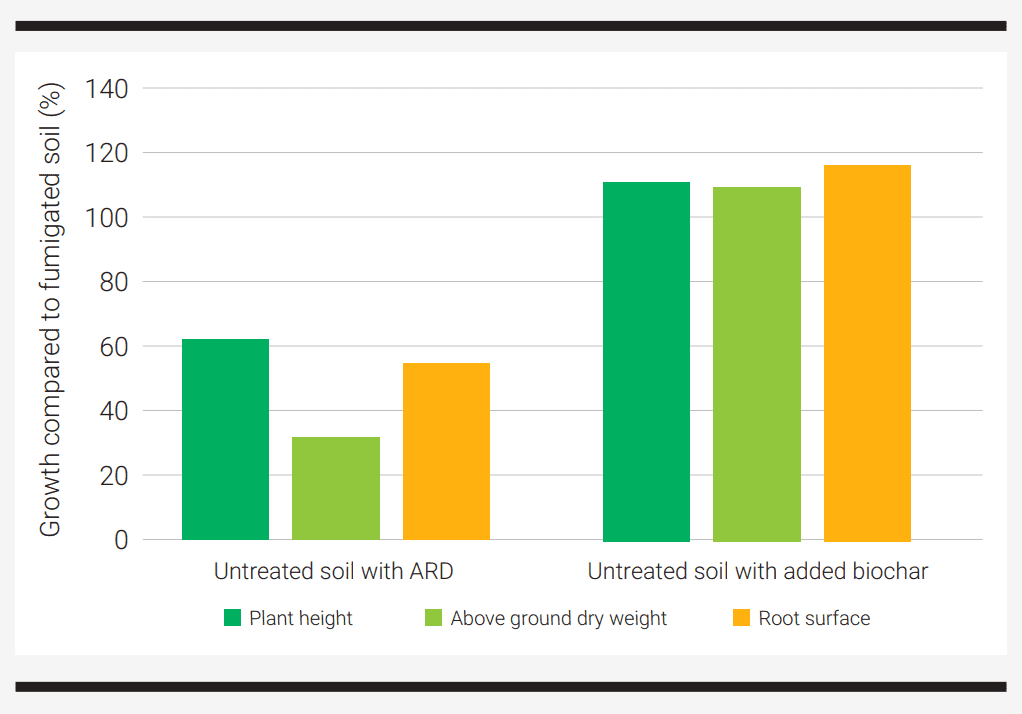
Figure 1: Impact of addition of biochar to unfumigated soil compared to fumigated and unfumigated replant soil on apple seedlings after four months of growth.
As mentioned previously, biochar has also been found to promote the growth and reproduction of beneficial soil microorganisms. These can be assessed by measuring the level of various enzymes in the soil responsible for the release of nutrients from the soil for tree use or detoxifying the soil environment. Urease plays an important role in the hydrolysis of urea into ammonia. Phosphatase catalyses the hydrolysis of phosphate. Invertase participates in the carbon cycle in soil. Catalase decomposes reactive oxidants into water, which reduces their toxicity to trees.
In the soils from the pots at the end of this trial, those from the methyl bromide treated soils had virtually no enzyme activity, indicating the treatment really did kill all the microorganisms in the soil. However, the treatment with biochar increased the activity of the beneficial microbes by more than 50 per cent and nearly doubled it for catalase and phosphatase (Figure 2). An analysis of the soil microbiome found that biochar increased the number of bacteria in the soil, while it decreased the number of fungi in the soil.
Hence the increase in growth in the biochar treatment compared to the untreated soil was associated with improved beneficial soil microbial activity, while the increased growth in the methyl bromide treatment was associated with a reduced incidence of root diseases.
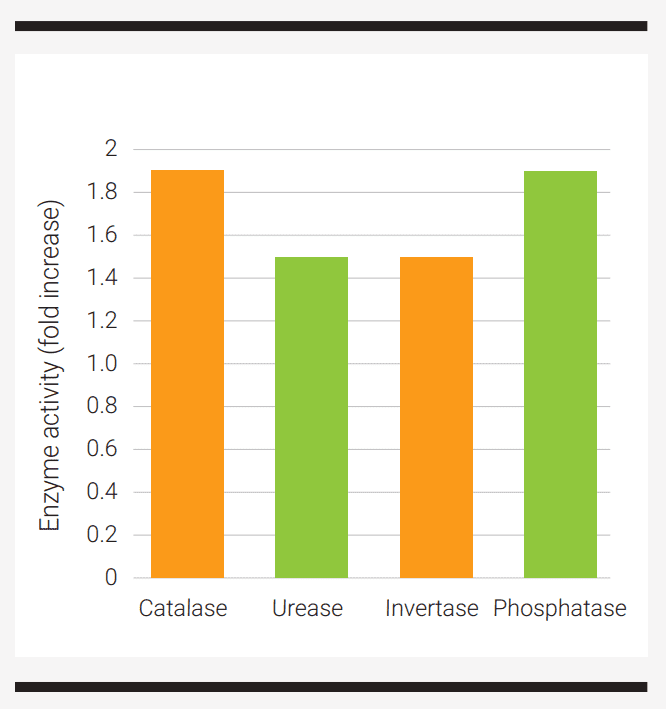
Figure 2: Impact of biochar on soil enzyme activity compared to untreated soil.
Biochar can be manufactured by anaerobically heating any organic matter such as wheat hulls, sawdust, prunings, forestry waste and below-specification produce. In the report summarised here, the biochar was produced by anaerobically heating rice hulls. In the Tasmanian trials reported by Alieta Eyles and her colleagues, the biochar was produced from acacia green waste.
While biochar is not currently readily available in large quantities, this is set to change. Recently Renergi installed a biochar plant in the Shire of Collie in Western Australia and they plan to install more plants around Australia. The Shire of Collie plant will convert all of the shire’s compostable portions of municipal waste and about 25,000 tonnes of biomass (including forestry waste) into bio-oil and biochar which will become available to Western Australian growers.
Take home messages
- Biochar added to the soil can overcome apple replant disease.
- Biochar added to the soil aids in soil retention of moisture and nutrients.
- Biochar is a method of sequestering carbon into the soil, aiding in the battle against climate change.
- The supply of biochar is set to increase with the installation of plants at council organic waste centres.
Further reading
- Liu Y et al. (May 2024) “Biochar alleviates apple replant disease by reducing the growth of Fusarium oxysporum and regulating microbial communities”, Horticultural Plant Journal, 10(3): 657–671, doi.org/10.1016/j.hpj.2022.11.009
- Eyles A et al. (October 2013) “Does biochar improve apple productivity?”, Australian Fruitgrower, 7(9): 32–34
- Dupont T, Mazzola M, Hewavitharana S (Spring 2020) “Evaluating IPM methods to control apple replant disease”, AFG, 14(3): 51–57
- Brown G (Winter 2019) “Lack of systemic impact of ARD has lessons for management”, Australian Fruitgrower, 13(1): 48–49
This article was first published in the Spring 2024 edition of AFG.



