Crop loading
November 2007 | Prepared by John Wilton and Ross Wilson, AgFirst | Future Orchards® Orchard Walk notes and presentation
Crop load is one of the orchard production factors most directly under grower control, and it has a major influence on both crop outcome and profitability. John Wilton and Ross Wilson of AgFirst explain how crop load affects yield, fruit size, soluble solids, firmness, colour development, harvest timing, storage potential and the overall value of the crop.
The notes emphasise that both over-cropping and under-cropping carry financial and production risks. Excess crop can reduce fruit size and sugar, delay colour and make it harder to harvest at optimum maturity, while a crop that is too light can leave orchard potential unused and increase the risk of calcium-related post-harvest disorders such as bitter pit.
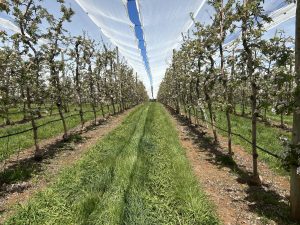
Optimum crop load depends on tree size or canopy volume, the fruit size and colour demanded by the market, seasonal weather, soil and site conditions. For young orchards that have not yet filled their allotted canopy space, trunk cross-sectional area provides a useful guide for setting fruit-number targets. As trees mature, previous block performance and canopy capacity become increasingly important.
The practical message is to convert yield ambitions into measurable fruit numbers and then adjust thinning to the capacity of the tree and the market requirement. Crop loading should therefore be treated as a deliberate management decision rather than simply accepting the number of fruit that remain after natural drop.