
2026 APAL Industry Forum: Ignore the noise and trust the data
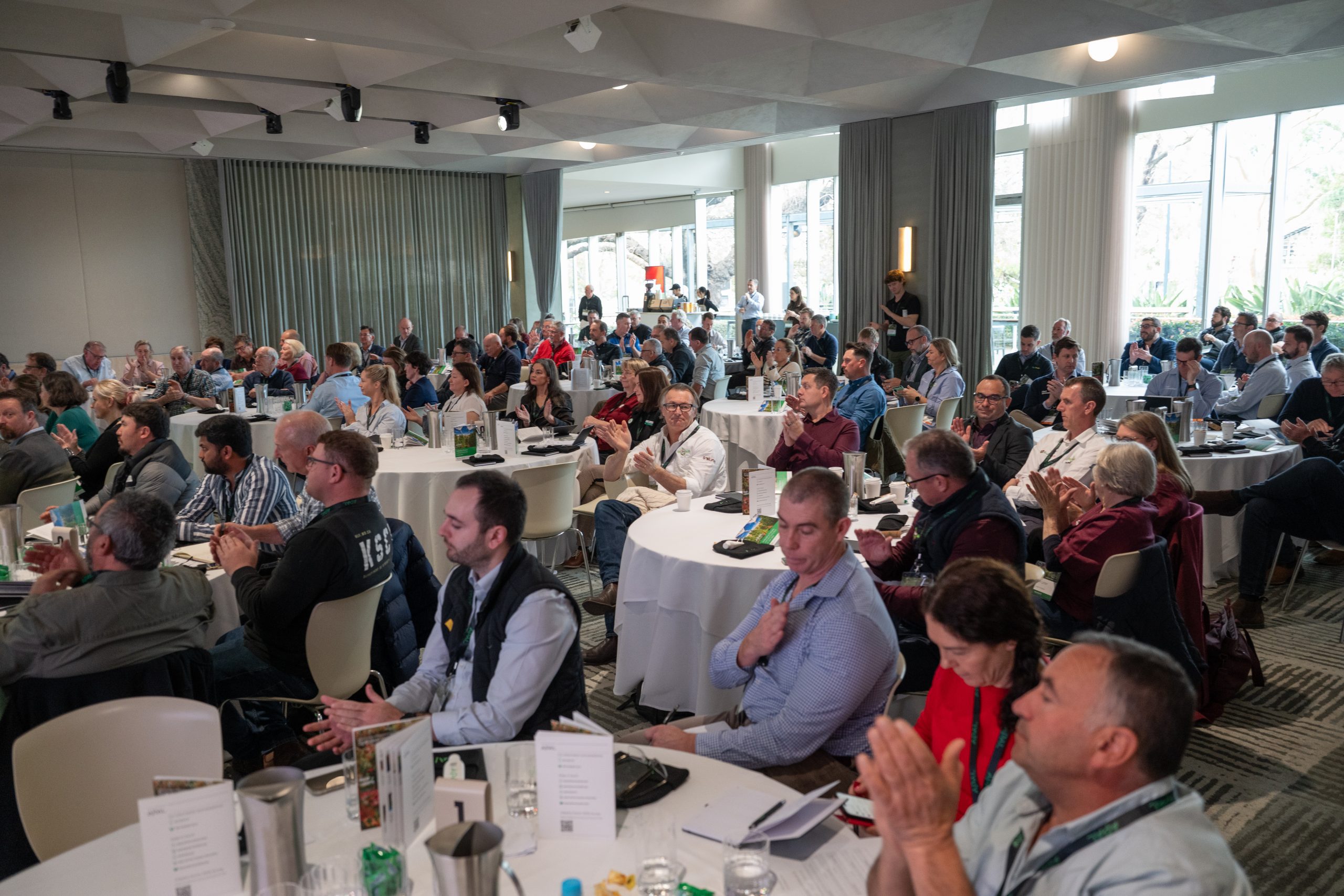
The 2026 APAL Industry Forum brought together delegates from across Australia, with a speaker line-up that opened with demographics, adaptive planning and the state of the industry, before moving to retail challenges, marketing, export and artificial intelligence.
Three speakers took the stage in the opening block: demographer Simon Kuestenmacher, who spoke about population trends; agribusiness strategist Dr Kate Burke, who looked at decision-making while facing uncertainty; and APAL General Manager Jeremy Griffith, who presented on supply and demand. Several common themes ran through all three sessions.
Demand is resilient, but it’s changing shape
Jeremy opened his session by reminding us that 84 per cent of Australian households buy apples – a level of market penetration few other grocery categories can match. But the households behind that number are changing.
Migration data presented by Simon showed Australia’s population base is shifting well beyond its traditional UK and New Zealand roots, with India now the largest source of overseas-born residents, followed by the UK, China and a much wider spread of countries. Nielsen retail sales and pricing data presented by Jeremy showed demand responding to that same shifting, price-sensitive consumer base in real time. In 2025 alone, the average retail price rose 13 per cent*, due to short supply. There’s no question that the industry has benefitted from the higher prices due to the tighter supply in the past two years, but Jeremy’s key message was that consumer demand is resilient, but not limitless.
Ignore the noise and trust the data
Outlining approaches for responding to challenge and uncertainty, Kate emphasised the need to look past the threats to focus on the opportunities. Key to this was having objective data.
“Uncertainty inhibits logic,” she said. “Knowing your business is good business. Use numbers to negate the noise.”
Simon echoed the need to know the data, pushing back on several popular claims that are repeated so often they are widely accepted as true. Cutting migration sounds like an easy political win, until the data shows that over 60 per cent of GPs in Australia and a similar share of aged care workers and truck drivers under 40 are overseas-born. Cut the migrant intake and the skills shortage in industries already reliant on overseas-born workers only gets worse.
Similarly, we can expect to hear a lot more reporting on China’s rapid population decline, but this doesn’t mean the industry has backed the wrong horse in terms of exports. The group of people buying premium imported fruit (the country’s aspirational middle class) will most likely continue to grow even as the overall population shrinks.
Jeremy explored the same point on pricing. We often hear from consumers that apples are too expensive, but when the unit cost of an apple gets compared to that of other treats like a coffee or a muesli bar, the price looks very different. The high–low supermarket discounting strategy can also set an unrealistic anchor point for customers, who tend to compare high prices with the cheapest price they have paid in the recent past.
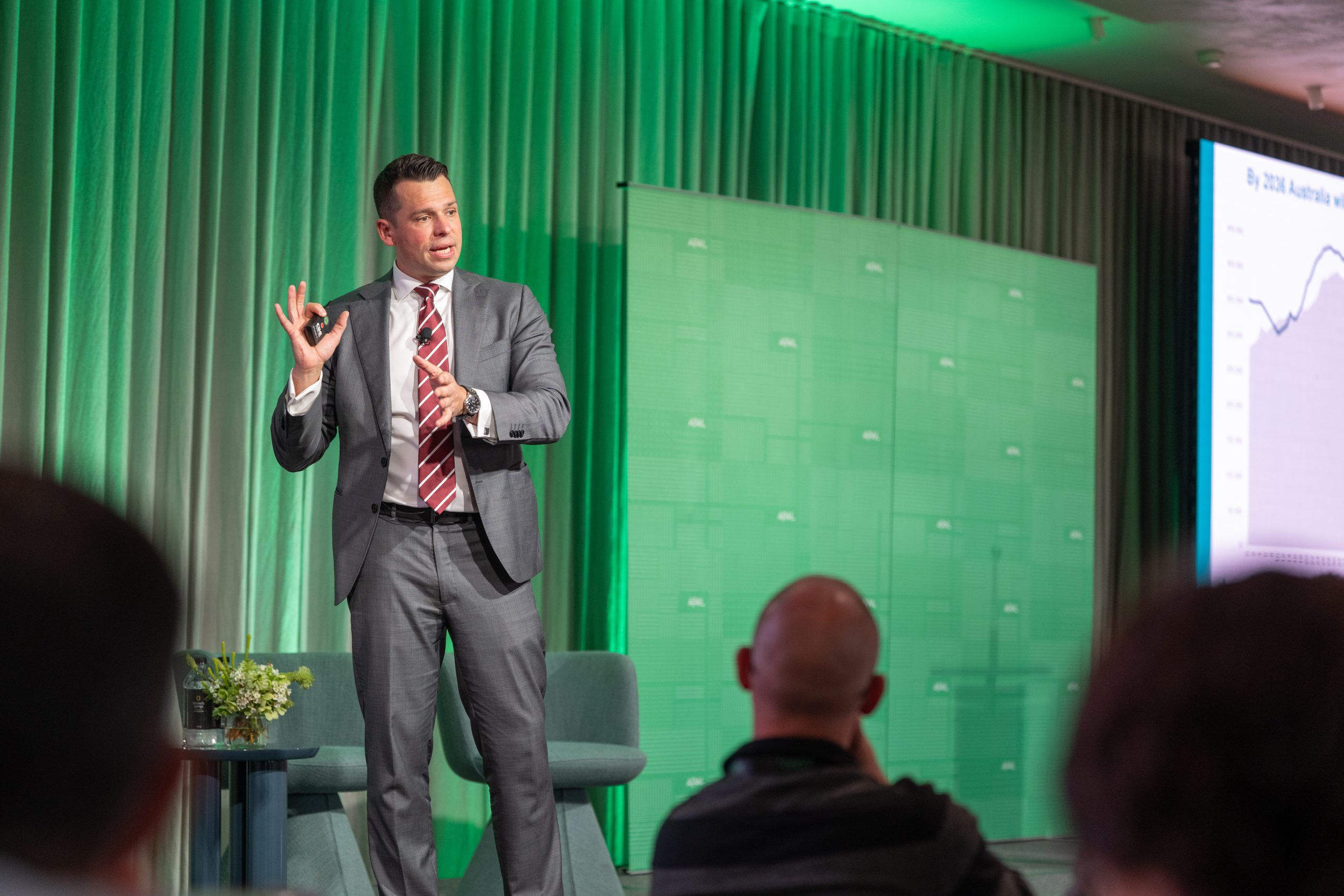
Simon Kuestenmacher, The Demographics Group. Photo: Ned Meldrum
Averages hide the real story
A national population figure or an industry-wide average may appear to be the full picture, but rarely is. Simon’s forecast has Australia’s population growing from 28 million to 31.5 million by 2036 – a rise of 3.5 million people. That sounds like straightforward growth for anyone selling fruit, but a closer look at the data reveals the growth is concentrated almost entirely in adults aged 18 to 44, not spread evenly across the population.
Kate identified a similar issue in relying on averages inside orchard businesses. Drawing on APAL industry benchmarking data from the Orchard Business Analysis (OBA) report, she pointed to a fourfold gap between the median profit surplus and the surplus earned by the top quartile businesses – a gap that gets lost whenever the industry talks in averages.
“We talk in averages, but it is the range that I am interested in,” Kate said. “If the top 25 per cent of growers are making four times more than the median, 75 per cent of growers have the opportunity to improve.”
Jeremy’s numbers told an almost identical story at the national level. Total revenue from apple sales grew 10 per cent in 2025 even though the actual volume of apples was slightly down due to short supply. The higher prices more than made up the difference. The catch is who captured that extra revenue.

APAL General Manager Jeremy Griffith. Photo: Ned Meldrum
Focus on what’s in your control
Rising production costs get a lot of attention in tough years, but Kate pointed to OBA data on the variation in costs, price and Class 1 yield between top performing orchard businesses and the median to argue that there was more opportunity to lift returns by increasing packout than by cutting costs. While cost of production varies surprisingly little between the two groups, Kate said what actually separates high performers from the rest is Class 1 yield. Not only does Class 1 yield vary far more between the two groups, providing greater opportunities for improvement, but the decisions on how to lift Class 1 yield are more within the grower’s control, she said.
Jeremy’s advice pointed the same way. Growers cannot move the retail price cycle or force supermarkets to pay more, but they can lift eating quality, grow their export volume, and remove unprofitable blocks that drag down overall returns.
Simon added a third version of the same idea on the labour side. Migration policy is set in Canberra and out of any individual grower’s hands, but staff retention and investment in orchard technology are decisions made at the farm gate.
Who bears the risk, who gets the reward?
One of Jeremy’s charts showed estimated retailer margins on apples spiking to around 65 per cent last year – well above the roughly 25 per cent margin considered typical – at the same time prices to consumers were climbing. Jeremy said growers, who carry all the weather, pest and market risk of actually producing the crop, were arguably more entitled to a larger share of the extra returns than the supermarkets selling it, that carried less risk.
Simon made a related point about the Australian economy as a whole: the country’s wealth from mining, agriculture, tourism and education only keeps flowing to ordinary Australians, while strong institutions keep that wealth fairly distributed rather than concentrated among a few large players.
Kate’s session included a case study on succession planning that showed a practical version of this dynamic in action. When a farming family needed to split a business during a succession process, having solid production and financial data let them agree on a fair valuation instead of guessing or arguing over it.

Dr Kate Burke, Think Agri. Photo: Ned Meldrum
Brand and quality do the heavy lifting
Two speakers landed on the same growth strategy from different directions. Simon pointed to the premium Chinese consumers pay for produce clearly branded as Australian, noting that China’s own domestic fruit industry struggles to win the trust of increasingly sceptical, sophisticated local shoppers who are willing to pay more for imported quality.
Jeremy made the equivalent case for the domestic market: a single bad eating experience with an apple sends a shopper straight to grapes or berries next time, so protecting quality protects demand for the entire category, not just one grower’s fruit. Both speakers pointed to trust and quality as the more durable lever.
Plan for uncertainty
Kate closed her session with a simple method for managing uncertainty: name what’s known for certain, name what isn’t, map out three or four realistic scenarios for what is unknown, assign rough odds to each, then decide on a plan of action for each one.
“Reframe uncertainty as possibility to identify opportunity,” she said.
Simon’s own forecasts – on interest rates staying elevated, on Australia’s major political parties losing further ground – work on the same logic. None of these outcomes are locked in, but ignoring the range of possibilities does not make that range disappear.
Taken together, the message from all three speakers points the same way: data-driven insight drives growth. The orchards that come out ahead over the next decade are likely to be the ones that do not let themselves be distracted by the noise, but use data to identify where the greatest opportunities for change are, whether they are within their control and make a plan to realise them.
*APAL calculation based in part on data reported by NielsenIQ through its Homescan Service for the fresh fruit category to 12 July 2026, for the Total Australia market, according to the NielsenIQ standard product hierarchy. Copyright © 2026, Nielsen Consumer LLC.



