
Psychosocial hazards in the workplace
Psychological health is as important as physical health, but what is considered a psychosocial hazard and what can employers do to control the risks?
While it has long been legislated that employers are required to provide and maintain, so far as reasonably practicable, a safe and healthy workplace for their employees, there has been increased regulatory attention on psychological health and psychosocial risks in recent years. Victoria has now joined the other states and territories by introducing the Occupational Health and Safety (Psychological Health) Regulations 2025, effective 1 December 2025, which sets clear expectations for employers on preventing psychological injury at work.
What is a psychosocial hazard?
The Victorian Occupational Health and Safety (Psychological Health) Regulations (2025) define psychosocial hazard as any of the following factors that arise in the working environment and cause an employee to experience one or more negative psychological responses that create a risk to their health and safety:
- Work design
- Systems of work
- Management of work
- Carrying out of the work
- Personal or work-related interactions.
Psychological responses can include cognitive, emotional and behavioural responses, as well as physiological processes associated with them.
Examples of psychosocial hazards may include aggression or violence, bullying, exposure to traumatic events or content, gendered violence, high job demands, low job control, low job demands, low recognition and reward, low role clarity, poor environmental conditions, poor organisational change management, poor organisational justice, poor support, poor workplace relationships, remote or isolated work, and sexual harassment.
How psychosocial hazards affect health and safety
Employees exposed to psychosocial hazards in the workplace may experience a negative psychological response, such as stress, that creates a risk to their health and safety (Figure 1).
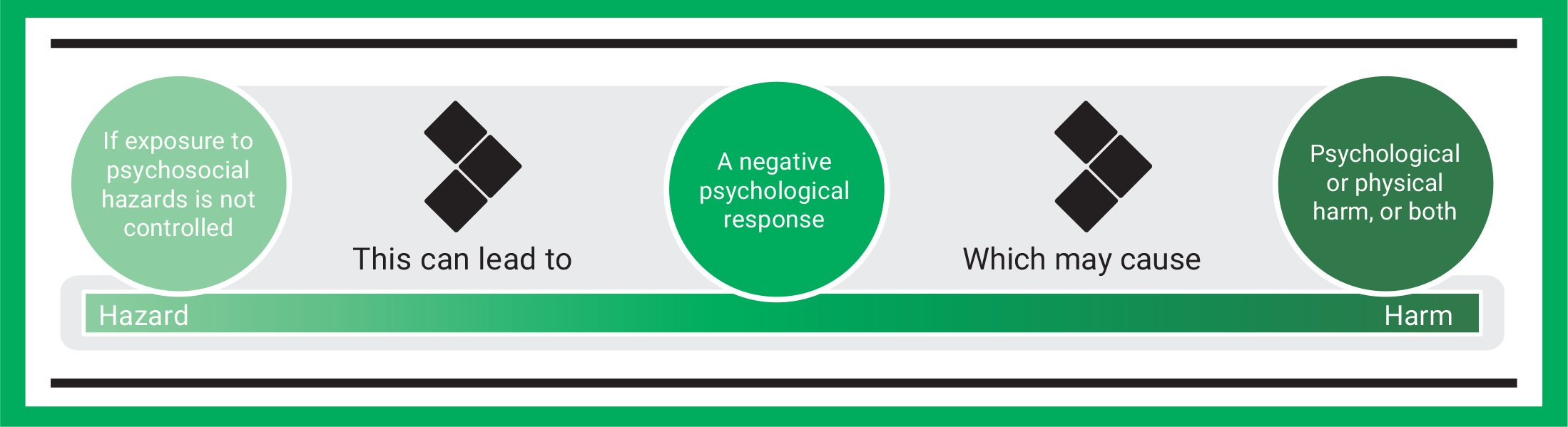
Figure 1: How psychosocial hazards can lead to harm. Source: Compliance code: Psychological health, WorkSafe Victoria
It is important to note that stress itself is not a psychological injury. For some people, a busy working environment can be motivating and lead to better performance, if stress is manageable. However, experiencing frequent, prolonged or severe periods of stress can lead to psychological or physical harm.
What does this mean for your business?
The impact of psychological harm extends beyond individual wellbeing. When workers experience harmful levels of stress, the consequences can include reduced productivity, lower quality of work, higher levels of absenteeism, higher levels of turnover, and increased workers compensation claims. Identifying and assessing psychosocial hazards – as part of the general workplace health and safety risk management processes – will help reduce risks to both people and businesses.
What should you do now?
Employers can manage risks associated with psychosocial hazards through a risk management process, in consultation with their employees.
Firstly, identify psychosocial hazards. This will look different for every organisation and sometimes even across groups of employees.
Then, assess the risk of the psychosocial hazards to determine to what extent they create a risk to the health and safety of employees. Look at the likelihood of harm occurring, the duration and frequency of exposure to the psychological hazard, and how severe the consequences for affected employees and others are if the harm occurs.
Once risks have been assessed, employers must work to control the risks, based on a risk mitigation hierarchy (Figure 2).
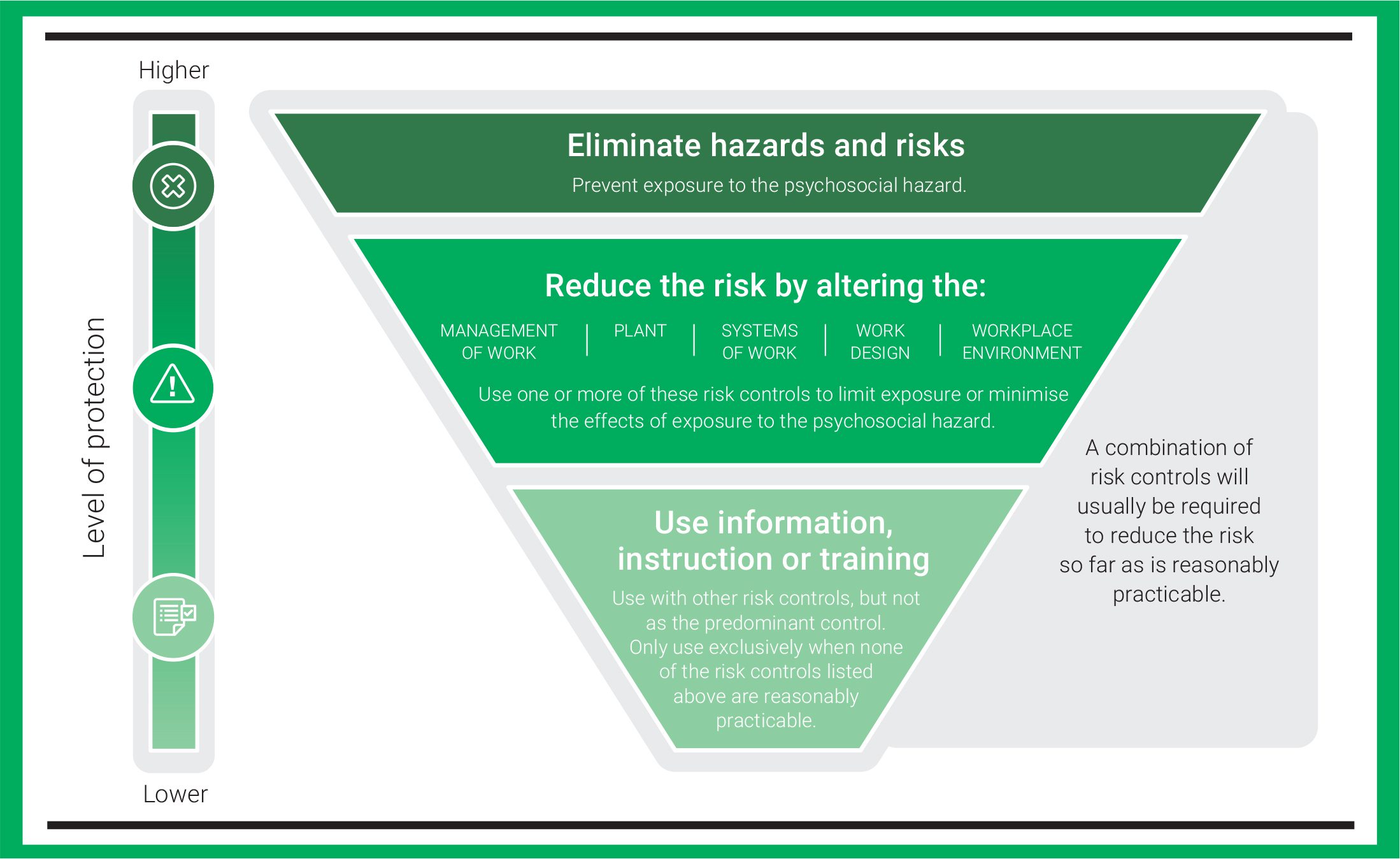
Figure 2: Employers can use a risk mitigation hierarchy to control exposure to psychosocial hazards and risks. Source: Compliance code: Psychological health, WorkSafe Victoria
Victoria’s legislation differs from other jurisdictions by prescribing that the use of information or instruction as a way to control risks is a last resort and can only be used exclusively where no other risk controls measured are reasonably practicable.
Finally, employers should review risk controls regularly to examine whether the measures are effectively controlling risks, so far as reasonably practicable.
More information for your state
Safe Work Australia
Psychosocial hazards: https://bit.ly/3YhJuPl
SafeWork NSW
Code of Practice for Managing psychosocial hazards at work: https://bit.ly/4pZURXZ
WorkSafe.qld.gov.au
Managing the risk of psychosocial hazards at work Code of Practice 2022: https://bit.ly/44jSlnn
SafeWork SA
Psychosocial hazards: https://bit.ly/3KC3idg
WorkSafe Tasmania
Psychosocial hazards: https://bit.ly/3Mpap9v
WorkSafe Victoria
Compliance code: Psychological health: https://bit.ly/3XLuSrn
WorkSafe Western Australia
Psychosocial hazards in the workplace: Code of practice: https://bit.ly/4pY9Sd1
Disclaimer
The information provided in this article is not legal advice. It is intended to provide commentary and general information only. Formal legal advice should be sought on matters of interest arising from this article.
This article was first published in the Summer 2025 edition of AFG.



