
Opportunities for achieving orchard efficiencies
How can we increase ROI per unit in a price-constrained market? What strategies can help increase Class 1 yield? Why is spraying so inefficient, and what can be done about it?
These questions and many more were addressed in the afternoon session of the 2025 APAL Technical Symposium by growers and technical experts who all shared a common focus: increasing efficiency.
Getting back on target: improving tree crop spray application
“How can we improve what’s been described as the most inefficient industrial process on earth?”
First up, delegates copped a spray from Dr David Manktelow of Applied Research and Technologies. The challenge, David explained, is the alarming levels of measured inefficiencies and variations in spray application. Outer canopy zones receive higher deposits, while inner and distant targets typically receive a half to one-third of the outer canopy deposits. As a result, five-fold deposit variations often lead to control failure.
Why does this happen?
David’s research found these inefficiencies stem from:
- significant variation in the target canopy
- dozens of types of sprayers and variation in setup and operation
- a lack of integrated understanding of best practice across industry service providers, growers and staff
- a lack of practical and relevant training and crop-specific resources
- basic (and avoidable) faults. Approximately 50 per cent of sprayers David has encountered on properties have restricted intakes, blocked filters, blocked nozzles, worn or damaged nozzles, incorrect nozzles, mixed-up nozzle sets, obstructed fans, wrong fan gear, wrong PTO speed, wrong fan speed, or travel too fast for effective air/spray delivery.
- a lack of use of coverage assessment feedback loops.
Solutions are readily available, but basic faults can still trip us up
David believes improving work rates is key; achievable through optimised multi-row spraying and multi-function operations. Canopy scanning and mapping technologies, like LiDAR, are crucial for measuring tree height and canopy structure data needed to direct spraying. Real-time monitoring and rate controllers can be used to make quick adjustments and track spray applications effectively. Calibration tools, such as pressure gauges and flow meters, help ensure sprayers hit target volumes and follow prescription maps.
We are starting to see a range of real-time canopy sensing and nozzle control systems being fitted to sprayers. But David stressed that even in a cutting-edge orchard equipped with spraying technology, basic faults like blocked nozzles and poorly trained human operators can still trip us up.
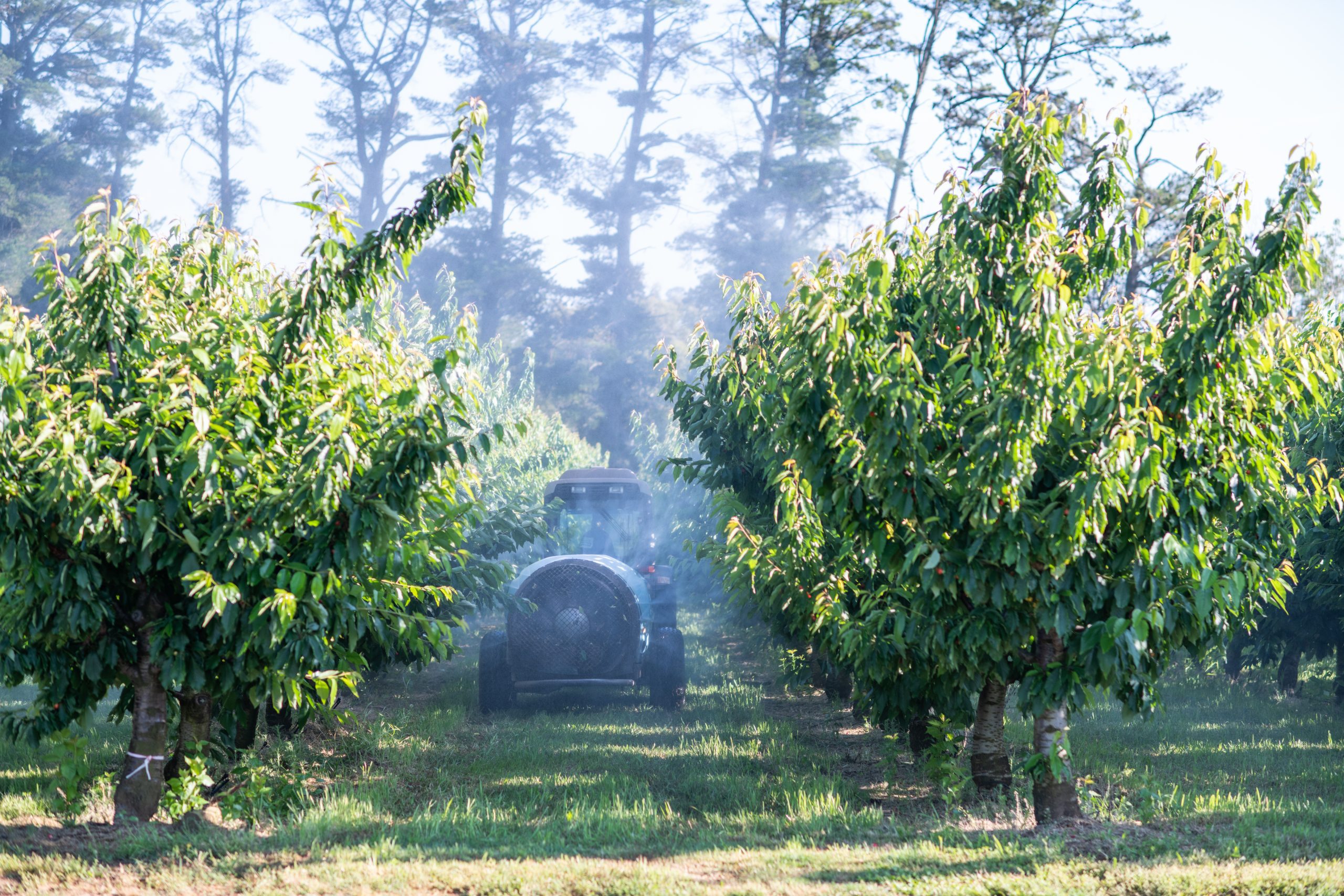
Solutions to improve tree crop spray application are readily available, but basic faults, like blocked nozzles and human error, can still trip us up. Photo: Pip Farquharson
Keep pace or be left behind
“If you don’t keep pace you will be, or already have been, left behind.”
The message from Nic Finger, APAL’s Industry Services Manager for Grower Development and Trials, is clear: returns are reducing in real terms and, if growers do not adapt, they risk being left behind. As costs continue to rise, particularly in a high-labour industry, the focus must shift from merely reducing costs to enhancing efficiency through targeted strategies.
The reality of rising costs
Nic emphasised that while consumer demand for value-for-money remains strong, growers are facing mounting pressures. Labour costs account for 62 per cent of on-farm expenses, with 30 per cent of that directly related to harvest activities.
“Such high labour inputs for our crop – with minimum casual rates currently standing at $34.93 plus payroll tax, plus on-costs – means we need to be incredibly efficient at extracting maximum return per input,” Nic said.
Inefficiencies in existing blocks
A concerning trend noted by Nic is the continued farming of older, inefficient blocks, as well as younger blocks that are not yet optimised. To combat this, he stressed the importance of ensuring that the best quality trees are ordered up to three years in advance to fill canopies quickly and maximise return on investment.
Maximising harvest efficiency
Nic outlined several key areas for improvement, including good-sized fruit, open tree structure, maximising colour, and providing quality staff training, supervision and incentivisation: “Are we dealing with bad pickers, or bad management?”
He stressed the importance of upskilling the entire team across technical, financial and social skills.
Targeted resource allocation
Nic advocated for a targeted approach to resource allocation, whether it be time, labour, or capital investment. Downsizing operations can sometimes lead to better resource management, but he reiterated that “efficiency doesn’t come through reducing absolute costs”, urging growers to focus on cost per unit return instead.
How do we squeeze more return per unit in a price-constrained market?
Unit costs are rising, driven by escalating labour expenses, and growers face mounting pressure to maintain and enhance their profitability. While efficiency and automation are vital components of the solution, one of the most effective strategies for growers is to focus on increasing Class 1 (C1) yields.
Understanding Class 1 fruit
Jonathan Brookes from AgFirst explained that C1 fruit is defined by its ability to meet or exceed market specifications. Key attributes include size, colour, maturity and a lack of defects. Understanding the specific C1 rules for various markets is crucial; the upper quartile of growers who took part in the 2024 Crop Forecast achieved a 9 per cent higher average C1 packout, a better price and a higher average cash operating surplus than the rest of the group average.
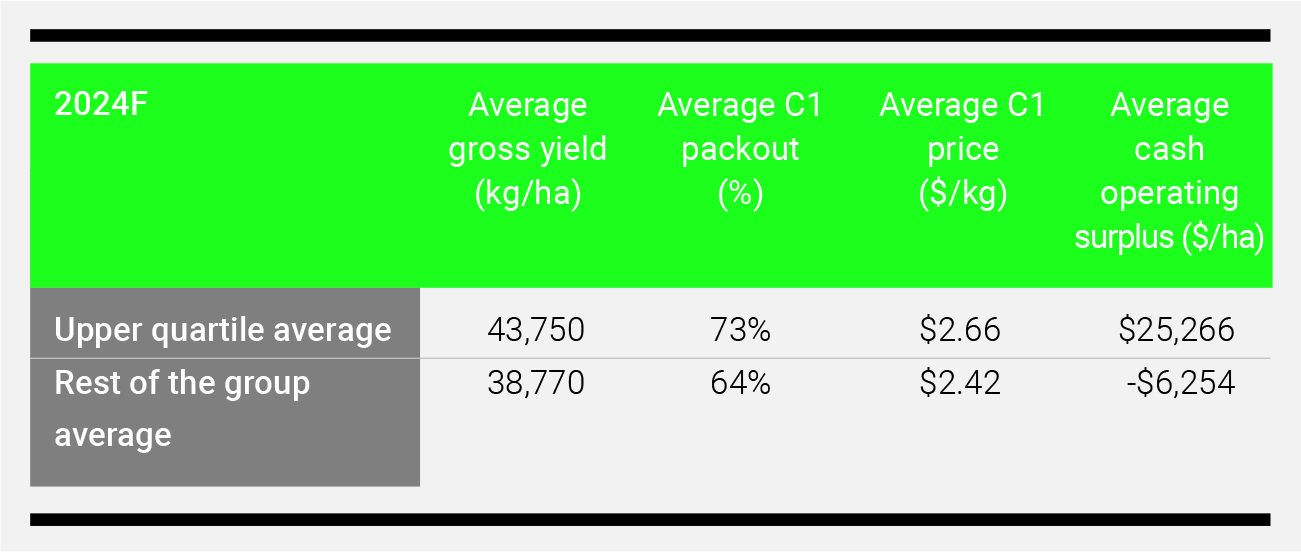
Table 1: Outputs of the Orchard Business Analysis (OBA) report comparing upper quartile and average performance. Note that these figures do not account for interest, lease costs, depreciation or capital expenditure. To request a copy of the OBA report, email [email protected]
A greater volume and percentage of C1 fruit directly boosts revenue. Moreover, increasing the C1 percentage reduces low-value waste at the packhouse and mitigates oversupply risks by lowering the volumes of inferior fruit reaching the market. Both factors contribute to enhanced overall profitability and resource efficiency, making it clear that better C1 yields lead to improved financial outcomes, particularly in a price-constrained environment.
Improvements in Class 1 recovery dramatically increases returns
Jonathan offered several strategies for maximising C1 production. Ensuring that trees fill their allotted space promotes maximum light capture, while setting informed yield targets for each block helps maintain productivity. Managing tree health is essential, including balancing branch and bud numbers with crop load and light requirements. He also emphasised the importance of reducing variability within blocks and mitigating limiting factors such as biennial bearing, pests and climate challenges. Timely orchard management and a focus on the profitability impact of packout rates are crucial to driving success.
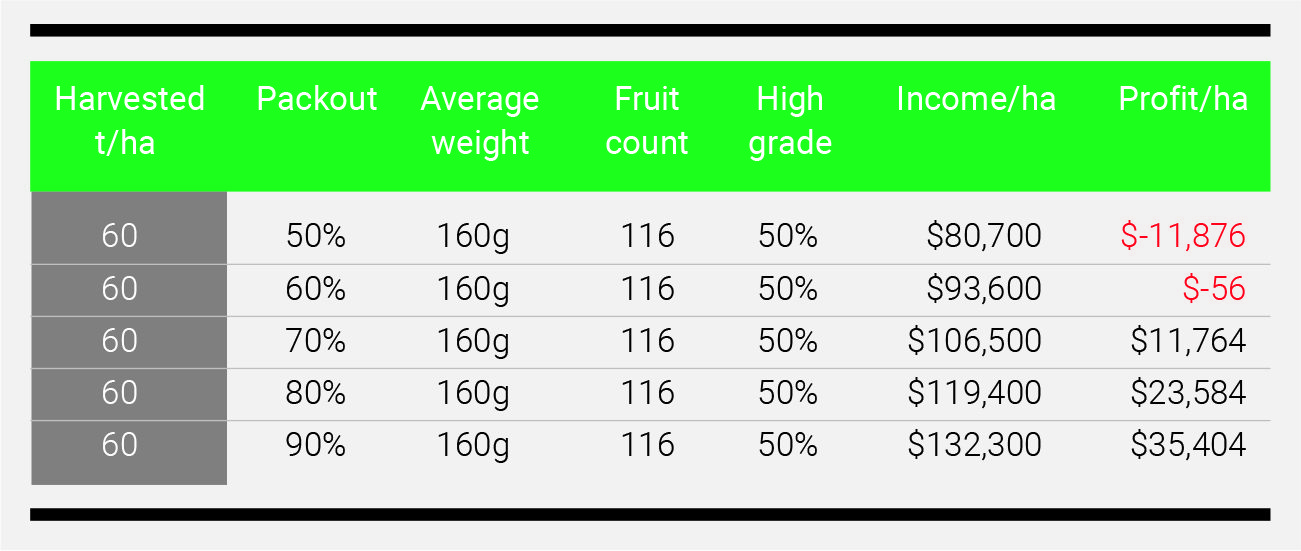
Table 2: The modelled impact of Class 1 packout on EBIT (earnings before interest and taxes) for a 60t/ha crop of apples sold domestically as Pink Lady.
Jonathan cautioned against over-cropping, which can lead to poor colour and maturity, increased picking costs and a higher proportion of non-Class 1 fruit. He noted that harvest efficiency is critical, as labour constitutes 62 per cent of on-orchard costs, with harvest being the most expensive category. A higher percentage of C1 fruit simplifies decisions for pickers and reduces bin requirements. He highlighted that gains in postharvest efficiency significantly impact profitability by decreasing transport and packing costs.
The ultimate goal should be to ensure that every piece of fruit is a winner, thereby preventing low-value varieties from negatively affecting market prices.
Harnessing the transformative power of data
APAL Grower of the Year Brett Squibb delivered a short but engaging presentation that underscored the transformative power of data in modern apple growing. As a third-generation grower managing a 25–30 hectare orchard in north-west Tasmania, Brett shared his journey of integrating technology into traditional farming practices to enhance efficiency and productivity.
He began by highlighting the importance of location, emphasising how their proximity to the Spirit of Tasmania in Devonport allows for seamless logistics, enabling fresh fruit to reach markets swiftly. This logistical advantage sets the stage for leveraging data effectively.
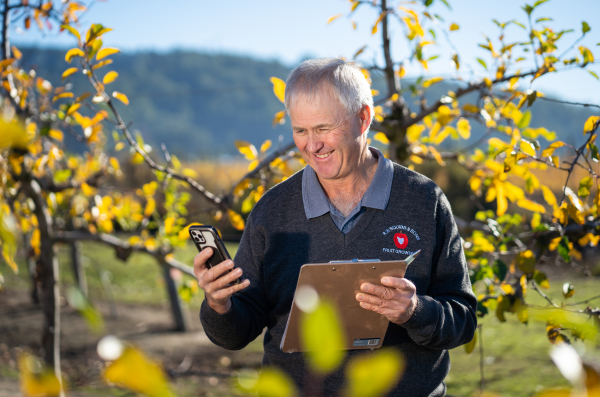
Tasmanian grower Brett Squibb documents observations and trends, which not only streamlines operations but also builds a valuable historical database that informs future decisions. Photo: Jacqui Beven Photography
Meticulous data recording
Brett discussed his weekly fruit measurements, which are meticulously recorded in Excel.
“If we find that we’re not up to spec, we can just address something, whether that be more water, more fertiliser, or run through again with the dreaded hand thinning,” he said.
If fruit quality falls short of expectations, the data enables him to quickly identify the issue and adjust management practices accordingly.
A significant part of his strategy involves the use of RIMpro, which helps him optimise chemical applications. By spraying only when necessary, he minimises costs and environmental impact. Additionally, he has implemented irrigation management trials with SWAN Systems, which utilise soil moisture data to determine precise watering schedules, removing guesswork and ensuring that resources are used efficiently.
Focus on apple varieties
Brett also shared insights into the varieties he cultivates, including Gala, high-colour sports sold domestically as Pink Lady, and newer club apples like Ambrosia™ and Smitten®. He emphasised the importance of using a data-driven approach to select varieties that thrive in their specific growing conditions and produce C1-quality fruit that meets market demands.
Looking to the future
Brett emphasised that technology doesn’t need to be complicated. He advocates for simplicity, stating: “I use my phone for everything … I’ve got it in my hand all the time.”
He encourages documenting observations and trends, noting that this approach not only streamlines operations but also builds a valuable historical database that informs future decisions.
“Always take photos … even down to two days apart,” he advised.
Looking ahead, Brett is excited about the potential of drone tech for spraying, which could revolutionise the way he manages his orchard.
This article was first published in the spring 2025 edition of AFG.



