
IPDM in focus: Biosecurity and potential incursions of new pests
What is the role of IPDM in biosecurity matters and what do growers and orchard workers need to be aware of?
The introduction of new pests, diseases, or weeds has the potential to affect fruit production, domestic and export market access, and orchard gate returns. These impacts can occur if the invader comes from overseas or from another region of Australia. Changes in pesticide usage, or choice of pesticide, may be necessary to manage an incursion and these changes can cause major disruptions to IPDM programs.
A sustained program of pest and disease management R&D has generated better understanding of the pest and disease interactions occurring in the orchard, and how they impact crop quality and productivity. This approach is important to improving adoption of IPDM strategies. Historical research often focused on integrating biological control of an individual pest species into a pesticide-dominated program that aimed to control much broader and more complex pest and disease challenges. Today, there is a suite of biological, agronomic and decision-support tools available to help growers deal with the interactive biological web of pests, diseases, weeds and biological control agents existing in their orchards.
Challengingly, the biological web can be swiftly damaged by biosecurity responses needed to deal with new pest and disease incursions. Biosecurity first response usually involves efforts to contain and eliminate the new pest, disease or weed. These often include quarantining infested properties, destruction of host trees, and spraying pesticides to kill the invader. If the invader is new to Australia, there may be no chemicals registered to control it, or the efficacy of registered or permitted pesticides may be uncertain.
The ability to detect new pests, weeds and diseases in Australia is important for early response to incursions that threaten food security, economic viability and trade. Some important exotic pests, such as brown marmorated stink bug (Halyomorpha halys) do not rely on transport of host material but instead may be themselves inadvertently transported. Active surveillance programs are conducted using protocols agreed between governments and usually with industry support.
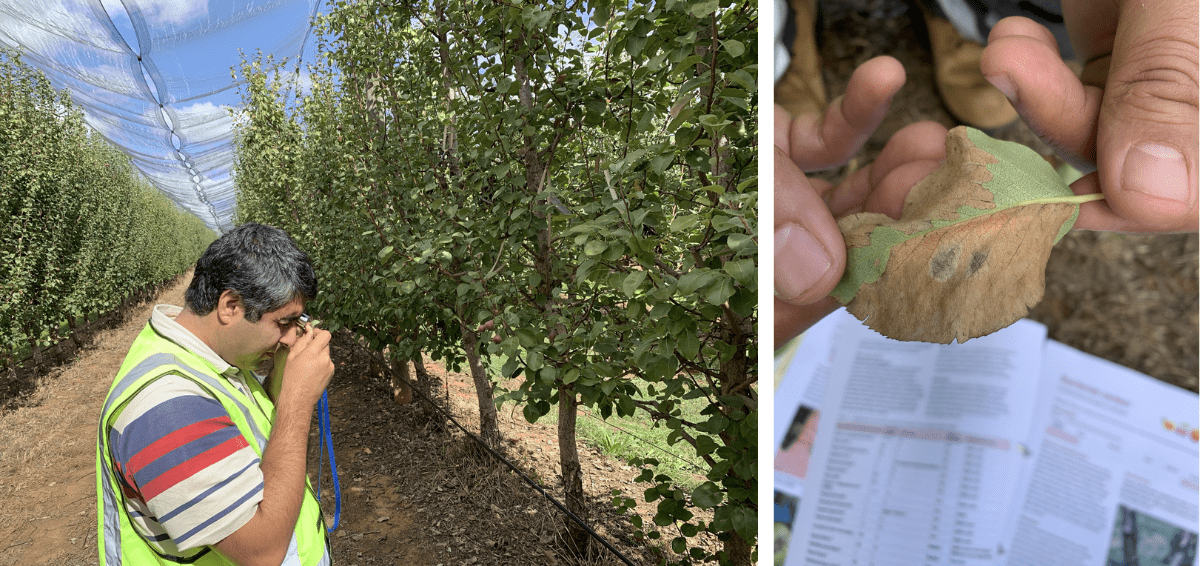
Figure 1: On-farm monitoring of existing pests, diseases and weeds is important for general biosecurity surveillance. Photo: Agriculture Victoria Research
Industry biosecurity measures
Apple and Pear Australia Ltd (APAL) represents the apple and pear industry as a member of Plant Health Australia (PHA), an organisation established to work with industry and government in the coordination, development and implementation of plant health policies and management programs that improve Australia’s response to outbreaks of new plant pests and diseases.
In addition to these national biosecurity programs, APAL is committed to providing support to growers at an orchard level by offering orchard risk assessments and recommendation reports to improve farm biosecurity preparedness.
By doing this benchmarking work, APAL also hopes to identify industry high-risk areas relevant to each region. In the event of a serious pest incursion, having this up-to-date data will enable APAL to work effectively with the responding agencies and minimise disruptions to business during a response.
For more information about creating a bespoke biosecurity plan for your apple or pear orchard, contact Ian Cover, APAL’s Industry Services Manager – Biosecurity and Extension: [email protected].
Biosecurity planning through PHA helps industry and government identify potential pest and disease threats to the fruit industry, develop risk assessments to prioritise action and protocols to reduce the probability of the pests and diseases reaching and establishing in Australia. Increased volumes of imported goods, traveller numbers and climate change are putting pressure on traditional surveillance programs for detecting incursions.
Advances in technology have generated opportunities to expand the range of sources accessible in a more flexible approach to collection of surveillance data. However, the quality of collected data is critically important and the potential for misidentification of pests and diseases must be addressed in any citizen science approach to surveillance.
Plant Health Australia biosecurity programs and reporting
PHA runs a biosecurity awareness program, Look. Be Alert. Call an Expert, that aims to increase awareness of simple biosecurity measures and the importance of early notification of unusual observations to the Exotic Plant Pest and Biosecurity Hotline (1800 084 881) so that incursions can be identified and quickly addressed. PHA prioritises and updates a list of apple and pear pest and diseases of concern with input from a panel of experts.
The Emergency Plant Pest Response Deed (EPPRD) is a legal document binding PHA, the Australian Government, all state and territory governments and national plant industry bodies with respect to management of responses to emergency plant pest incidents. PLANTPLAN is the technical response plan that supports the EPPRD and is regularly updated to ensure best practice in emergency plant pest responses. Individual industry biosecurity planning covers industry and pest specific information, risk mitigation activities and contingency plans.
Farm surveillance
On-farm monitoring of existing pests, diseases and weeds can be used for general biosecurity surveillance data purposes and unusual pest and disease damage or activity should be investigated. Orchard pest monitoring scouts should be made aware of priority pests and diseases and strongly encouraged to collect any unusual specimens for identification.
The following resources contain fact sheets about the pests and diseases that are of concern to the apple and pear industry:
- Chapter 4 of the IPDM Manual for Australian Apple and Pears (2021): extensionaus.com.au/ozapplepearipdm/ipdm-manual-for-apples-and-pears
- Orchard Biosecurity Manual for the Apple and Pear Industry: www.planthealthaustralia.com.au/wp-content/uploads/2024/01/Orchard-Biosecurity-Manual-for-the-Apple-and-Pear-Industry.pdf
- Plant Health Australia: www.planthealthaustralia.com.au/resource/
- APAL Export Hub: apal.org.au/member-hub/export/
This article has been prepared from information outlined in Chapter 4 of the Integrated Pest, Disease and Weed Management Manual for Australian Apples and Pears (IPDM Manual, Edition 2, 2021).
Acknowledgement
 The PIPS 4 Profit Pest and disease management (AP22001) project has been funded by Hort Innovation, using the apple and pear research and development levy, contributions from the Australian Government and co-investment from Agriculture Victoria. It is supported regionally by the Tasmanian Institute of Agriculture, Pomewest and NSW Department of Primary Industries and Regional Development. Hort Innovation is the grower-owned, not-for-profit research and development corporation for Australian horticulture.
This article was first published in the spring 2025 edition of AFG.



