Potential thinning tools for managing crop load in European pear
Researchers in Victoria are investigating crop load management tools to maximise fruit quality and ensure regular yields.
While thinning is a routine practice for managing crop load in apples, there is limited information available on how to best manage crop loads in European pear cultivars to maximise fruit quality and ensure regular yields. An added complication is that different cultivars often respond differently to many of the available tools. As a result, many growers find it difficult to put together effective thinning programs for their crops. To address this problem, several strategies are being examined in Victoria’s Goulburn Valley as part of the PIPS 4 Profit Pear production systems for future climates (AP22002) project with the aim of developing cost-effective management strategies and tools to aid growers in optimising yield and fruit quality.

Figure 1: Heavy fruit set in ANP-0131 (marketed as Ricó™) pear.
Relationship between crop load and fruit size
In most fruit crops, pears included, there is a negative linear relationship between crop load and fruit size (Figure 2). An adequate supply of carbohydrates is required by developing fruit to enable them to reach their full size and quality potential – higher crop loads mean that fewer resources are available for each individual fruit. Ideally, in trees that set heavily, crop load needs to be reduced early in the season before the completion of cell division in the developing fruitlets. Every developing fruitlet that ends up on the ground, either through natural shedding or hand thinning, is a waste of the tree’s carbohydrate resources, and the larger the size of dropped fruit the greater the wastage. Thinning early in the season means that more resources are available to the fruit that will remain on the tree through to harvest; the longer the delay in removal of excess flowers and/or fruit, the greater the potential loss in fruit size and firmness of fruit remaining on the tree.

Figure 2: Effect of crop load on fruit weight in ANP-0131 (marketed as Ricó™) pear. Data supplied by Lexie McClymont, Agriculture Victoria.
In addition to maximising fruit size and quality, another key reason for early reduction of excessive crop loads is to minimise biennial bearing in prone cultivars as it results in a multitude of issues for growers, from fluctuations in orchard productivity (and hence profitability) through to potential tree damage and limb breakage.
Natural fruit drop
There are three waves of natural fruit drop in pears. The first drop occurs soon after petal fall and is of non-fertilised flowers – this drop usually goes unnoticed. The second drop, referred to as the ‘November drop’, occurs six to eight weeks after bloom and is often the largest, particularly in trees with heavy crop loads. The third drop occurs preharvest. In heavy-bearing trees, the natural shedding that occurs in the first two drops is insufficient to achieve optimum crop loads, fruit size or quality, or to prevent biennial bearing. Trees carrying optimal crop loads normally do not shed during the November drop period.
Available tools for reducing crop load
There are multiple tools available for reducing heavy crop loads. These include hand thinning, mechanical thinning, pruning, strategic removal of flower buds, photosynthetic inhibition through shading, and chemical thinning.
Hand thinning can be a useful tool for young trees, but relying on hand thinning for managing excess crop loads in mature trees is labour intensive and expensive. It also results in sub-optimal fruit size and quality as it is often left until well after flowering. By this time, the tree has put resources into fruit that are later removed. By ensuring there is less competition earlier in the season, resources are directed to fruit buds that go on to produce good-sized fruit.
Strategies and tools being examined as part of the current five-year PIPS 4 Profit project include artificial bud extinction, pruning, mechanical thinning and chemical thinning.
Pruning and artificial bud extinction
The main functions of pruning are to enhance light distribution within the canopy and control tree vigour, maintaining a balance between vegetative and reproductive growth. The number of fruiting buds that remain on the tree after dormant winter pruning influences thinning requirements, so pruning should be considered the first stage of any crop load management program as it is can be a valuable aid in reducing the abundance of floral buds and cutting the cost of subsequent thinning operations. The strategy of reducing the number of floral buds per tree to a predefined number through the removal of shoots/limbs is termed ‘precision pruning’. The use of pruning to reduce floral bud numbers has multiple benefits:
- It can be achieved during routine winter pruning.
- Competition for carbohydrates between flowers/fruitlets is reduced, optimising carbohydrate distribution benefits leading to improved fruit size and quality.
- It is an environmentally friendly method of reducing crop load.
A natural extension to precision pruning is the removal of individual buds or spurs, termed ‘artificial bud extinction’ (ABE). The technique was first introduced in apples by a team of French researchers in the 1990s and mimics natural bud extinction. ABE is a precision crop load management technique precisely defining the amount of fruit set on the tree. Bud density is reduced in late winter or early spring by manual removal of buds, preferentially from the underside of limbs and shaded areas of the canopy. This technique not only precisely determines how much fruit is set on each limb of the tree, but also where it is positioned. Because the bulk of thinning is completed prior to flowering, there is minimal resource wastage in ABE managed trees. Hence, at budburst trees will be carrying fewer but stronger buds and fruit size is greater than in conventionally managed trees.
Many growers worry that reducing bud numbers to the desired crop load will result in low fruit set, reducing crop yields; however, fruit set in the retained buds is enhanced as the reduced competition means that there are more resources available for the remaining buds. It is normal for over 90 per cent of buds on ABE managed trees to set fruit, unlike conventionally managed trees in which 50 per cent or more of buds can fail to set. The number of fruit set per bud is also higher under ABE management.
Due to the reduced initial crop load, ABE managed trees do not express late fruitlet drop as there is no excessive fruit set that invokes fruit shedding. This means that hand thinning can be undertaken within two to three weeks of flowering, following the first drop of unfertilised flowers after petal fall. Hand thinning of ABE managed trees is straightforward because spacing, position and number of clusters are already set; all that is required is to thin clusters to singles and the occasional double to retain the total number of required fruit.
An additional advantage of ABE management is that it is not weather dependent. Comparisons between ABE and chemical thinning in apples have demonstrated that costs are comparable in the implementation year and reduce in subsequent years after the initial tree set-up.
Mechanical thinning
With increasing labour costs and greater awareness of the environmental impacts of chemicals, mechanical thinning is becoming more common. A range of different technologies have been developed and trialled in different tree crops with varying degrees of success. Tractor-mounted string thinners such as the Darwin string thinner and BAUM device (Figure 3) are becoming increasingly common. This technology is most suited for flower thinning and has been used in pears from white bud through to petal fall. String thinners use flexible cords rotating around a vertical spindle, with thinning intensity adjusted by altering the rotational speed of the spindle and/or the tractor speed.
Tree architecture is important to the success of mechanical thinning; the ideal tree architecture is a two-dimensional hedgerow-type system, i.e. slender cylindrical trees with short branches, because voluminous three-dimensional canopies impede machine access to blossom clusters. Fruit morphology can also be important in the success of mechanical thinning; long flexible peduncles limit successful removal by the rotating strings.
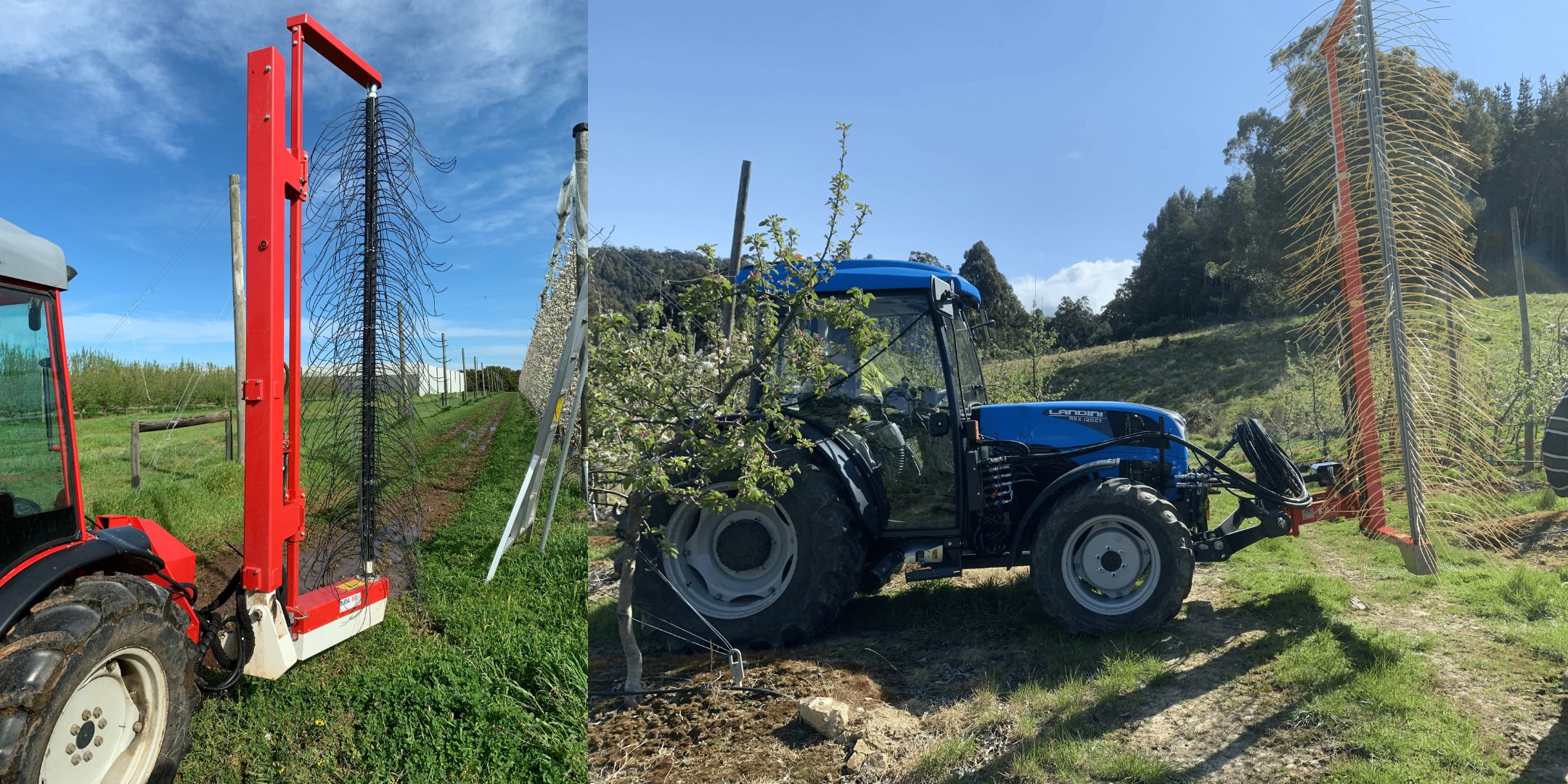
Figure 3: Mechanical string thinners: Darwin string thinner (left) and BAUM device (right).
Chemical thinning
Chemical thinning, using synthetic hormonal growth regulators or caustic materials that reduce the number of flowers and/or fruit on the tree, is gaining increasing acceptance in pear production as growers are becoming increasingly aware of the advantages of early thinning regarding fruit size and other quality parameters. However, many interacting factors influence the response to chemical thinning agents, hence chemical thinning can be unpredictable. These factors include cultivar, tree health, tree age, rootstock, vigour, blossom density, pollination, weather conditions, chemicals used, and application timing and method. There are two categories of thinning chemicals:
- growth regulators that mimic natural plant hormones
- blossom desiccants.
Growth regulators alter physiological processes within the tree, either through production of ethylene, or by reducing the ability of fruitlets to compete for resources by stimulating abortion of seeds, inhibiting photosynthesis or through other poorly understood mechanisms. These hormonal-type thinning agents can either be blossom or fruitlet (post-bloom) thinners.
Blossom desiccants prevent fertilisation by desiccating the style and stigma of the flower; they are not effective on flowers that have been pollinated and already set fruit. As early opening flowers tend to produce the largest fruit, the aim is to allow these early flowers to pollinate and set fruit, then apply the desiccant to remove the later flowers – normally more than one application of the desiccant is required in cultivars or regions with an extended flowering period. Desiccants tend to be less dependent on weather conditions for their effectiveness than hormonal-type thinners. However, they can be reactivated under humid conditions or if rewetting occurs soon after application, in some cases causing severe burning, damaging buds, fruit and leaves.
Absorption of hormonal-type thinning agents through the foliage, and adequate coverage of the female reproductive organs when applying blossom desiccants is critical to the success of chemical thinning. Humid conditions that increase drying time and higher temperatures during application lead to increased absorption. Low light intensity and low temperatures prior to application also lead to increased absorption as the leaf cuticle becomes thinner and more permeable. Other factors that can affect chemical absorption include spray formulation, addition of a wetting agent and hardness of the water.
The risks involved in chemical thinning can be mitigated by use of a structured approach, using a sequential spray program with both blossom and post-bloom thinners. Knowledge of conditions that impact the carbon balance of the tree and the ability to make use of carbon-deficit conditions are likely to improve the predictability of chemical thinning.
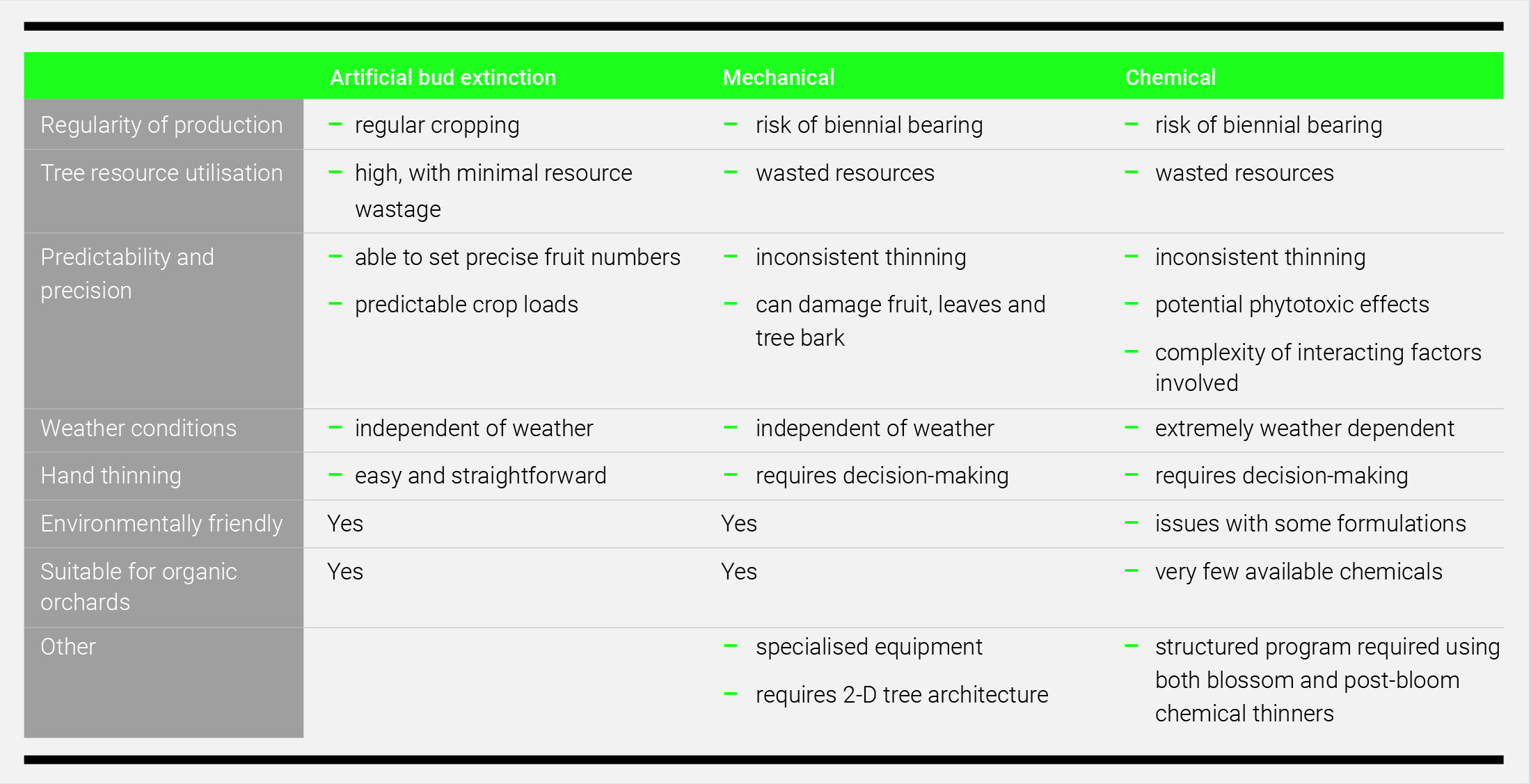
Table 1: Comparison between artificial bud extinction (ABE), mechanical and chemical thinning.
Studies in progress
Studies over the five-year duration of this project aim to expand on the crop thinning results from the PIPS3 Developing smarter and sustainable pear orchards (AP19005) project, examining pruning and ABE, mechanical thinning technologies, and a range of chemical thinning agents that have shown potential in initial laboratory screening experiments. An important component of all experiments being undertaken is the economic benefit and profitability of each crop regulation strategy.
Replicated experiments have been established at the Tatura SmartFarm and a commercial orchard at Ardmona to compare ABE and time of hand thinning on fruit quality and yield stabilisation in Rico™ and Lanya™ pears. An experiment using the Darwin string thinner is also underway at the Tatura SmartFarm, and the impact of petal removal prior to flower opening on fruit set has been examined as a precursor to establishing experiments using a leaf blower during the flowering period.
Although experiments need to be conducted over multiple seasons to ensure reliability of results, the importance of undertaking some form of crop load management has been demonstrated with improved fruit size, packout and return bloom.
Focus for season 3 (2025–26)
The ABE and fruitlet hand thinning experiments will be continued for one more full season to confirm the efficacy and economics of artificial bud extinction and hand thinning.
Mechanical thinning studies will be continued with the Darwin string thinner to determine the optimal rotor speed for effective thinning. An experiment will be set up to assess the efficacy of the leaf blower as a thinning tool.
Studies with some of the newer thinning agents will be commenced, with a focus on 1-aminocyclopropane-1-carboxylic acid (ACC), SARsil (liquid potassium silicate solution, Organic Crop Protectants) and ammonium thiosulphate (ATS).
Acknowledgment

The PIPS 4 Profit Pear production systems for future climates (AP22002) project is funded by Hort Innovation, using the apple and pear research and development levy, contributions from the Australian Government and co-investment from Agriculture Victoria. Hort Innovation is the grower-owned, not-for-profit research and development corporation for Australian horticulture.

This article was first published in the spring 2025 edition of AFG.