
Near-harvest plant growth regulators and internal browning in Pink Lady apples
A national trial in 2024 assessing the effect of near-harvest use of plant growth regulators on internal browning in Pink Lady apples gives insights into pre- and postharvest management where there is a predicted risk of the disorder.
Key points
- Trial demonstrated already known facts about radial internal browning (IB) in Cripps Pink and Rosy Glow apples:
- Highly variable between regions
- Increased with more mature fruit at harvest
- IB was higher in Rosy Glow strain – fits anecdotal reports and something to investigate further
- Harvista helped maintain firmness of fruit in storage, even though harvest firmness was equivalent
- Radial IB was not increased by use of ReTain or Harvista, rather was reduced both in national survey and Stanthorpe study
- Reduction in radial browning is likely a secondary effect of maturity management provided by these PGRs
- Note: this study is specific to apples sold as Pink Lady, results are not expected to be transferable to IB disorders in other varieties as other disorders likely have variable modes of action.
Internal browning (IB) has been a commercially significant postharvest disorder for apples sold domestically as Pink Lady for many years. There are two primary types of internal browning in Cripps Pink and high-colour strains such as Rosy Glow varieties: radial browning (discussed in this article) and diffuse browning. Like most postharvest disorders, the causes of IB in Pink Lady apples can be complex and multifaceted.
There are several variables that impact the development of radial browning, including fruit maturity at harvest, fruit nutrition, storage conditions and orchard climatic conditions. By managing these primary factors, the disorder can often be well controlled under commercial conditions.
One change since previous trials is the use of plant growth regulators (PGRs) in commercial apple production. PGRs work by changing how the plant interacts with different plant hormones. They are used throughout the season to manage features of plant growth and development, including branching, thinning, fruit shaping and fruit ripening. As fruit maturation has already been linked to the development of radial browning, PGRs applied near harvest that impact fruit maturity were of particular interest in this trial.
ReTain® and Harvista™ are two commercially available PGRs used in apple orchards in the period near harvest. While both PGRs have an impact on fruit ripening and maturation by changing how the plant interacts with the hormone ethylene, they have different modes of action. ReTain blocks the rate limiting step in the production of ethylene, while Harvista stops the perception of ethylene.
The goal of the 2024 trial was to look at the impact of ReTain and Harvista in commercial Pink Lady orchards to determine if there was any link between the use of either PGR and the development of internal browning.
The study was set up in two parts:
- A large-scale survey of 44 orchards growing Cripps Pink or high-colour strains in multiple regions around Australia.
- A replicated field trial in Stanthorpe where 3 orchards had blocks treated with ReTain or Harvista or were left as untreated control for direct comparison.
In all cases a sample of fruit was destructively tested for maturity at harvest and a second sample of fruit was placed in regular air (RA) storage for approximately 6 months to allow any browning to develop.
In the national survey, fruit samples were taken close to the commercial harvest date and details of any PGRs used were collected. Where possible, samples from blocks with and without near-harvest PGRs were taken.
In total 6,200 apples were assessed for internal browning following storage. Browning was assessed on a 4-point scale: none, slight, moderate, severe. Slight browning was defined as that which could be seen when looking closely, but which would not be considered as a reject in the supply chain. Browning has been reported both as total browning (% fruit with IB, regardless of severity) or commercially significant browning (% moderate and severe browning).
Results
National survey
The biggest variation in both total and commercially significant levels of browning was regional variation. The highest levels of browning were seen in Northern Tasmania and Southern Victoria, while the lowest levels were seen in the Goulburn Valley and South Australia.
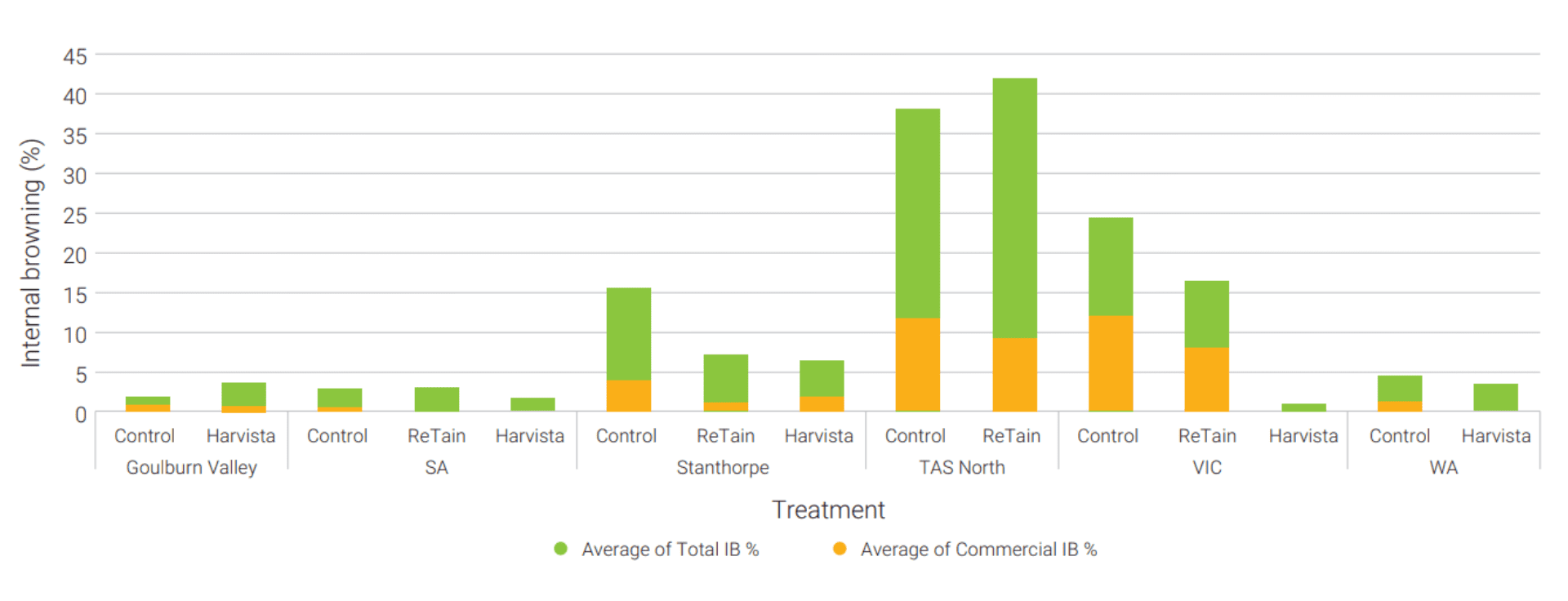
Figure 1: Incidence of internal browning by region and PGR.
The main cause of regional and seasonal variation in the levels of browning is the climatic conditions during fruit growth and development. While the seasonal risk of browning cannot be predicted, the accumulation of growing degree days (GDD) above 10oC between full bloom and maturity gives a good estimation of risk.
In the 2024 growing season, the GDD model gave the following risks by region for the development of radial browning in the areas where the study was completed:
- Low risk: Stanthorpe, Goulburn Valley, Western Australia
- Moderate risk: South Australia, Southern Victoria
- High risk: Northern Tasmania
When looking at the national data, these predictions fit the results relatively well, with the exception of South Australia. South Australia was predicted to have a moderate risk for developing browning, but only low levels were seen in this study. This is likely due to operational constraints; the fruit in SA was stored at a higher temperature than other regions and, due to this, the fruit was also assessed for browning earlier than in the other regions.
When aggregating the national survey data, there was no difference in either total browning or commercially significant browning between any of the treatment groups. This suggested that there was no detrimental relationship between ReTain or Harvista and the development of radial browning in Pink Lady apples.
Field trial
The replicated trial in Stanthorpe was set up in the same season to give a controlled comparison between the treatments directly. This allows more robust and in-depth examination of any relationship between near-harvest PGRs and browning. The study had three orchard locations; two were growing the high-colour strain, Rosy Glow, and the other was growing Cripps Pink. ReTain and Harvista were both applied at commercial rates and timings, while a control block on each orchard was left untreated. At all locations, fruit were harvested on two occasions – commercial maturity and late pick (10–15 days later).
Typical quality assessments of starch, sugar, firmness and skin colour were also taken both at harvest and following storage. When looking at fruit firmness, there was no difference seen between any treatment at harvest. However, following storage, the first pick fruit showed more firmness retention when Harvista had been applied prior to harvest. In the later picked fruit, both ReTain and Harvista showed increased firmness retention when compared to the untreated control or ReTain treated blocks.

Figure 2: Incidence of internal browning after storage of apples harvested at commercial maturity (harvest 1) and late pick 10–15 days later (harvest 2).
Browning results taken at the first harvest showed relatively low levels of both total browning and commercially relevant browning. Commercially relevant browning was 0–3 per cent in all treatments. This aligns with the Stanthorpe region having a predicted low risk of internal browning in the 2024 season.
Browning results from the second harvest show a marked increase in the levels of internal browning seen after storage (harvest maturity is a primary cause of increased risk of the development of radial browning during storage). With the higher levels of browning at the second pick, some other relationships can also be observed. Fruit from the high-colour strain, Rosy Glow, showed higher levels of browning than those of the Cripps Pink variety. Additionally, the results showed that the highest levels of browning were in the untreated control blocks. Across all strains and orchards, those treated with ReTain or Harvista showed the lowest levels of browning.

Fruit maturity at harvest, fruit nutrition, storage conditions and orchard climatic conditions are some of the variables that impact the development of radial browning.
Optimising pre- and postharvest management
Preharvest
- Manage maturity in the field
- Start checking starches well ahead of predicted harvest date
- Make use of PGRs to manage maturity around any events such as weather or labour issues
- Selectively pick to ensure consistent maturity in bins for optimal storage quality.
Postharvest
- Temperature management
- A chilling sensitive variety, utilise stepwise cooling
- CO2 management
- A CO2 sensitive variety, ensure use of room opening or scrubbers from the moment fruit are put into a room. Maintain tight management for at least the first 8 weeks
- Inventory management
- IB usually takes a few months to develop; if you have fruit that you know is at risk, take the opportunity to market it early rather than risk keeping it longer.
Further information
“Internal browning in Pink Lady apples” webinar with Dr Hannah James (April 2022), www.youtube.com/watch?v=EavPTF1jDV8
“Internal browning – what causes it and how to reduce the risks”, https://apal.org.au/internal-browning-what-causes-it-and-how-to-reduce-the-risks/
“Managing the flesh browning disorder of Cripps Pink apples”, https://bit.ly/40jujqX
Acknowledgements
Thanks to the growers who participated in the national survey. Thanks to APAL for supporting this work so that we were able to expand the scope of the trial and include more orchards.
This article was first published in the Summer 2024 edition of AFG.



