
Profitable and sustainable crop load management technologies for apple production
Researchers are experimenting with different thinning and pruning strategies in the Huon Valley to assess those that demonstrate the best profitability, fruit yield and quality.
Profitability is powered by crop load management, which sets fruit yield and size from early spring and can be a huge cost saving when it works well. It’s for this reason that the PIPS 4 Profit program’s Optimising apple production systems (AP22004) project is focusing a large component of its research into more robust, reliable, profitable and environmentally friendly crop load management.
In Tasmania’s apple growing region, the project is investigating new and environmentally safe thinning chemicals, comparing the effectiveness of mechanical and chemical thinning, and exploring pruning strategies and artificial bud extinction.

Figure 1: Envy™ tree sprayed with a chemical thinner to runoff (left) and desiccated flower in a cluster after the application of 2% potassium bicarbonate chemical thinner (right).
Balancing profitability, risk, fruit quality and the environment
Removing around 90 per cent of flowers is a balancing act of risk and profitability depending on which crop load management method you choose. Some of this risk is mitigated by experience but can still head into dangerous territory when the growing environment throws a curve ball, or when using a new chemical, growing system or variety. This program of work is about comparing alternative and new crop load management tools that clearly lay out the profitability and risks of each, and their environmental impact.
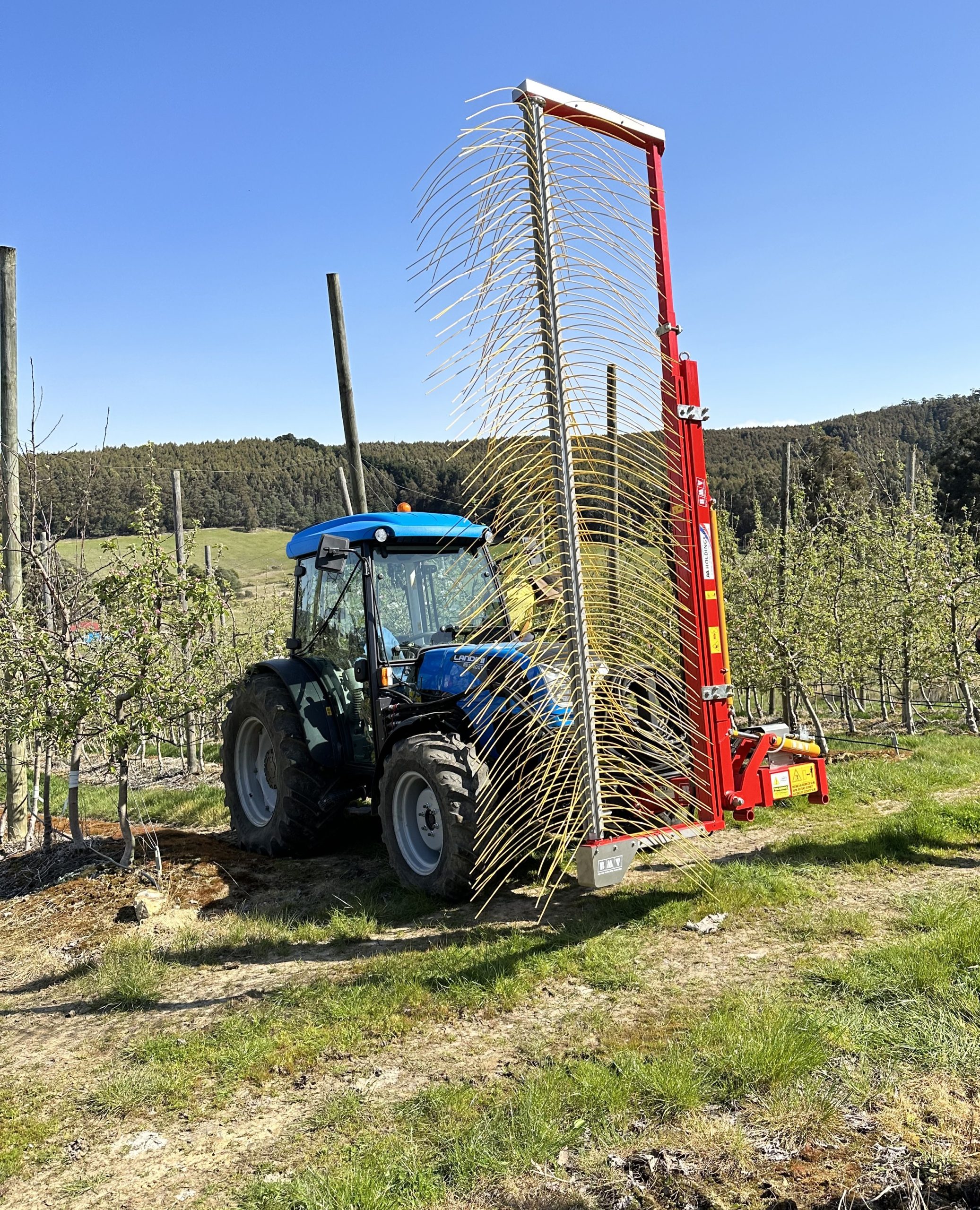
Figure 2: Mechanical string thinner used as a blossom/fruitlet thinner.
Why chemical thinners cause angst
Chemical thinners have been the backbone of crop load management for many years. They reduce labour and are relatively cheap. So why move away from these? ‘Unpredictable’ and ‘complex’ are two frequently conveyed reasons why chemical thinners are considered frustrating and used with caution.
The complexity comes from the many factors that interact to potentially change the thinning result of a given situation. These factors include timing of application, tree age, cultivar, pruning and weather conditions. Add to this the variety of chemical thinners that are available and the situation becomes a decision-making minefield. Then, of course, there is the regulatory scrutiny to consider, given chemical thinners can have potential phytotoxic effects on the tree.
It’s not surprising, then, that many growers struggle with the risks and complexity of interacting factors involved with chemical thinning programs.
The PIPS 4 Profit research team in Tasmania is comparing three alternative chemical thinning options: potassium bicarbonate, potassium bicarbonate + potassium silicate (sold as Ecocarb® Plus) and 1-aminocyclopropane-1-carboxylic acid (ACC, sold as Accede®) with industry standard ammonium thiosulphate (ATS, sold as Thin-It™).
Potassium bicarbonate and potassium bicarbonate + potassium silicate (formulation) have similar modes of action and cause a physical desiccation or flower burn (Figure 1). Potassium bicarbonate is included in the trial as a low-cost alternative, while potassium bicarbonate + potassium silicate (formulation) may have added fruit quality benefits through the inclusion of potassium silicate. ACC is a naturally occurring plant protein that converts to ethylene in the plant and stimulates flower and fruitlet drop. A key advantage of ACC is its suitability for use post bloom, adding flexibility to the program. All three options have a low environmental impact, and potassium bicarbonate and potassium bicarbonate + potassium silicate (formulation) are suitable alternatives for organic production.
Non-chemical crop load management
Newer non-chemical crop load management methods have potential to be cost effective and have low environmental impact, so the team is testing two non-chemical crop load management techniques: artificial bud extinction (ABE) and a mechanical string thinner (Figure 2).
ABE produces a precise crop load through manual removal of buds just before bud break and is suitable for most orchard systems. Trees managed by ABE have much less initial floral and fruit load and so do not typically experience late fruitlet drop, meaning hand thinning adjustments can be done at a much earlier stage. It also removes buds that are of lower quality or are poorly positioned, improving light distribution to remaining fruit buds. Both these features contribute to improved fruit colour and quality. The challenge will be to demonstrate this method as a cost-effective alternative.
Mechanical thinning using a string thinner is best suited to high-density two-dimensional (2D) orchards. The advantage of this method is its speed and cost efficiency, with potentially lower precision being the main disadvantage.
Tasmanian crop load management trials
Crop load management trials are underway at two sites in Tasmania’s Huon Valley at Geeveston. The first site at Matt Tack’s Our Mates’ Farm is an organic Gala (Galaxy) orchard planted on a tall spindle system. The second site at John Evans’s is a conventional orchard of Envy™ (Scilate) converted to a 2D system.
The treatments (Table 1) are designed to compare different chemical and physical crop load management options.
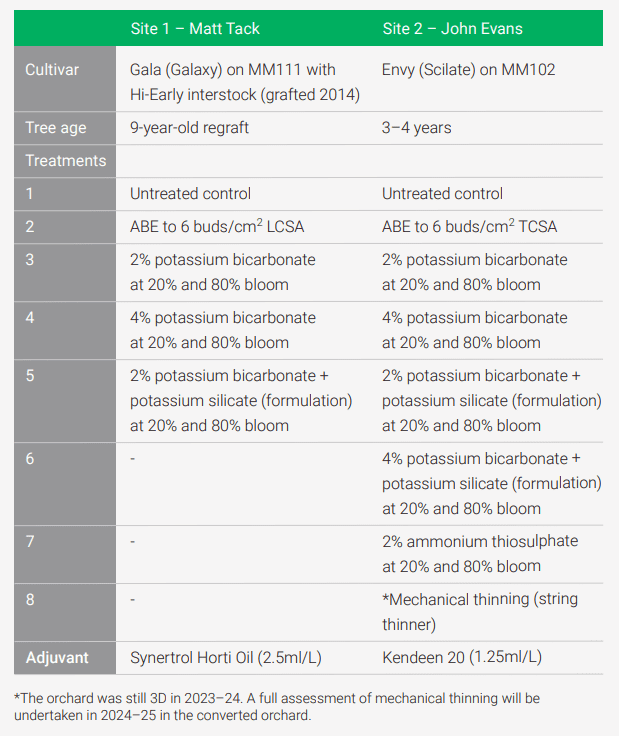
Table 1: Details of crop load management trials established at two sites in 2023–24.
Key assessments
The team will have a busy November and December counting blossom clusters and fruit set. The number of flowers and fruit counted before and after treatment are the first measures of success and will show how close each treatment comes to achieving target crop load.
Harvest will reveal just how well each treatment performed in achieving both yield and fruit quality, with measures of fruit yield, fruit weight, colour, Brix, flesh firmness, total soluble solids, dry matter and titratable acidity. Return bloom will be assessed in the following season to measure the trees’ biennial bearing response.
Most importantly, the true cost of each treatment will be recorded so a full economic evaluation can be made after harvest.
Larger-scale grower trials will be set up in coming seasons to assess those treatments that demonstrate the best profitability, fruit yield and quality while managing biennial bearing.
Stay up to date with the Optimising apple production systems (AP22004) project’s activities by visiting apal.org.au/projects/ap22004.
Acknowledgment
 The PIPS 4 Profit program’s Optimising apple production systems (AP22004) project has been funded by Hort Innovation using the apple and pear research and development levy, contributions from the Australian Government and co-investment from the Tasmanian Institute of Agriculture, Agriculture Victoria, NSW Department of Primary Industries and WA Department of Primary Industries and Regional Development. It is supported by Lenswood Apples in SA. Hort Innovation is the grower-owned, not-for-profit research and development corporation for Australian horticulture.
This article was first published in the Spring 2024 edition of AFG.



