
Making the tough decisions today for future profitability
Having a successful orchard business often comes down to an in-depth knowledge of orchard data, a willingness to adjust to the market … and knowing when to pull the pin.
In most industries, business owners are encouraged to be nimble, bold and unafraid to experiment with their product. The mantra is to see what works, make tough decisions quickly and swap out underperforming products with speed and decisiveness. But apple and pear growers operate on a much longer timeline where rapid pivots are simply not feasible.
Unlike other fast-paced markets, our industry requires years of careful planning and patience. Identifying a promising new apple variety, planting the trees and waiting three years or more for the first crop is a complex, capital-intensive and high-stakes process. Yes, ripping out an established orchard to gamble on an unproven cultivar is an enormous risk. But growers must weigh this against the dangers of an even bigger risk: clinging to a variety that is no longer meeting consumer tastes.
“Short-term strategies for long-term gains” was the topic of a panel discussion at APAL’s Industry Forum 2024 in June, where moderator Justin Smith (Head of Industry Services at APAL) was joined by Sue Finger (Vernview Orchard), Sarah de Bruin (Horticultural Consultant at AgFirst) and Ross Wilson (Director and Horticultural Consultant at AgFirst).
To succeed in tough times, Ross warned growers they would need to continually review what they are growing, based on data on yields, packouts, costs and returns and be willing to make the tough decisions.
“To make money, you need the right varieties that are going to deliver the margin. The pace of change is like the fashion industry; like a treadmill.”
Ross said he had seen a lot of change in 30-odd years of orcharding.
“For every tree I’ve bought, there’s now a new one in its place,” he said. “I’ve just pulled out two blocks of [Scifresh, marketed as] Jazz™ because we can’t make money from that variety in New Zealand and the European market is now unsustainable for us. Two years ago, I had to graft over a beautiful Jazz block to a variety that would potentially pay more – it was frustrating, but necessary.”
In Ross’s experience, the most successful growers are those willing to adjust to the market to stay in business.
“They are almost able to look ahead 5 to 10 years when they plant today. The cycle is long, but the ones who do well have the variety mix, and get that yield accumulation up in year one, two, and three. But you must have the right genetics in place at the start. If they’re wrong, they can pull you down really quick.”
Sue’s business has evolved from the lower to middle-level varieties, and today features 70 per cent high-value, high-returning varieties.
“Previously we were very big on Golden Delicious and Granny Smith – then the bulldozer was booked, and two big blocks went,” she said. “We don’t grow Golden Delicious anymore; it’s a great apple, but there’s no return.”
“We had bare ground for a while,” Sue continued. “Not rushing into a decision about variety mix is important. But when do you pull the pin? You’ve been sold a new variety and by year three it’s starting to get yield, but by year four and five the market doesn’t seem to like that variety anymore. Do you give it one more shot or do you pull it? It’s very challenging.”
Ross also stressed the importance of avoiding knee-jerk decisions.
“We’re not dealing with an annual crop,” he said. “All varieties have their good and bad years. Two years ago, Envy™ was highly profitable for us, then dropped below the cost of production in 2022. The wrong thing would have been to make a decision based on that one bad year. The best thing we did was to talk to all our business partners. Did I believe this variety had the potential to have a good margin above my costs going forward? The answer, in this case, was ‘yes’.”
Sarah, who presented on the Orchard Business Analysis (OBA) at the Forum, spoke about how to recognise an underperforming or unprofitable variety as early as possible with post-harvest reviews.
“Get started by looking at the packout and seeing which fruit are getting knocked out, then remedy the defects on orchard,” she said.
“A lot of growers simply haven’t opened the books. Have a look, talk to your packers, understand your post-harvest costs and how much thinning per hectare is costing. Get a baseline, understand where to start, then delve into other aspects of the costs,” she advised.
Sarah added that the other side of choosing new varieties is considering the canopy system you are developing, then potentially grafting over to achieve greater cumulative yield, which gives more opportunity looking forward.
Sue shared a story of a tough decision not to invest further into an on-site packhouse.
“For our size, given the costs of postharvest equipment, we couldn’t justify the costs to operate and maintain it. You have to make the decisions that are right for your business. It allowed us to focus on growing, chasing better yields and getting better results on orchard, which is where our expertise lies” she said. “And getting rid of your packhouse means you suddenly have a life on weekends!”
The reality, Ross said, is that it’s very hard to make good decisions on new varieties every time.
“We should hope to make a good decision maybe seven times out of ten,” he said. “In New Zealand we’ve seen new varieties completely fail by year five – it’s a risk you take by trying to be at the forefront of new varieties. There are great opportunities in Australia and New Zealand, but it takes time to work through them and get them right for your business.”
Further information
The Orchard Business Analysis report is available exclusively to levy-paying growers. To request a copy, contact APAL by email to [email protected] or by phone on 03 9329 3511.
The APAL Data Hub houses insights from the APAL Orchard Census, and provides past and current crop estimates and consumption data detailing historical trends for apples and pears by variety. APAL members can register here for the new Data Hub, along with the Quality Hub and Export Hub portals, within the APAL Member Hub: apal.org.au/member-hub/register/
AgFirst horticultural consultants Ross Wilson and Sarah de Bruin shared data from the Orchard Business Analysis (OBA) and their insights into short-term strategies for long term gains with us at the APAL Industry Forum in Melbourne on 3 June 2024.
Watch their interview with APAL here
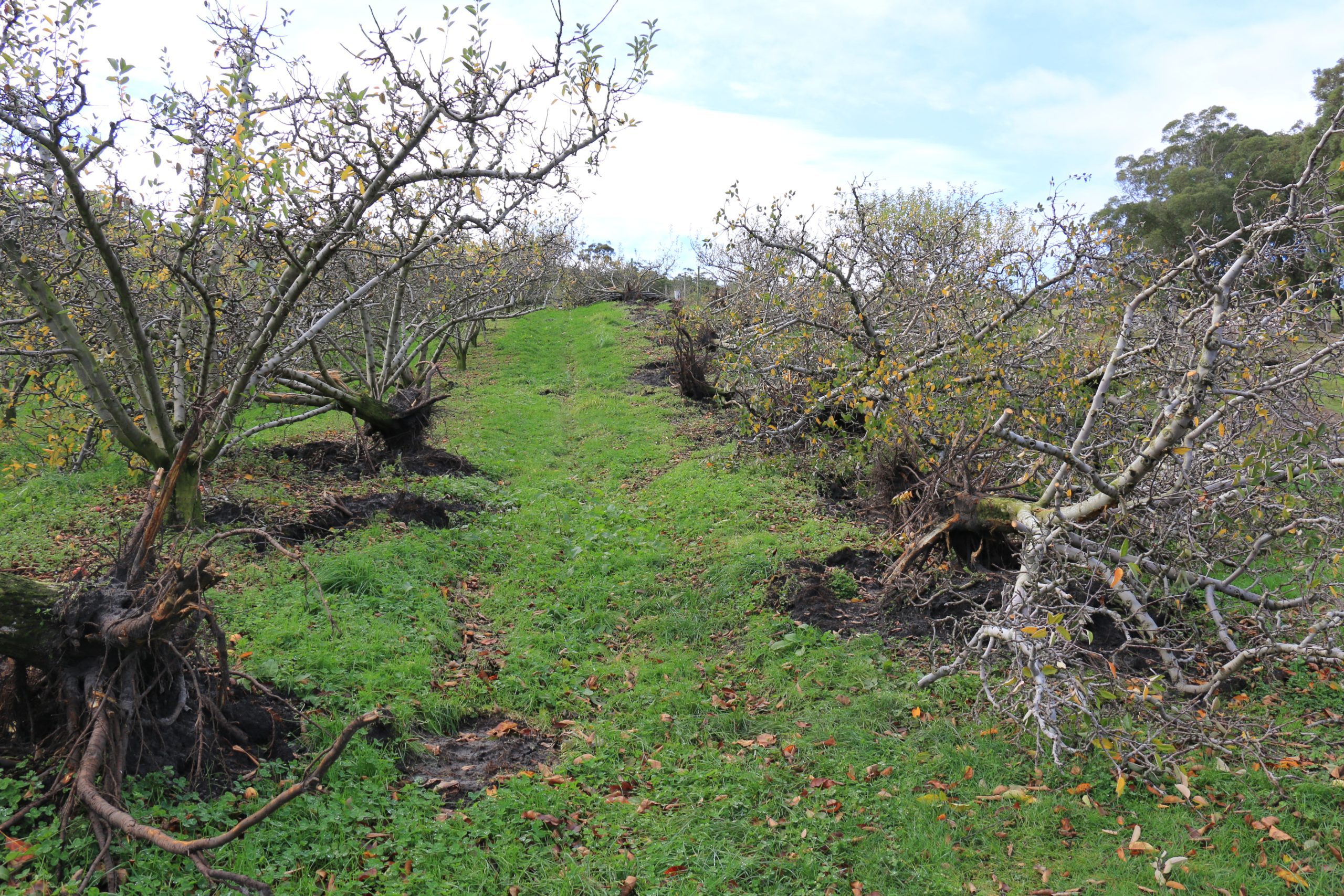
Ripping out an established orchard to gamble on an unproven cultivar is an enormous risk, but clinging to a variety that is no longer meeting consumer tastes is an even bigger risk.

Orchardists need to continually review what they are growing, based on data on yields, packouts, costs and returns and be willing to make tough decisions.
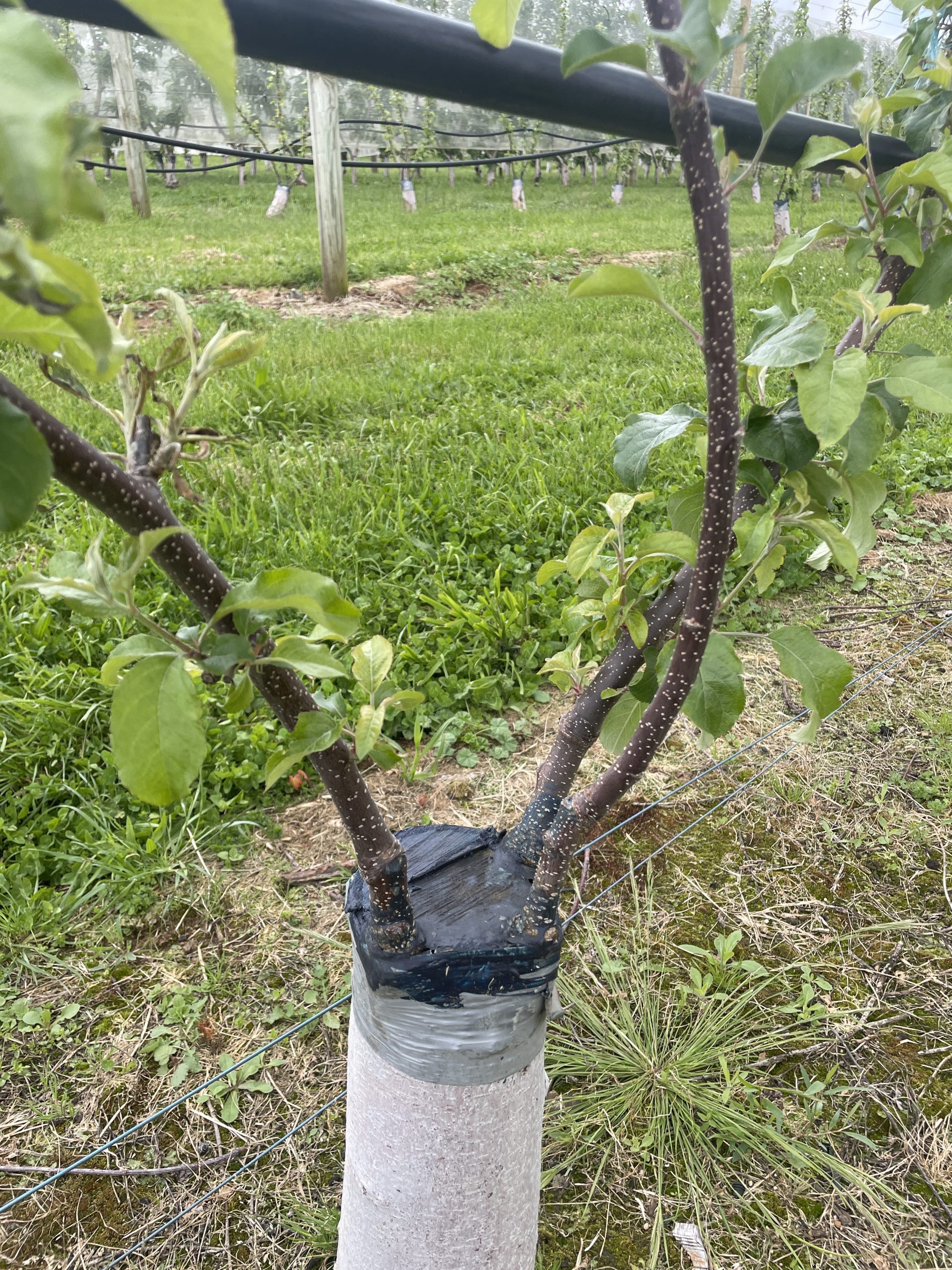
When choosing new varieties that could potentially pay more, consider the canopy system you are developing, then potentially graft over a block of another variety to achieve greater cumulative yield.
Dr Hugo Britt shared a summary of the “Short-term strategies for long-term gains” panel discussion from the APAL Industry Forum in the upcoming Spring 2024 edition of AFG.



